Episode 915: Severe Burn Injuries

Episode 915: Severe Burn Injuries

Contributor: Megan Hurley, MD

Educational Pearls:

  • Initial assessment of patients with severe burn injuries begins with ABCs

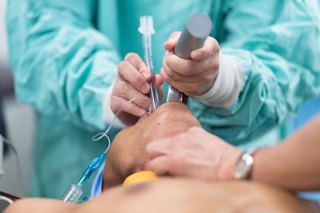
    • Airway: consider inhalation injury

    • Breathing: circumferential burns of the trunk region can reduce respiratory muscle movement

    • Circulation: circumferential burns compromise circulation

    • Exposure: Important to assess the affected surface area

  • Escharotomy: emergency procedure to release the tourniquet-ing effects of the eschar

    • Differs from a fasciotomy in that it does not breach the deep fascial layer

  • PEEP = positive end-expiratory pressure

    • The positive pressure remaining in the airway after exhalation

    • Keeps airway pressure higher than atmospheric pressure

  • Common formulas for initial fluid rate in burn shock resuscitation

    • Parkland formula: 4 mL/kg body weight/% TBSA burns (lactated Ringer's solution)

    • Modified Brooke formula: 2 mL/kg/% (also lactated Ringer's solution)

      • Less fluid = lower risk of intra-abdominal compartment syndrome

  • Lactated Ringer's solution is preferred over normal saline in burn injuries

    • Normal saline is avoided in large quantities due to the possibility of it leading to hyperchloremic acidosis

References

  1. Acosta P, Santisbon E, Varon J. "The Use of Positive End-Expiratory Pressure in Mechanical Ventilation." Critical Care Clinics. 2007;23(2):251-261. doi:10.1016/j.ccc.2006.12.012

  2. Orgill DP, Piccolo N. Escharotomy and decompressive therapies in burns. J Burn Care Res. 2009;30(5):759-768. doi:10.1097/BCR.0b013e3181b47cd3

  3. Snell JA, Loh NH, Mahambrey T, Shokrollahi K. Clinical review: the critical care management of the burn patient. Crit Care. 2013;17(5):241. Published 2013 Oct 7. doi:10.1186/cc12706

Summarized by Meg Joyce, MS1 | Edited by Meg Joyce & Jorge Chalit

Donate: https://emergencymedicalminute.org/donate/

Avsnitt(1146)

Podcast #279: Sedation After Intubation

Podcast #279: Sedation After Intubation

Author: Aaron Lessen, M.D. Educational Pearls Post-intubation care should always include pain control and adequate sedation. Commonly used sedation agents include propofol, ketamine and versed. Howev...

8 Dec 20171min
Podcast #278: Subdural Hematomas

Podcast #278: Subdural Hematomas

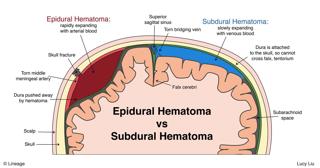
Educational Pearls Subdural hematomas can happen in the elderly because of brain atrophy, and can manifest with neurological deficit. Subdural hematomas are caused by rupture of the bridging veins of...

6 Dec 20172min
Podcast #277: Mucor

Podcast #277: Mucor

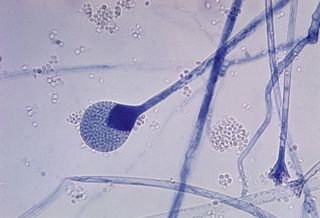
Author: Don Stader, M.D. Educational Pearls Mucor/Rhizopus fungal infections usually present in diabetic or immunocompromised patients as a black, necrotic lesion on the face. The fungus invades the ...

4 Dec 20172min
Podcast #276: Angioedema

Podcast #276: Angioedema

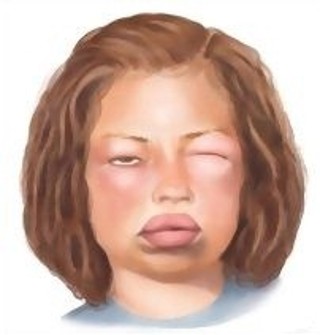
Author: John Winkler, M.D. Educational Pearls Angioedema is immediately life-threatening due to airway obstruction. Mechanisms include allergic reaction (histamine-related) or bradykinin-related (ACE...

1 Dec 20173min
Podcast #275: Battery Ingestions

Podcast #275: Battery Ingestions

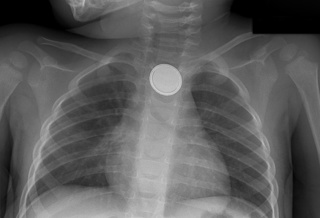
Author: Nick Hatch, M.D. Educational Pearls Unlike coin ingestions, button batteries can cause necrosis of the GI tract. If lodged in the esophagus, removal within 2 hours is important, because they ...

29 Nov 20174min
Podcast #274: Pediatric Sedation

Podcast #274: Pediatric Sedation

Author: Aaron Lessen, M.D. Educational Pearls A recent prospective observational study was performed to examine the safety of different sedation medications in the pediatric ED. This study included 6...

27 Nov 20172min
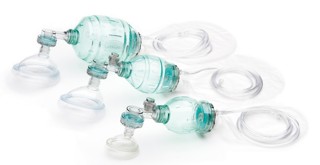
Podcast #273:  Bag Valve Masks

Podcast #273: Bag Valve Masks

Author: Sam Killian, M.D. Educational Pearls Difficulty with bag valve mask (BVM) ventilation can be addressed using the MOANS mnemonic. Mask seal, Obesity/obstruction, Age, No teeth, Sleep apnea. O...

17 Nov 20173min

Podcast #272: More on Temperature in Sepsis

Podcast #272: More on Temperature in Sepsis

Author: David Rosenberg, M.D. Educational Pearls A study of 20,000 subjects found that reducing fever in sepsis did not improve outcomes such as morbidity, mortality, or length of stay. However, corr...

16 Nov 20172min

Populärt inom Vetenskap

p3-dystopia
dumma-manniskor
svd-nyhetsartiklar
allt-du-velat-veta
det-morka-psyket
kapitalet-en-podd-om-ekonomi
pojkmottagningen
sexet
rss-ufo-bortom-rimligt-tvivel
rss-vetenskapsradion-2
rss-vetenskapsradion
dumforklarat
halsorevolutionen
rss-broccolipodden-en-podcast-som-inte-handlar-om-broccoli
medicinvetarna
rss-experimentet
bildningspodden
vetenskapsradion
hacka-livet
intergalaktiskt