Episode 916: Central Cord Syndrome

Episode 916: Central Cord Syndrome

Contributor: Taylor Lynch, MD

Educational Pearls:

What is Central Cord Syndrome (CCS)?

  • Incomplete spinal cord injury caused by trauma that compresses the center of the cord

  • More common in hyperextension injuries like falling and hitting the chin

  • Usually happens only in individuals with preexisting neck and spinal cord conditions like cervical spondylosis (age-related wear and tear of the cervical spine)

Anatomy of spinal cord

  • Motor tracts

    • The signals the brain sends for the muscles to move travel in the corticospinal tracts of the spinal cord

    • The tracts that control the upper limbs are more central than the ones that control the lower limbs

    • The tracts that control the hands are more central than the ones that control the upper arm/shoulder

  • Fine touch, vibration, and proprioception (body position) tracts

    • These sensations travel in separate tracts in the spinal cord than the sensation of pain and temperature

    • Their pathway is called the dorsal column-medial lemniscus (DCML) pathway

    • This information travels in the most posterior aspect of the spinal cord

  • Pain, crude touch, pressure, and temperature tracts

    • These sensations travel in the spinothalamic tract, which is more centrally located

    • These signals also cross one side of the body to the other within the spinal cord near the level that they enter

How does this anatomy affect the presentation of CCS?

  • Patients typically experience more pronounced weakness or paralysis in their upper extremities as compared to their lower extremities with their hands being weaker than more proximal muscle groups

  • Sensation of pain, crude touch, pressure, and temperature are much morelikely to be diminished while the sensation of fine touch, vibration, and proprioception are spared

What happens with reflexes?

  • Deep tendon reflexes become exaggerated in CCS

  • This is because the disruption in the corticospinal tract removes inhibitory control over reflex arcs

What happens to bladder control?

  • The neural signals that coordinate bladder emptying are disrupted, therefore patients can present with urinary retention and/or urge incontinence

What is a Babinski's Sign?

  • When the sole of the foot is stimulated a normal response in adults is for the toes to flex downward (plantar flexion)

  • If there is an upper motor neuron injury like in CCS, the toes will flex upwards (dorsiflexion)

How is CCS diagnosed?

  • CCS is mostly a clinical diagnosis

  • These patient also need an MRI to see the extent of the damage which will show increased signal intensity within the central part of the spinal cord on T2-weighted images

How is CCS treated?

  • Strict c-spine precautions

  • Neurogenic shock precautions. Maintain a mean arterial pressure (MAP) of 85-90 to ensure profusion of the spinal cord

  • Levophed (norepinephrine bitartrate) and/or phenylephrine can be used to support their blood pressure to support spinal perfusion

  • Consider intubation for injuries above C5 (C3, 4, and 5 keep the diaphragm alive)

  • Consult neurosurgery for possible decompression surgery

  • Physical Therapy

References

  1. Avila, M. J., & Hurlbert, R. J. (2021). Central Cord Syndrome Redefined. Neurosurgery clinics of North America, 32(3), 353–363. https://doi.org/10.1016/j.nec.2021.03.007

  2. Brooks N. P. (2017). Central Cord Syndrome. Neurosurgery clinics of North America, 28(1), 41–47. https://doi.org/10.1016/j.nec.2016.08.002

  3. Engel-Haber, E., Snider, B., & Kirshblum, S. (2023). Central cord syndrome definitions, variations and limitations. Spinal cord, 61(11), 579–586. https://doi.org/10.1038/s41393-023-00894-2

Summarized by Jeffrey Olson, MS3 | Edited by Jorge Chalit, OMS3

Donate: https://emergencymedicalminute.org/donate/

Avsnitt(1149)

Podcast #197: Ashman Phenomenon

Podcast #197: Ashman Phenomenon

Author: Dylan Luyten M.D. Educational Pearls: Ashman's Phenomenon occurs in the setting atrial fibrillation and mimics ventricular tachycardia, but is harmless. On ECG, the pattern of Ashman Phenomen...

30 Apr 20171min
Podcast #196: DVT and May-Thurner Syndrome

Podcast #196: DVT and May-Thurner Syndrome

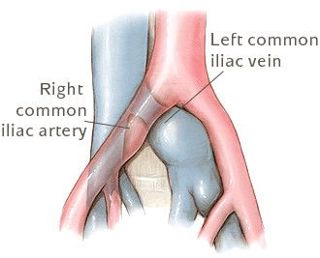
Author: Samuel Killian M.D. Educational Pearls: Lower extremity DVTs are extremely common. There are more left lower extremity DVT due to anatomical variation. May-Thurner Syndrome is a form of anato...

28 Apr 20172min
Podcast #195: How to Properly Inject Heroin

Podcast #195: How to Properly Inject Heroin

Author: Don Stader, M.D Educational Pearls: It is important for providers to know how to use IV drugs properly so that they can instruct their patients on how to avoid injury. Heroin use is increasin...

26 Apr 20177min
Podcast #194: Atruamatic ICH

Podcast #194: Atruamatic ICH

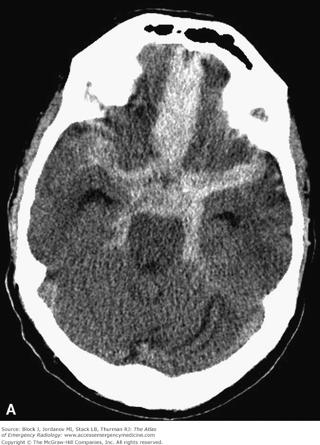
Author: Peter Bakes, M.D Educational Pearls Intracerebral hemorrhage is an intracranial bleed within the brain tissue or ventricles. Subarachnoid aneurysm causes about 50% of all ICH. Amyloid deposit...

24 Apr 20179min
Podcast #193: The Quick Wee

Podcast #193: The Quick Wee

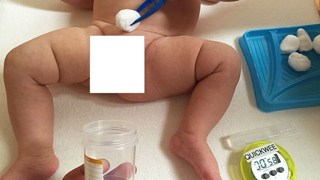
Author: JP Brewer M.D. Educational Pearls: The "Quick Wee" was a method to get urine out of infants who need to have a UA in the Emergency Department. A randomized-controlled experiment was done with...

22 Apr 20172min
Podcast #192: Back Fat Hernia

Podcast #192: Back Fat Hernia

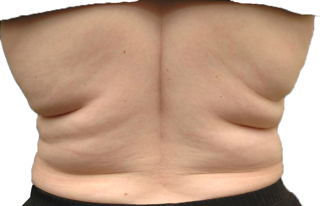
Author: Jared Scott M.D. Educational Pearls: There are two anatomical triangles on the back, the inferior lumbar triangle and the superior lumbar triangle. Herniation occurs whenever something moves ...

20 Apr 20173min
Podcast #191: Blunt Cervical Trauma

Podcast #191: Blunt Cervical Trauma

Author: Chris Holmes M.D. Educational Pearls: Mechanism of injury involves hyperextension/hyperflexion Pathophysiology: inside of the arteries in the neck becomes disrupted, similar to a dissection. ...

18 Apr 20172min
Deep Dive #2: Biological Terrorism

Deep Dive #2: Biological Terrorism

Author: Michael Hunt M.D. Dr. Hunt shares his wealth of experience with biological terrorism over the course of his career.

16 Apr 201728min

Populärt inom Vetenskap

dumma-manniskor
p3-dystopia
svd-nyhetsartiklar
allt-du-velat-veta
kapitalet-en-podd-om-ekonomi
rss-vetenskapsradion
medicinvetarna
det-morka-psyket
rss-ufo-bortom-rimligt-tvivel-2
rss-vetenskapsradion-2
rss-experimentet
sexet
halsorevolutionen
paranormalt-med-caroline-giertz
dumforklarat
hacka-livet
bildningspodden
rss-geopodden-2
vetenskapsradion
rss-spraket