Episode 916: Central Cord Syndrome

Episode 916: Central Cord Syndrome

Contributor: Taylor Lynch, MD

Educational Pearls:

What is Central Cord Syndrome (CCS)?

  • Incomplete spinal cord injury caused by trauma that compresses the center of the cord

  • More common in hyperextension injuries like falling and hitting the chin

  • Usually happens only in individuals with preexisting neck and spinal cord conditions like cervical spondylosis (age-related wear and tear of the cervical spine)

Anatomy of spinal cord

  • Motor tracts

    • The signals the brain sends for the muscles to move travel in the corticospinal tracts of the spinal cord

    • The tracts that control the upper limbs are more central than the ones that control the lower limbs

    • The tracts that control the hands are more central than the ones that control the upper arm/shoulder

  • Fine touch, vibration, and proprioception (body position) tracts

    • These sensations travel in separate tracts in the spinal cord than the sensation of pain and temperature

    • Their pathway is called the dorsal column-medial lemniscus (DCML) pathway

    • This information travels in the most posterior aspect of the spinal cord

  • Pain, crude touch, pressure, and temperature tracts

    • These sensations travel in the spinothalamic tract, which is more centrally located

    • These signals also cross one side of the body to the other within the spinal cord near the level that they enter

How does this anatomy affect the presentation of CCS?

  • Patients typically experience more pronounced weakness or paralysis in their upper extremities as compared to their lower extremities with their hands being weaker than more proximal muscle groups

  • Sensation of pain, crude touch, pressure, and temperature are much morelikely to be diminished while the sensation of fine touch, vibration, and proprioception are spared

What happens with reflexes?

  • Deep tendon reflexes become exaggerated in CCS

  • This is because the disruption in the corticospinal tract removes inhibitory control over reflex arcs

What happens to bladder control?

  • The neural signals that coordinate bladder emptying are disrupted, therefore patients can present with urinary retention and/or urge incontinence

What is a Babinski's Sign?

  • When the sole of the foot is stimulated a normal response in adults is for the toes to flex downward (plantar flexion)

  • If there is an upper motor neuron injury like in CCS, the toes will flex upwards (dorsiflexion)

How is CCS diagnosed?

  • CCS is mostly a clinical diagnosis

  • These patient also need an MRI to see the extent of the damage which will show increased signal intensity within the central part of the spinal cord on T2-weighted images

How is CCS treated?

  • Strict c-spine precautions

  • Neurogenic shock precautions. Maintain a mean arterial pressure (MAP) of 85-90 to ensure profusion of the spinal cord

  • Levophed (norepinephrine bitartrate) and/or phenylephrine can be used to support their blood pressure to support spinal perfusion

  • Consider intubation for injuries above C5 (C3, 4, and 5 keep the diaphragm alive)

  • Consult neurosurgery for possible decompression surgery

  • Physical Therapy

References

  1. Avila, M. J., & Hurlbert, R. J. (2021). Central Cord Syndrome Redefined. Neurosurgery clinics of North America, 32(3), 353–363. https://doi.org/10.1016/j.nec.2021.03.007

  2. Brooks N. P. (2017). Central Cord Syndrome. Neurosurgery clinics of North America, 28(1), 41–47. https://doi.org/10.1016/j.nec.2016.08.002

  3. Engel-Haber, E., Snider, B., & Kirshblum, S. (2023). Central cord syndrome definitions, variations and limitations. Spinal cord, 61(11), 579–586. https://doi.org/10.1038/s41393-023-00894-2

Summarized by Jeffrey Olson, MS3 | Edited by Jorge Chalit, OMS3

Donate: https://emergencymedicalminute.org/donate/

Avsnitt(1144)

Podcast 840: Abnormal Pediatric Vitals at Discharge

Podcast 840: Abnormal Pediatric Vitals at Discharge

Contributor: Aaron Lessen, MD Educational Pearls: Pediatric patients frequently have vital signs considered abnormal for age at discharge Large multicenter study recently evaluated if pediatric patie...

29 Dec 20223min
Podcast 839: Causes of Pancreatitis

Podcast 839: Causes of Pancreatitis

Contributor: Travis Barlock, MD Educational Pearls: The causes of pancreatitis can be remembered with the mnemonic: "GET SMASHED" G: Gallstones (Most common cause of pancreatitis overall) E: Ethan...

19 Dec 20223min
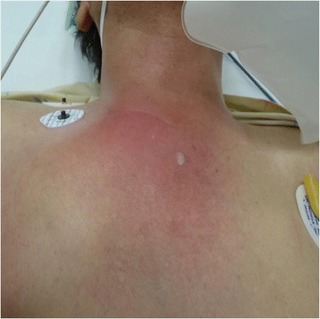
Podcast 838: Sternoclavicular Septic Arthritis

Podcast 838: Sternoclavicular Septic Arthritis

Contributor: Aaron Lessen, MD Educational Pearls: Septic arthritis of the sternoclavicular joint is uncommon accounting for Immunosuppression and IV drug use increases the risk  Can account for up ...

13 Dec 20224min
Podcast 837: Snakebites

Podcast 837: Snakebites

Contributor: Meghan Hurley, MD Educational Pearls: Venomous snakes in the United States include species from the family Elapidae and subfamily Crotalinae In prehospital setting, elevate the bitten ex...

12 Dec 20226min

Podcast 836: Humming to get EJ

Podcast 836: Humming to get EJ

Contributor: Jared Scott, MD Educational Pearls: Two conventional ways to aid in external jugular vein (EJ) catheter placement are Trendelenburg's position and Valsalva's maneuver by patient One stu...

6 Dec 20223min
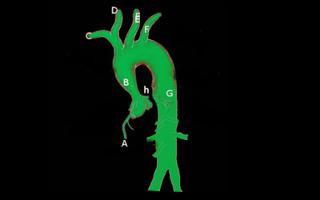
Podcast 835: Syncope Review

Podcast 835: Syncope Review

Contributor: Meghan Hurley, MD Educational Pearls: Syncope is defined as a loss of consciousness with an immediate return to baseline Differential is broad Cardiogenic Structural (aortic stenosis, ...

5 Dec 20226min
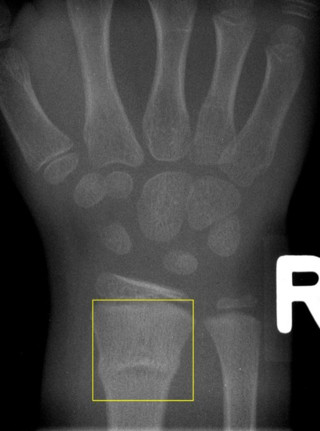
Podcast 834:  Peds Buckle Fractures

Podcast 834: Peds Buckle Fractures

Contributor: Aaron Lessen, MD Educational Pearls: Torus (Buckle) fractures are a commonly encountered pediatric fracture pattern Typically presents as wrist pain secondary to a child falling on outs...

29 Nov 20223min
Podcast 833: NS vs LR

Podcast 833: NS vs LR

Contributor: Travis Barlock, MD Educational Pearls: Normal Saline (NS) contains 154 mEq of both Sodium (Na) and Chloride (Cl), and has a pH of 5.5 Normal Na and Cl in adult humans are about 140 mEq...

28 Nov 20225min

Populärt inom Vetenskap

p3-dystopia
svd-nyhetsartiklar
pojkmottagningen
dumma-manniskor
allt-du-velat-veta
kapitalet-en-podd-om-ekonomi
det-morka-psyket
rss-vetenskapsradion
rss-ufo-bortom-rimligt-tvivel
paranormalt-med-caroline-giertz
rss-experimentet
rss-vetenskapsradion-2
medicinvetarna
halsorevolutionen
bildningspodden
4health-med-anna-sparre
sexet
rss-spraket
vetenskapsradion
dumforklarat