Episode 916: Central Cord Syndrome

Episode 916: Central Cord Syndrome

Contributor: Taylor Lynch, MD

Educational Pearls:

What is Central Cord Syndrome (CCS)?

  • Incomplete spinal cord injury caused by trauma that compresses the center of the cord

  • More common in hyperextension injuries like falling and hitting the chin

  • Usually happens only in individuals with preexisting neck and spinal cord conditions like cervical spondylosis (age-related wear and tear of the cervical spine)

Anatomy of spinal cord

  • Motor tracts

    • The signals the brain sends for the muscles to move travel in the corticospinal tracts of the spinal cord

    • The tracts that control the upper limbs are more central than the ones that control the lower limbs

    • The tracts that control the hands are more central than the ones that control the upper arm/shoulder

  • Fine touch, vibration, and proprioception (body position) tracts

    • These sensations travel in separate tracts in the spinal cord than the sensation of pain and temperature

    • Their pathway is called the dorsal column-medial lemniscus (DCML) pathway

    • This information travels in the most posterior aspect of the spinal cord

  • Pain, crude touch, pressure, and temperature tracts

    • These sensations travel in the spinothalamic tract, which is more centrally located

    • These signals also cross one side of the body to the other within the spinal cord near the level that they enter

How does this anatomy affect the presentation of CCS?

  • Patients typically experience more pronounced weakness or paralysis in their upper extremities as compared to their lower extremities with their hands being weaker than more proximal muscle groups

  • Sensation of pain, crude touch, pressure, and temperature are much morelikely to be diminished while the sensation of fine touch, vibration, and proprioception are spared

What happens with reflexes?

  • Deep tendon reflexes become exaggerated in CCS

  • This is because the disruption in the corticospinal tract removes inhibitory control over reflex arcs

What happens to bladder control?

  • The neural signals that coordinate bladder emptying are disrupted, therefore patients can present with urinary retention and/or urge incontinence

What is a Babinski's Sign?

  • When the sole of the foot is stimulated a normal response in adults is for the toes to flex downward (plantar flexion)

  • If there is an upper motor neuron injury like in CCS, the toes will flex upwards (dorsiflexion)

How is CCS diagnosed?

  • CCS is mostly a clinical diagnosis

  • These patient also need an MRI to see the extent of the damage which will show increased signal intensity within the central part of the spinal cord on T2-weighted images

How is CCS treated?

  • Strict c-spine precautions

  • Neurogenic shock precautions. Maintain a mean arterial pressure (MAP) of 85-90 to ensure profusion of the spinal cord

  • Levophed (norepinephrine bitartrate) and/or phenylephrine can be used to support their blood pressure to support spinal perfusion

  • Consider intubation for injuries above C5 (C3, 4, and 5 keep the diaphragm alive)

  • Consult neurosurgery for possible decompression surgery

  • Physical Therapy

References

  1. Avila, M. J., & Hurlbert, R. J. (2021). Central Cord Syndrome Redefined. Neurosurgery clinics of North America, 32(3), 353–363. https://doi.org/10.1016/j.nec.2021.03.007

  2. Brooks N. P. (2017). Central Cord Syndrome. Neurosurgery clinics of North America, 28(1), 41–47. https://doi.org/10.1016/j.nec.2016.08.002

  3. Engel-Haber, E., Snider, B., & Kirshblum, S. (2023). Central cord syndrome definitions, variations and limitations. Spinal cord, 61(11), 579–586. https://doi.org/10.1038/s41393-023-00894-2

Summarized by Jeffrey Olson, MS3 | Edited by Jorge Chalit, OMS3

Donate: https://emergencymedicalminute.org/donate/

Avsnitt(1144)

Podcast 715: Heated High Flow O2

Podcast 715: Heated High Flow O2

Contributor: Nick Hatch, MD Educational Pearls: High flow nasal cannula (HFNC) or "heated high flow" can deliver higher oxygen levels than nasal cannula It typically is used as an "intermediate" betw...

27 Sep 20214min

Podcast 714: Intradermal Sterile Water for Back Pain

Podcast 714: Intradermal Sterile Water for Back Pain

Contributor: Aaron Lessen, MD Educational Pearls: Randomized controlled-trial evaluated intradermal injections of sterile water to manage low back pain versus an IV NSAID Four intradermal injections ...

21 Sep 20213min

Podcast 713: Oral Ketamine

Podcast 713: Oral Ketamine

Contributor: Don Stader, MD Educational Pearls: Those on chronic opioid therapy may have high tolerance to opioids and/or opioid hyperalgesia Ketamine is a good adjunct for pain control in patients o...

20 Sep 20213min

Podcast 712: Cephalosporin with a Penicillin Allergy

Podcast 712: Cephalosporin with a Penicillin Allergy

Contributor: Aaron Lessen, MD Educational Pearls: Retrospective cohort study in the Kaiser system looked at over 4 million patients receiving antibiotics to determine the effect of penicillin allergy...

13 Sep 20213min
On the Streets #10: IO Administration Gone Awry

On the Streets #10: IO Administration Gone Awry

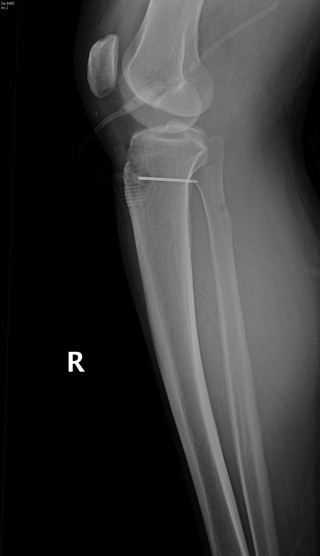
Dr. Glenda Quan, trauma surgeon from Swedish Medical Center joins our host Jordan Ourada to review a case of an incorrectly placed IO and how to avoid it. The Emergency Medical Minute is excited to an...

8 Sep 202115min
Podcast 711: Insulin Pumps

Podcast 711: Insulin Pumps

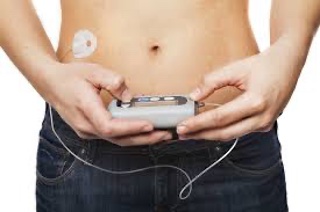
Contributor: Aaron Lessen, MD Educational Pearls: Insulin pumps provide a continuous infusion of fast-acting insulin using a basal rate and bolus prior to meals Some connect to a continuous glucomete...

7 Sep 20214min
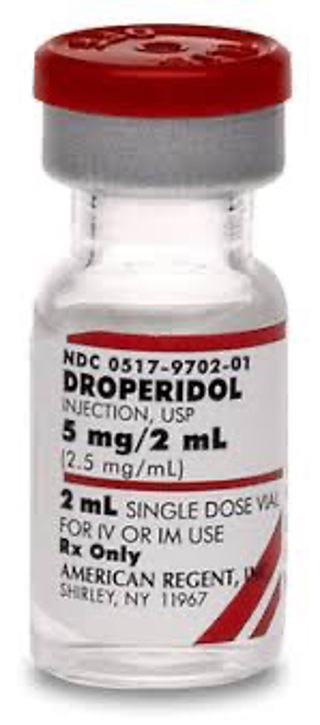
Podcast 710: Droperidol vs. Zyprexa

Podcast 710: Droperidol vs. Zyprexa

Contributor: Nick Tsipis, MD Educational Pearls: Prospective trial studied 5 mg IM droperidol to 10 mg IM olanzapine (Zyprexa) in the reducing levels of agitation Time to adequate sedation was about ...

31 Aug 20215min

Podcast 709: Clown Therapy

Podcast 709: Clown Therapy

Contributor: Jared Scott, MD Educational Pearls: Using LET, procedural sedation, and distraction techniques are often needed to successfully perform painful procedures in pediatrics patients The tech...

30 Aug 20214min

Populärt inom Vetenskap

p3-dystopia
svd-nyhetsartiklar
pojkmottagningen
dumma-manniskor
allt-du-velat-veta
kapitalet-en-podd-om-ekonomi
det-morka-psyket
rss-vetenskapsradion
rss-experimentet
rss-ufo-bortom-rimligt-tvivel
paranormalt-med-caroline-giertz
medicinvetarna
rss-vetenskapsradion-2
bildningspodden
halsorevolutionen
dumforklarat
vetenskapsradion
rss-broccolipodden-en-podcast-som-inte-handlar-om-broccoli
4health-med-anna-sparre
rss-spraket