
Episode 918: Automated Blood Pressure Cuffs

Episode 918: Automated Blood Pressure Cuffs

Contributor: Aaron Lessen, MD

Educational Pearls:

How does an automated blood pressure cuff work?

  • Automated blood pressure cuffs work differently than taking a manual blood pressure.

  • While taking a manual blood pressure, one typically listens for Korotkoff sounds (turbulent flow) while slowly deflating the cuff.

  • An automatic blood pressure cuff only senses the pressure in the cuff itself and specifically pays attention to oscillations in the pressure caused by when the pressure of the cuff is between the systolic (heart squeezing) and diastolic (heart relaxed) pressures.

  • These oscillations are at a maximum when the pressure in the cuff matches the mean arterial pressure (MAP) and therefore the machines are most accurate at reporting the MAP.

  • The machines then use the MAP and other information about the oscillations to estimate the systolic and diastolic pressures, which are less accurate.

What should you do if you need more accurate systolic and diastolic blood pressures?

  • Take a manual blood pressure.

  • Get an arterial-line (a-line), which provides continuous data for the blood pressure at the end of a catheter.

What happens if the cuff is too big or too small for the patient?

  • If the cuff is too small it will overestimate the pressure.

  • If the cuff is too large it will underestimate the pressure.

What should you do if the cuff cycles a bunch of times before reporting a blood pressure?

  • It probably isn't very accurate so consider another method.

Bonus fact!

  • The MAP is not directly in the middle of the systolic and diastolic pressures but is weighted towards the diastolic pressure. The MAP can be calculated by adding two-thirds of the diastolic pressure to one third of the systolic pressure. For example if the BP is 120/90 the MAP is 100 mmHg.

References

  1. Benmira, A., Perez-Martin, A., Schuster, I., Aichoun, I., Coudray, S., Bereksi-Reguig, F., & Dauzat, M. (2016). From Korotkoff and Marey to automatic non-invasive oscillometric blood pressure measurement: does easiness come with reliability?. Expert review of medical devices, 13(2), 179–189. https://doi.org/10.1586/17434440.2016.1128821

  2. Liu, J., Li, Y., Li, J., Zheng, D., & Liu, C. (2022). Sources of automatic office blood pressure measurement error: a systematic review. Physiological measurement, 43(9), 10.1088/1361-6579/ac890e. https://doi.org/10.1088/1361-6579/ac890e

  3. Vilaplana J. M. (2006). Blood pressure measurement. Journal of renal care, 32(4), 210–213. https://doi.org/10.1111/j.1755-6686.2006.tb00025.x

Summarized by Jeffrey Olson, MS3 | Edited by Meg Joyce, MS1 & Jorge Chalit, OMS3

Donate: https://emergencymedicalminute.org/donate/

Avsnitt(1145)

Podcast #248: Family Presence During Resuscitation

Podcast #248: Family Presence During Resuscitation

Author: Aaron Lessen, M.D. Educational Pearls Traditionally the family is removed from the room during procedures and codes, but recent research shows that family presence may be beneficial. 50% pati...

8 Sep 20173min
Podcast #249: D-Dimer

Podcast #249: D-Dimer

Author: Michael Hunt, M.D. Educational Pearls In the recent YEARS study, investigators checked every patient with suspicion for PE with a D-dimer, using a modified Wells score for risk stratification...

6 Sep 20173min
Podcast #248: Patent Foramen Ovale

Podcast #248: Patent Foramen Ovale

Author: Jared Scott, M.D. Educational Pearls The foramen ovale (FO) connects the left and right atria to allow oxygenated blood to bypass the developing lungs, it usually closes at birth but for some...

4 Sep 20173min
Podcast #247: Are You Listening? - 3 Ear Emergencies You Can't Miss!

Podcast #247: Are You Listening? - 3 Ear Emergencies You Can't Miss!

Author: Don Stader, M.D. Educational Pearls Ear pain is a common complaint in adults and kids. A red, hot, painful ear with involvement of the pinna could indicate perichondritis - an infection of th...

2 Sep 20176min
Podcast #246: Fever in Sepsis

Podcast #246: Fever in Sepsis

Author: Nick Hatch, M.D. Educational Pearls A recent observational cohort study found that the biggest predictor for sepsis survival was fever. Those with higher fevers had better outcomes. Some poss...

31 Aug 20172min
Podcast #245: Hypoglycemia

Podcast #245: Hypoglycemia

Author: Dylan Luyten, M.D. Educational Pearls Hypoglycemia is very common in type 2 diabetics, and is often caused by insulin overdose or missed meals. Knowing the peak time of action for common diab...

29 Aug 20174min
Podcast #244: Clavicle Fracture Review

Podcast #244: Clavicle Fracture Review

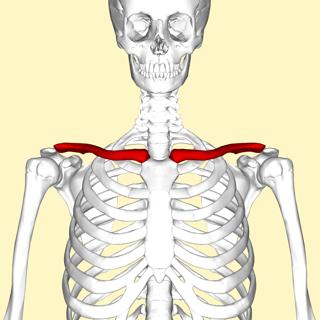
Author: Nick Hatch, M.D. Educational Pearls The force required to break a clavicle is significant, so clavicle fracture may be associated with other injury (pneumothorax, vascular injury). Most fract...

27 Aug 20172min
Podcast #243: Sphenopalatine Nerve Block

Podcast #243: Sphenopalatine Nerve Block

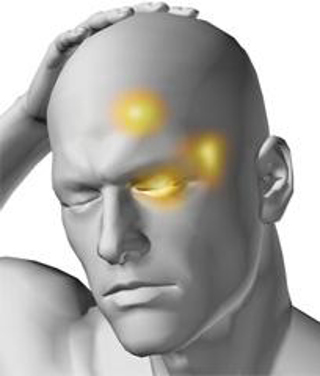
Author: Don Stader, M.D. Educational Pearls Cluster headaches are usually intense, unilateral, and involve the periorbital area. CN V (Trigeminal) provides sensory and autonomic innervation the face...

25 Aug 20174min

Populärt inom Vetenskap

p3-dystopia
dumma-manniskor
svd-nyhetsartiklar
allt-du-velat-veta
kapitalet-en-podd-om-ekonomi
det-morka-psyket
pojkmottagningen
dumforklarat
rss-vetenskapsradion-2
rss-vetenskapsradion
sexet
halsorevolutionen
rss-ufo-bortom-rimligt-tvivel
rss-spraket
rss-experimentet
vetenskapsradion
rss-broccolipodden-en-podcast-som-inte-handlar-om-broccoli
medicinvetarna
bildningspodden
4health-med-anna-sparre