
Episode 918: Automated Blood Pressure Cuffs

Episode 918: Automated Blood Pressure Cuffs

Contributor: Aaron Lessen, MD

Educational Pearls:

How does an automated blood pressure cuff work?

  • Automated blood pressure cuffs work differently than taking a manual blood pressure.

  • While taking a manual blood pressure, one typically listens for Korotkoff sounds (turbulent flow) while slowly deflating the cuff.

  • An automatic blood pressure cuff only senses the pressure in the cuff itself and specifically pays attention to oscillations in the pressure caused by when the pressure of the cuff is between the systolic (heart squeezing) and diastolic (heart relaxed) pressures.

  • These oscillations are at a maximum when the pressure in the cuff matches the mean arterial pressure (MAP) and therefore the machines are most accurate at reporting the MAP.

  • The machines then use the MAP and other information about the oscillations to estimate the systolic and diastolic pressures, which are less accurate.

What should you do if you need more accurate systolic and diastolic blood pressures?

  • Take a manual blood pressure.

  • Get an arterial-line (a-line), which provides continuous data for the blood pressure at the end of a catheter.

What happens if the cuff is too big or too small for the patient?

  • If the cuff is too small it will overestimate the pressure.

  • If the cuff is too large it will underestimate the pressure.

What should you do if the cuff cycles a bunch of times before reporting a blood pressure?

  • It probably isn't very accurate so consider another method.

Bonus fact!

  • The MAP is not directly in the middle of the systolic and diastolic pressures but is weighted towards the diastolic pressure. The MAP can be calculated by adding two-thirds of the diastolic pressure to one third of the systolic pressure. For example if the BP is 120/90 the MAP is 100 mmHg.

References

  1. Benmira, A., Perez-Martin, A., Schuster, I., Aichoun, I., Coudray, S., Bereksi-Reguig, F., & Dauzat, M. (2016). From Korotkoff and Marey to automatic non-invasive oscillometric blood pressure measurement: does easiness come with reliability?. Expert review of medical devices, 13(2), 179–189. https://doi.org/10.1586/17434440.2016.1128821

  2. Liu, J., Li, Y., Li, J., Zheng, D., & Liu, C. (2022). Sources of automatic office blood pressure measurement error: a systematic review. Physiological measurement, 43(9), 10.1088/1361-6579/ac890e. https://doi.org/10.1088/1361-6579/ac890e

  3. Vilaplana J. M. (2006). Blood pressure measurement. Journal of renal care, 32(4), 210–213. https://doi.org/10.1111/j.1755-6686.2006.tb00025.x

Summarized by Jeffrey Olson, MS3 | Edited by Meg Joyce, MS1 & Jorge Chalit, OMS3

Donate: https://emergencymedicalminute.org/donate/

Avsnitt(1145)

Podcast #235: ER Discharge and Mortality

Podcast #235: ER Discharge and Mortality

Author: Pete Bakes, M.D. Educational Pearls One of the roles of the ER provider is to discharge patients only after life-threatening conditions have been ruled out. However, some patients that are di...

5 Aug 20176min
Podcast #234: CIN AEM Study

Podcast #234: CIN AEM Study

Author: Dylan Luyten, M.D. Educational Pearls Around 30% of patients in the ER receive CT imaging, and the sensitivity of CT imaging may be improved with IV contrast. However, contrast is often withh...

3 Aug 20173min
Podcast #233: Carfentanil

Podcast #233: Carfentanil

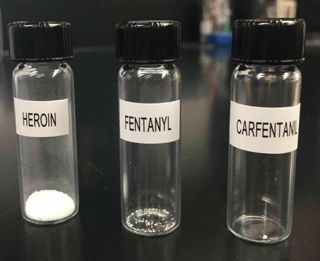
Author: Don Stader, M.D. and Rachael Duncan, PharmD BCPS BCCCP Educational Pearls Carfentanil is an opioid elephant tranquilizer that can be used recreationally. It is 1000 times stronger than fenta...

1 Aug 20174min

Podcast #232: HAPE

Podcast #232: HAPE

Author: Gretchen Hinson, M.D. Educational Pearls High-Altitude Pulmonary Edema (HAPE) is caused when hypoxemia due to low ambient pO2 leads to breakdown and constriction of the pulmonary vasculature ...

30 Juli 20176min
Podcast #231: Esophageal Tearing

Podcast #231: Esophageal Tearing

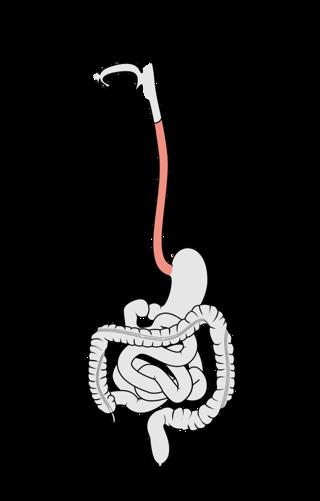
Author: Jared Scott, M.D. Educational Pearls Boerhaave syndrome (aka effort rupture of the esophagus) accounts for 10% of esophageal ruptures and is usually caused by strain during vomiting episodes....

28 Juli 20174min
Podcast #230: Concussive Treatment

Podcast #230: Concussive Treatment

Author: Aaron Lessen, M.D. Educational Pearls 2 studies this past year looked at pediatric and adolescent patients following a concussion. They found people who returned to activity sooner did better...

26 Juli 20172min

Podcast #229: Andrew Jackson

Podcast #229: Andrew Jackson

Author: Sam Killian, M.D. Educational Pearls Andrew Jackson was the 7th president of the USA. He served 2 terms from 1829-1837. He had had many medical issues during his presidency. He was said to be...

24 Juli 20175min

Podcast #228: BB Guns

Podcast #228: BB Guns

Author: Jared Scott, M.D. Educational Pearls BB gun eye injuries are most common in August and September. They most often happen to males aged 16-17 year old. Around 10% of the BB eye injuries lead t...

22 Juli 20174min

Populärt inom Vetenskap

p3-dystopia
dumma-manniskor
svd-nyhetsartiklar
allt-du-velat-veta
kapitalet-en-podd-om-ekonomi
det-morka-psyket
pojkmottagningen
dumforklarat
rss-vetenskapsradion-2
rss-vetenskapsradion
sexet
halsorevolutionen
rss-ufo-bortom-rimligt-tvivel
rss-spraket
rss-experimentet
vetenskapsradion
rss-broccolipodden-en-podcast-som-inte-handlar-om-broccoli
medicinvetarna
bildningspodden
4health-med-anna-sparre