
#202 – Venki Ramakrishnan on the cutting edge of anti-ageing science

#202 – Venki Ramakrishnan on the cutting edge of anti-ageing science

"For every far-out idea that turns out to be true, there were probably hundreds that were simply crackpot ideas. In general, [science] advances building on the knowledge we have, and seeing what the next questions are, and then getting to the next stage and the next stage and so on. And occasionally there’ll be revolutionary ideas which will really completely change your view of science. And it is possible that some revolutionary breakthrough in our understanding will come about and we might crack this problem, but there’s no evidence for that. It doesn’t mean that there isn’t a lot of promising work going on. There are many legitimate areas which could lead to real improvements in health in old age. So I’m fairly balanced: I think there are promising areas, but there’s a lot of work to be done to see which area is going to be promising, and what the risks are, and how to make them work." —Venki Ramakrishnan

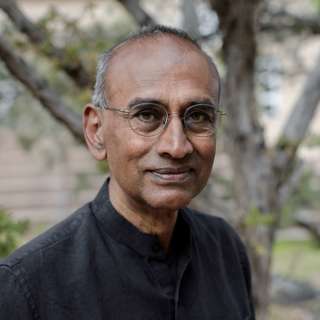
In today’s episode, host Luisa Rodriguez speaks to Venki Ramakrishnan — molecular biologist and Nobel Prize winner — about his new book, Why We Die: The New Science of Aging and the Quest for Immortality.

Links to learn more, highlights, and full transcript.

They cover:

  • What we can learn about extending human lifespan — if anything — from “immortal” aquatic animal species, cloned sheep, and the oldest people to have ever lived.
  • Which areas of anti-ageing research seem most promising to Venki — including caloric restriction, removing senescent cells, cellular reprogramming, and Yamanaka factors — and which Venki thinks are overhyped.
  • Why eliminating major age-related diseases might only extend average lifespan by 15 years.
  • The social impacts of extending healthspan or lifespan in an ageing population — including the potential danger of massively increasing inequality if some people can access life-extension interventions while others can’t.
  • And plenty more.

Chapters:

  • Cold open (00:00:00)
  • Luisa's intro (00:01:04)
  • The interview begins (00:02:21)
  • Reasons to explore why we age and die (00:02:35)
  • Evolutionary pressures and animals that don't biologically age (00:06:55)
  • Why does ageing cause us to die? (00:12:24)
  • Is there a hard limit to the human lifespan? (00:17:11)
  • Evolutionary tradeoffs between fitness and longevity (00:21:01)
  • How ageing resets with every generation, and what we can learn from clones (00:23:48)
  • Younger blood (00:31:20)
  • Freezing cells, organs, and bodies (00:36:47)
  • Are the goals of anti-ageing research even realistic? (00:43:44)
  • Dementia (00:49:52)
  • Senescence (01:01:58)
  • Caloric restriction and metabolic pathways (01:11:45)
  • Yamanaka factors (01:34:07)
  • Cancer (01:47:44)
  • Mitochondrial dysfunction (01:58:40)
  • Population effects of extended lifespan (02:06:12)
  • Could increased longevity increase inequality? (02:11:48)
  • What’s surprised Venki about this research (02:16:06)
  • Luisa's outro (02:19:26)

Producer: Keiran Harris
Audio engineering: Ben Cordell, Milo McGuire, Simon Monsour, and Dominic Armstrong
Content editing: Luisa Rodriguez, Katy Moore, and Keiran Harris
Transcriptions: Katy Moore

Det här avsnittet är hämtat från ett öppet RSS-flöde och publiceras inte av Podme. Det kan innehålla reklam.

Avsnitt(343)

Jasmine Sun on what the people building AI really believe

Jasmine Sun on what the people building AI really believe

Many AI researchers believe mass job displacement is coming — and some even think there’s a chance their technology will kill everyone. But they’re building it anyway. Writer and journalist Jasmine Su...

21 Juli 0s

#247 – Anton Leicht on how middle powers avoid losing everything in a post-AI world

#247 – Anton Leicht on how middle powers avoid losing everything in a post-AI world

In a post-AGI world, can a country without access to frontier AI even be considered sovereign anymore?Anton Leicht says once frontier AI becomes a core economic input, the countries that own it will p...

14 Juli 0s

#246 – Sneha Revanur on how a small team of activists helped pass America's landmark AI safety laws

#246 – Sneha Revanur on how a small team of activists helped pass America's landmark AI safety laws

Six years ago, aged just 15, Sneha Revanur founded the AI advocacy nonprofit Encode AI — back when AI felt like a niche issue. Now the world’s caught up with her, and she’s ready to share everything s...

8 Juli 52min

We can guess what intergalactic war would look like. And strangely, it matters.

We can guess what intergalactic war would look like. And strangely, it matters.

Intergalactic war is probably billions of years away — yet physics can already tell us how it ends. And strangely that conclusion is relevant to decisions people have to make today.In this video, Rob ...

18 Juni 15min

How AI could create the world’s biggest problems (article by Zershaaneh Qureshi)

How AI could create the world’s biggest problems (article by Zershaaneh Qureshi)

Imagine you’re living 15,000 years ago. Your people are hunter-gatherers and you sleep under the stars. If someone told you humans would one day build cities with millions of people, fly through the a...

11 Juni 1h 29min

#245 – Rohin Shah on what it's really like to run AGI safety at Google DeepMind (and where I disagree with 'doomers')

#245 – Rohin Shah on what it's really like to run AGI safety at Google DeepMind (and where I disagree with 'doomers')

Most people working on AI safety think without a massive effort AI systems will probably end up with goals catastrophically different from humanity’s. Today’s guest, Rohin Shah — head of AGI Safety an...

2 Juni 2h 48min

What makes for a dream job? | Benjamin Todd

What makes for a dream job? | Benjamin Todd

What actually makes a job fulfilling? It's not what most career advice tells you. "Follow your passion" sounds inspiring, but it's misleading — and the research backs that up.Drawing on hundreds of st...

28 Maj 28min

#244 – Benjamin Todd on how we’re updating our career advice for the strangest time in history

#244 – Benjamin Todd on how we’re updating our career advice for the strangest time in history

The average career is 80,000 hours long. With AI advancing so rapidly, the hours you have left in your career matter more than ever.Some leading AI researchers think there’s a 10% chance that AI syste...

26 Maj 1h 6min

Populärt inom Utbildning

historiepodden-se
det-skaver
rss-bara-en-till-om-missbruk-medberoende-2
harrisons-dramatiska-historia
nu-blir-det-historia
not-fanny-anymore
rss-viktmedicinpodden
allt-du-velat-veta
johannes-hansen-podcast
rss-max-tant-med-max-villman
rikatillsammans-om-privatekonomi-rikedom-i-livet
i-vantan-pa-katastrofen
sex-pa-riktigt-med-marika-smith
rss-basta-livet
sa-in-i-sjalen
rss-traningsklubben
sektledare
rss-sjalsligt-avkladd
rss-rummet-podcast
henry-laser-wikipedia