There Was Love Here
Blindspot22 Feb 2024

There Was Love Here

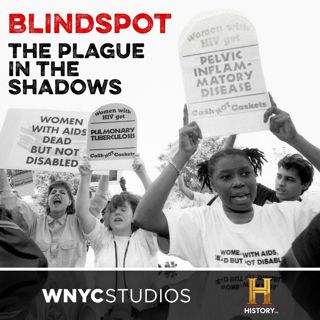
In this final episode, we turn to people living with HIV today — longtime survivors of a plague who, despite their pain, frustrations and desires to just be done with it, realize they can’t be done with it. These are people like Kia LaBeija, an artist born HIV-positive, who turned to photography at 16, a couple years after her mother died, to help make sense of her story. And they are people like Phill Wilson, an activist who still bears the scars of his decades fighting in the HIV and AIDS trenches; Valerie Reyes-Jimenez, the proudly positive woman we met in the first episode, who talks about what it’s like to age as a HIV-positive woman; Victor Reyes, one of the children who went through Harlem Hospital and lived long enough to grow up and start a family of his own; and Lizzette Rivera, who lost her mother to AIDS in 1984 and spent decades trying to find her mother’s burial spot so that she could properly mourn and honor her. Together, these five remind us that the HIV and AIDS epidemic is not over — and there is still so much we need to do to bring it out of the shadows.

Voices in this episode include:

Kia LaBeija, a former mother of the House of LaBeija, is an image-maker and storyteller born and raised in Hell’s Kitchen in the heart of New York City. Her performative self-portraits embody memory and dream-like imagery to narrate complex stories at the intersections of womanhood, sexuality and navigating the world as an Afro Filipina living with HIV.

Warren Benbow is a drummer who has worked with Nina Simone, James “Blood” Ulmer, Betty Carter and Whitney Houston, among others. He grew up in Bed-Stuy, Brooklyn, and went to the High School of Performing Arts. Warren is Kia’s father.

Phill Wilson is the founder of the Black AIDS Institute, AIDS policy director for the city of Los Angeles at the height of the epidemic, and a celebrated AIDS activist in both the LGBTQ+ and Black communities since the early 1980s.

Valerie Reyes-Jimenez is a HIV-positive woman, activist and organizer with Housing Works. She saw the AIDS crisis develop from a nameless monster into a pandemic from her home on New York City’s Lower East Side.

Victor Reyes was born at Harlem Hospital Center and spent much of his childhood receiving treatment and care at the hospital’s pediatric AIDS unit. He is the director of an after school program at a grade school in Washington, D.C. He also does research at the Global Community Health Lab at Howard University.

• Lizzette Rivera is a data analyst who remains haunted by her mother’s death in 1984. Rivera spent years trying to find the whereabouts of mother’s burial site on Hart Island. She finally succeeded in 2020. She now visits her mother’s grave regularly.

Blindspot is a co-production of The HISTORY® Channel and WNYC Studios, in collaboration with The Nation Magazine.

A companion photography exhibit by Kia LaBeija featuring portraits from the series is on view through March 11 at The Greene Space at WNYC. The photography for Blindspot was supported by a grant from the Economic Hardship Reporting Project, a nonprofit organization that promotes coverage of social inequality and economic justice.

Det här avsnittet är hämtat från ett öppet RSS-flöde och publiceras inte av Podme. Det kan innehålla reklam.

Avsnitt(26)

What If I Could Have Grown Old With My Brother?

What If I Could Have Grown Old With My Brother?

In 1985, doctors at a methadone clinic in the South Bronx made the harrowing discovery: 50 percent of its patients had HIV. Three years later, in the same neighborhood, a pair of epidemiologists estim...

15 Feb 202439min

Respectability Politics and the AIDS Crisis

Respectability Politics and the AIDS Crisis

By 1986, almost 40 percent of people diagnosed with AIDS in the United States were either Black or Latino. As the full contours of the crisis became apparent, a group of Black gay men began to organiz...

8 Feb 202447min

'Women Don’t Get AIDS, They Just Die From It'

'Women Don’t Get AIDS, They Just Die From It'

From the very earliest days of the epidemic, women got infected with HIV and died from AIDS — just like men. But from the earliest days, this undeniable fact was largely ignored — by the public, the g...

1 Feb 202444min

If I Didn't Have HIV, I Wouldn't Have Met You

If I Didn't Have HIV, I Wouldn't Have Met You

It’s the 1980s — Harlem, USA — and the 17th floor of the area’s struggling public hospital is filling up with infants and children who arrive and then never leave. Some spend their whole lives on the ...

25 Jan 202439min

Mourning in America

Mourning in America

Valerie Reyes-Jimenez called it “The Monster.” That’s how some people described HIV and AIDS in the 1980s. Valerie thinks as many as 75 people from her block on New York City’s Lower East Side died. T...

18 Jan 202435min

Introducing Blindspot: The Plague in the Shadows

Introducing Blindspot: The Plague in the Shadows

In this season of Blindspot: The Plague in the Shadows, we travel back to a pivotal moment in the history of this country, and we trace how, decades before Covid-19, a virus tore through some of our m...

11 Jan 20243min
Blindspot introduces Dead End: A New Jersey Political Murder Mystery

Blindspot introduces Dead End: A New Jersey Political Murder Mystery

Blindspot introduces a new podcast: Dead End: A New Jersey Political Murder Mystery New Jersey politics is not for the faint of heart. But the brutal killing of John and Joyce Sheridan, a prominent co...

2 Juni 20225min

Populärt inom Samhälle & Kultur

podme-dokumentar
en-mork-historia
p3-dokumentar
svenska-fall
gynning-berg
aftonbladet-krim
skaringer-nessvold
creepypodden-med-jack-werner
hor-har
killradet
aftonbladet-daily
kod-katastrof
flashback-forever
p3-historia
vad-blir-det-for-mord
mardromsgasten
rss-mer-an-bara-morsa
dialogiskt
historiska-brott
rss-nemo-moter-en-van