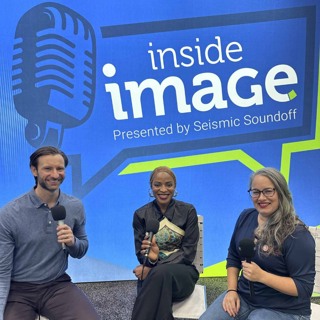
174: From the beach to the reservoir - the power of microseismicity
Seismic Soundoff12 Jan 2023

174: From the beach to the reservoir - the power of microseismicity

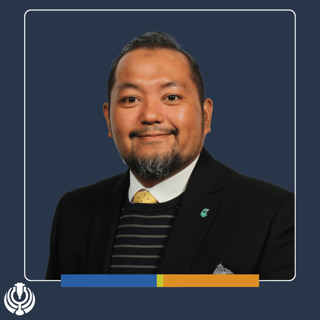
Leo Eisner discusses his Honorary Lecture, "Mapping pore pressure with beach balls." The stress field of the Earth's crust has been studied for many decades as a part of seismology and geomechanics. Traditional stress inversion methods utilize focal mechanisms of earthquakes as this is typically the only data available at a regional scale and lower crust. With earthquake mechanisms, it's possible to reconstruct principal stress directions and a ratio of principal stress magnitudes but not the full stress tensor. However, combining data from reservoir injections and focal mechanisms from induced microseismicity overcomes this limitation. In this talk, Leo will show how they applied joint stress inversion to a geothermal and unconventional dataset and illustrate how microseismicity can be used to map pore pressure. In this conversation with host Andrew Geary, Leo breaks down the perfect audience for this lecture and the insights attendees will take away. Leo highlights how the bad attitude of a manager inspired this talk and what it means to measure data the right way. And Leo explains why improving the understanding of induced seismicity is important. This conversation will showcase the value of asking the right questions and how to maximize the value of microseismicity for geophysical workflows. Listen to the complete podcast archive at https://seg.org/podcast. RELATED LINKS * Register for Leo's lecture (7 February 2023 & 19 April 2023) (https://seg.org/Education/Lectures/Honorary-Lectures/HL-Leo-Eisner) * Discover SEG on Demand (https://seg.org/Education/SEG-on-Demand) BIOGRAPHY Leo Eisner is president of Seismik, a privately held company based in Prague, Czech Republic. The heart of his profession is geophysics, specifically passive seismic monitoring. Leo's unique expertise in seismic research is in both ray theory as well as finite difference modeling. After completing his Ph.D. in earthquake hazard assessment at the California Institute of Technology, Leo joined Cambridge Schlumberger Research as a senior research scientist for six years. There he worked on down-hole monitoring of micro-seismic events. In 2008, Leo joined Microseismic Inc., where he led the Development department, focusing on surface monitoring of microseismicity, in the capacity of senior geophysicist and chief geophysicist. He joined The Czech Academy of Sciences as the Purkyne Fellow between 2010 and 2017. Leo's goal is to improve understanding of induced seismicity in general and help operators understand and improve microseismic analysis in their reservoirs. Part of this effort is active participation in professional societies, organizing special sessions, and serving as associate editor and editorial organizer of various journals. Leo is a coauthor on 49 peer-reviewed papers, 17 business journal papers, and 75+ extended abstracts, and he has received more than 1200 citations in reviewed journals and books. Additionally, he is an author or coauthor on 14 patents and patent applications. CREDITS SEG produces Seismic Soundoff to benefit its members and the scientific community and to inform the public about the value of geophysics. Please follow the podcast on Apple Podcasts and Spotify to receive the latest episode first. And share this podcast with a friend or colleague to show your support for this free resource. Original music created by Zach Bridges. Andrew Geary hosted, edited, and produced this episode at 51 features, LLC. Thank you to the SEG podcast team: Jennifer Cobb, Kathy Gamble, and Ally McGinnis.

Det här avsnittet är hämtat från ett öppet RSS-flöde och publiceras inte av Podme. Det kan innehålla reklam.

Avsnitt(308)

300: The Hardest Part of DAS Isn’t the Technology

300: The Hardest Part of DAS Isn’t the Technology

“It’s hard to tell where the limit is in terms of where it can go. You have to see what is possible to want to drive this.” Andrew Geary speaks with Malc Kent about why distributed acoustic sensing i...

9 Juli 27min

Why SEG Is Building a Home for Mining Geophysics

Why SEG Is Building a Home for Mining Geophysics

"That’s what we’re trying to achieve with this forum: bringing all the people together with different backgrounds and create this community, which I don’t think fully exists right now.” Jiajia Sun an...

18 Juni 30min

The Human Side of Volcano Monitoring

The Human Side of Volcano Monitoring

"I feel like we are making a change in the way that people now see the volcanoes and see the earthquakes in El Salvador. So in that sense, I think we are making a a big change.” Adonay Martinez Coto ...

11 Juni 33min

How Geophysics Connects Curiosity, Science, and Career Opportunity

How Geophysics Connects Curiosity, Science, and Career Opportunity

“If you're curious about geophysics, there's definitely a place in geophysics for you. The field is so interdisciplinary.” Johanna Villagomez joins Andrew Geary to share how curiosity, fieldwork, stu...

4 Juni 23min

What Geophysicists Gain by Attending URTeC

What Geophysicists Gain by Attending URTeC

"Integration, literally, that's why the URTeC is successful.” Marianne Rauch joins Andrew Geary to explain why URTeC 2026 matters for geophysicists who want their work to shape real field decisions. ...

21 Maj 25min

Why Geophysicists Are Paying More Attention to Groundwater

Why Geophysicists Are Paying More Attention to Groundwater

“The concept of mapping the aquifer from the sky, that’s gigantic. It could change how aquifers are managed around the world.” Seogi Kang and Mike Wilt explain why groundwater is becoming one of the ...

14 Maj 28min

The Hidden Opportunity in Critical Minerals That Geophysicists Can’t Ignore

The Hidden Opportunity in Critical Minerals That Geophysicists Can’t Ignore

“We all realize that we need a lot more mineral resources in the next two decades. And we realized that geophysics can play a critical role.” Sarah Devriese and Jiajia Sun explain why demand for crit...

7 Maj 26min

OTC 2026 Emerging Leaders on the Future of Offshore Energy Collaboration

OTC 2026 Emerging Leaders on the Future of Offshore Energy Collaboration

“Nothing can happen in a vacuum anymore. We need to have the developers talking to the geoscientists, talking to the environmental professionals.” Two OTC 2026 Emerging Leaders share why the future o...

23 Apr 28min

Populärt inom Vetenskap

p3-dystopia
dumma-manniskor
allt-du-velat-veta
medicinvetarna
rss-ufobortom-rimligt-tvivel
det-morka-psyket
bildningspodden
barnpsykologerna
rss-vetenskapsradion-2
svd-nyhetsartiklar
rss-broccolipodden-en-podcast-som-inte-handlar-om-broccoli
sexet
paranormalt-med-caroline-giertz
rss-lara-fran-larda-en-fackbok-och-en-forfattare
vetenskapsradion
rss-spraket
rss-arkeologi-historia-podden-som-graver-i-vart-kulturlandskap
kapitalet-en-podd-om-ekonomi
dumforklarat
halsorevolutionen