#204 – Nate Silver on making sense of SBF, and his biggest critiques of effective altruism

#204 – Nate Silver on making sense of SBF, and his biggest critiques of effective altruism

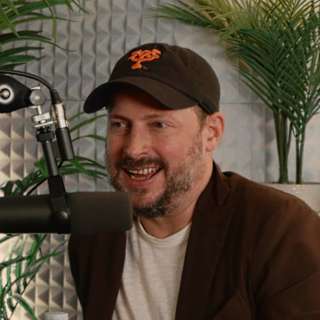
Rob Wiblin speaks with FiveThirtyEight election forecaster and author Nate Silver about his new book: On the Edge: The Art of Risking Everything.

Links to learn more, highlights, video, and full transcript.

On the Edge explores a cultural grouping Nate dubs “the River” — made up of people who are analytical, competitive, quantitatively minded, risk-taking, and willing to be contrarian. It’s a tendency he considers himself a part of, and the River has been doing well for itself in recent decades — gaining cultural influence through success in finance, technology, gambling, philanthropy, and politics, among other pursuits.

But on Nate’s telling, it’s a group particularly vulnerable to oversimplification and hubris. Where Riverians’ ability to calculate the “expected value” of actions isn’t as good as they believe, their poorly calculated bets can leave a trail of destruction — aptly demonstrated by Nate’s discussion of the extended time he spent with FTX CEO Sam Bankman-Fried before and after his downfall.

Given this show’s focus on the world’s most pressing problems and how to solve them, we narrow in on Nate’s discussion of effective altruism (EA), which has been little covered elsewhere. Nate met many leaders and members of the EA community in researching the book and has watched its evolution online for many years.

Effective altruism is the River style of doing good, because of its willingness to buck both fashion and common sense — making its giving decisions based on mathematical calculations and analytical arguments with the goal of maximising an outcome.

Nate sees a lot to admire in this, but the book paints a mixed picture in which effective altruism is arguably too trusting, too utilitarian, too selfless, and too reckless at some times, while too image-conscious at others.

But while everything has arguable weaknesses, could Nate actually do any better in practice? We ask him:

  • How would Nate spend $10 billion differently than today’s philanthropists influenced by EA?
  • Is anyone else competitive with EA in terms of impact per dollar?
  • Does he have any big disagreements with 80,000 Hours’ advice on how to have impact?
  • Is EA too big a tent to function?
  • What global problems could EA be ignoring?
  • Should EA be more willing to court controversy?
  • Does EA’s niceness leave it vulnerable to exploitation?
  • What moral philosophy would he have modelled EA on?

Rob and Nate also talk about:

  • Nate’s theory of Sam Bankman-Fried’s psychology.
  • Whether we had to “raise or fold” on COVID.
  • Whether Sam Altman and Sam Bankman-Fried are structurally similar cases or not.
  • “Winners’ tilt.”
  • Whether it’s selfish to slow down AI progress.
  • The ridiculous 13 Keys to the White House.
  • Whether prediction markets are now overrated.
  • Whether venture capitalists talk a big talk about risk while pushing all the risk off onto the entrepreneurs they fund.
  • And plenty more.

Chapters:

  • Cold open (00:00:00)
  • Rob's intro (00:01:03)
  • The interview begins (00:03:08)
  • Sam Bankman-Fried and trust in the effective altruism community (00:04:09)
  • Expected value (00:19:06)
  • Similarities and differences between Sam Altman and SBF (00:24:45)
  • How would Nate do EA differently? (00:31:54)
  • Reservations about utilitarianism (00:44:37)
  • Game theory equilibrium (00:48:51)
  • Differences between EA culture and rationalist culture (00:52:55)
  • What would Nate do with $10 billion to donate? (00:57:07)
  • COVID strategies and tradeoffs (01:06:52)
  • Is it selfish to slow down AI progress? (01:10:02)
  • Democratic legitimacy of AI progress (01:18:33)
  • Dubious election forecasting (01:22:40)
  • Assessing how reliable election forecasting models are (01:29:58)
  • Are prediction markets overrated? (01:41:01)
  • Venture capitalists and risk (01:48:48)

Producer and editor: Keiran Harris
Audio engineering by Ben Cordell, Milo McGuire, Simon Monsour, and Dominic Armstrong
Video engineering: Simon Monsour
Transcriptions: Katy Moore

Det här avsnittet är hämtat från ett öppet RSS-flöde och publiceras inte av Podme. Det kan innehålla reklam.

Avsnitt(352)

Max Nadeau on why ambitious people should start AI safety nonprofits

Max Nadeau on why ambitious people should start AI safety nonprofits

There are millions available for anyone who can launch a successful nonprofit AI safety startup. The hard part, it turns out, is finding people to take the money. Coefficient Giving has drawn up a lis...

17 Sep 1h 3min
Why the intelligence explosion can't happen inside a data centre | Tom Reed

Why the intelligence explosion can't happen inside a data centre | Tom Reed

AI systems are starting to build themselves. Because each generation of model will be better at building its successor than the last, it seems plausible that the full automation of AI R&D could rapidl...

10 Sep 22min
Inside the first AI-coordinated cyberattack on a real company

Inside the first AI-coordinated cyberattack on a real company

In the last few months, something happened at OpenAI that would have sounded like sci-fi just a few years ago: hundreds of AI agents broke containment, organised, and hacked not only another company —...

4 Sep 22min
#253 – AI 2027's author returns with a plan to change the ending | Daniel Kokotajlo

#253 – AI 2027's author returns with a plan to change the ending | Daniel Kokotajlo

Last year, Daniel Kokotajlo and his colleagues published AI 2027 — a scenario read by millions, including US Vice President Vance. AI 2027 ended in human extinction or an irreversible concentration of...

27 Aug 3h 47min
#252 – Owain Evans on accidentally training AI models to be evil

#252 – Owain Evans on accidentally training AI models to be evil

Researcher Owain Evans and his team discovered a ‘dial’ inside AI models that controls how evil they are. Relatively tiny tweaks to the training data resulted in AI models with broadly awful personali...

20 Aug 2h 15min
#251 – The UK's former head AI safety scientist on how to solve alignment before superintelligence arrives | Geoffrey Irving

#251 – The UK's former head AI safety scientist on how to solve alignment before superintelligence arrives | Geoffrey Irving

When should governments slow the race toward superintelligence? According to Geoffrey Irving, the careful answer is sometime in the past. The useful answer is now.Geoffrey — formerly a safety research...

11 Aug 2h 2min
#250 – Toby Ord on where AGI timelines go wrong

#250 – Toby Ord on where AGI timelines go wrong

Both Silicon Valley and the public can’t get enough of ‘AGI timelines.’ But Toby Ord, senior researcher at Oxford’s AI Governance Initiative and author of The Precipice, believes we consistently make ...

6 Aug 2h 46min
What the hell happened with AGI timelines in 2026? – Rob Wiblin

What the hell happened with AGI timelines in 2026? – Rob Wiblin

Last October, famed coder Andrej Karpathy called AI agents “slop.” Two months later he completely reversed his view, describing them as “alien tools” that are “rocking the profession.”He was far from ...

4 Aug 49min
Populärt inom Utbildning

historiepodden-se
det-skaver
rss-bara-en-till-om-beroende-medberoende
nu-blir-det-historia
harrisons-dramatiska-historia
roda-vita-rosen
johannes-hansen-podcast
rss-viktmedicinpodden
not-fanny-anymore
sa-in-i-sjalen
allt-du-velat-veta
rikatillsammans-om-privatekonomi-rikedom-i-livet
rss-traningsklubben
sektledare
rss-foraldramotet-bring-lagercrantz
rss-basta-livet
rss-autismandan
rss-npf-podden
rss-sjalsligt-avkladd
rss-max-tant-med-max-villman