
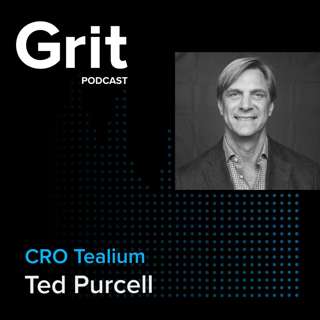
#145 CRO Tealium, Ted Purcell: Snap Into It
Guest: Ted Purcell, CRO of TealiumThe biggest difference between small companies and big companies, says Tealium CRO Ted Purcell, is that at untested early-stage firms, you have to convince workers “to truly believe in what they believe... It’s not just ‘do this’ or ‘do that.’” To unlock high performers, Ted explains, you need to give them a “religious level” of belief in the company and the value it delivers to customers, which will carry over into every aspect of their jobs. And this is even more important in a market downturn: “That becomes the main job because the winning is not as evenly spread,” he says. In this episode, Ted and Joubin discuss empty-nesters, resisting leadership, liking to win vs. hating to lose, complete commitment, commitment to culture, hardcore accountability, Israeli conversations, Day-Timers, and endurance battles.In this episode, we cover:Growing up and raising kids in Silicon Valley (00:56)From individual contributor to management (05:03)The appreciation for the grind (08:45)Ted’s father and his sudden passing (10:33)Stepping up to take care of the family (14:40)The Purcell family dinner table conversation (18:22)Working with Bill McDermott at SAP (20:50)Ted’s favorite Bill story (26:00)Getting comfortable as a leader (28:35)(Over-) Optimizing for lifestyle (34:02)How to spot greatness in interviews (37:25)A startup guy at big companies (39:48)Clarizen and corporate culture in Israel (42:10)Tealium and the “pressure cooker” environment (47:36)Believing in the “why” (51:13)Tough feedback and misconceptions (53:47)Recording ideas and daily habits (55:33)Pushing to achieve your potential (57:38)Gaining perspective (01:02:05)Who Tealium is hiring and what “grit” means to Ted (01:05:55)Links:Connect with TedLinkedInConnect with JoubinTwitterLinkedInEmail: grit@kleinerperkins.com Learn more about Kleiner PerkinsThis episode was edited by Eric Johnson from LightningPod.fm
3 Juli 20231h 7min
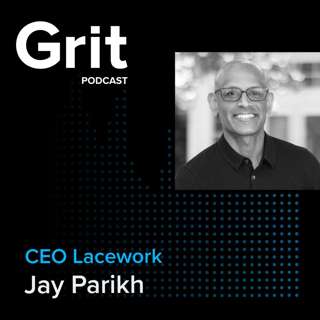
#144 CEO Lacework, Jay Parikh: Quiet Intensity
Guest: Jay Parikh, CEO of LaceworkJay Parikh describes himself as a “stickler” for meetings that start and end on time, and holds himself to the same expectations as his workers. “It’s just really important as a leader to set the standard for how everybody else should be respected,” the Lacework CEO says. “Too often in our industry, executives think that they can show up late, hold a meeting late, and everybody will adjust.” No one will complain, he says, to the person on top of the org chart when they are 10 minutes late, but they should: “I’m like, no, I disrespected 10 minutes of your time. So I take that really seriously.”In this episode, Jay and Joubin discuss non-traditional CEOs, surviving Facebook’s early days, disrupting yourself, Akamai co-founder Danny Lewin, cultivating culture, applying restless energy, the loneliness of leaders, brushing your teeth, the love of the game, and being approachable.In this episode, we cover:The “S-curve of learning” (01:04)Finding new challenges (05:10)“Is this too big of a job?” (07:33)Intensity and zen (11:00)Jay’s first jobs (15:07)Akamai’s post-IPO pop and crash (16:31)9/11 and Danny Lewin’s legacy (19:56)Facebook’s pivot to mobile (24:58)Managing morale when the share price drops (27:16)Learning from Mark Zuckerberg (30:13)Being on time (34:44)Security in the cloud (37:58)Leaving Facebook (40:01)What has surprised Jay about becoming a CEO (45:00)Hiring, onboarding, and unlocking people (49:34)Jay’s favorite interview questions (54:34)Refusing to compromise on greatness (01:00:44)Balancing work and family (01:07:02)Who Lacework is hiring and what “grit” means to Jay (01:09:06)Links:Connect with JayTwitterLinkedInConnect with JoubinTwitterLinkedInEmail: grit@kleinerperkins.com Learn more about Kleiner PerkinsThis episode was edited by Eric Johnson from LightningPod.fm
26 Juni 20231h 10min
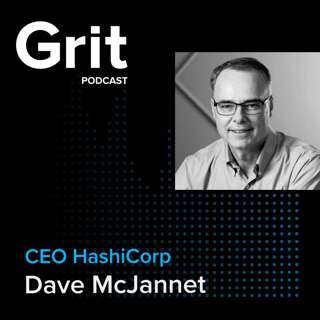
#143 CEO HashiCorp, Dave McJannet: Phase Shifts
Guest: Dave McJannet, CEO of HashiCorpTo scale a company effectively, says HashiCorp CEO Dave McJannet, you will have to make something like 10 decisions every single day. “There’s generally one that really needs to be right, but there are eight that if you get them wrong, you will cause real damage to yourself,” he says. “It won’t be fatal, and a lot of times, it’s cultural damage.” Sometimes, he adds, these decisions can seem innocuous, like deciding how to run internal town halls with workers. But even small choices can create a “cultural crater” that you’ll have to dig yourself out of three months later.In this episode, Dave and Joubin discuss returning to the office, the sales data flow, unstructured problem-solving, why companies grow like trees, anonymous town halls entrepreneurs-in-residence, go to market vs. product, committing to the job, the executive “CPU tax,” and the 30-to-100 phase shift. In this episode, we cover:In-person vs. remote collaboration (00:43)How to build any kind of business (05:26)The value of being in the sales motion (07:30)Thinking like a venture capitalist (11:51)Commiserating with other CEOs (13:28)Systems-based thinking (17:37)Administrators vs. builders (20:25)The daily 10 decisions (22:29)Staving off decision fatigue (24:17)Dave’s past jobs and the path to CEO (26:01)The reluctant CEO (28:46)Rapid change vs. high-profile maintenance (32:20)The pressure of being at the top (35:12)The state of HashiCorp when Dave arrived (37:39)How he got the CEO job (40:38)Product-building POV (45:50)The first “oh shit” moment (48:48)Being motivated by competition (50:47)Laddered time horizons (53:47)Paul Moritz and empathy (55:17)Misconceptions about CEOs (57:10)Deciding to go public (59:45)Time and energy management (01:03:10)Anticipating phase shifts (01:06:12)Fierce independence (01:08:12)Getting the right feedback (01:09:13)Who HashiCorp is hiring and what “grit” means to Dave (01:12:30)Links:Connect with DaveTwitterLinkedInConnect with JoubinTwitterLinkedInEmail: grit@kleinerperkins.com Learn more about Kleiner PerkinsThis episode was edited by Eric Johnson from LightningPod.fm
19 Juni 20231h 14min
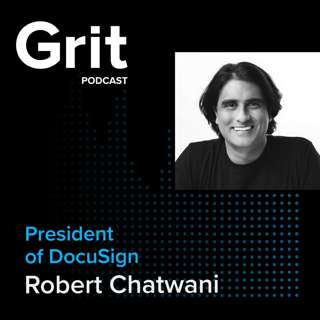
#142 President of DocuSign, Robert Chatwani: Get Uncomfortable
Guest: Robert Chatwani, President and General Manager of Growth at DocuSignRobert Chatwani’s first reinvention was in his early 20s, when he left McKinsey & Company to start a people-powered commerce startup called MonkeyBin. And in the ensuing decades, his entrepreneurial energy hasn’t slowed down, with hops to eBay, Spring, Atlassian, and now DocuSign, where he is the President and General Manager of Growth. He cites a “healthy anxiety” that comes from getting too comfortable in any role, where he finds himself solving the same problems over and over again; but when you’re in a little bit over your head, Robert explains, “that’s a good place to be, because that’s where the best learning comes from.”In this episode, Robert and Joubin discuss trusting your intuition, reinventing yourself, personal boards of advisors, people-powered commerce, betting on people, career coaching, taking time for family, being the same person in every room, bone marrow donors, energy takers vs. creators, and leading with empathy.In this episode, we cover:Networking through venture capitalists (02:18)Leaving high-profile jobs (04:29)How to know when it’s time to leave (07:55)12 years at eBay (11:05)The seeds of doubt (15:10)Finding purpose in company-building (17:51)Robert’s personal mission statement (21:01)Growing up in Chicago and his parents (24:40)Losing a parent (27:16)True North by Bill George (29:35)Finding ways to be human (32:45)What accomplishment Robert is most proud of (34:35)MonkeyBin and meeting eBay (36:08)Sameer Bhatia’s battle with leukemia (38:30)Building a global bone marrow campaign (42:38)“You can’t control every outcome” (48:07)Unexpected side effects (52:56)Business is a force for good (56:26)Working at Spring, and then Atlassian (01:00:01)Self-doubt and leaving Atlassian (01:06:29)Making tough calls with IQ & EQ (01:10:24)Who DocuSign is hiring, and what “grit” means to Robert (01:13:48)Links:Connect with RobertLinkedInConnect with JoubinTwitterLinkedInEmail: grit@kleinerperkins.com Learn more about Kleiner PerkinsThis episode was edited by Eric Johnson from LightningPod.fm
12 Juni 20231h 17min

#141 CEO Navan, Ariel Cohen: Be Naive!
Guest: Ariel Cohen, CEO and co-founder of NavanAs a business travel-focused startup, Navan (previously known as TripActions) was heavily impacted by the coronavirus pandemic in 2020; after laying off 24% of the staff, CEO Ariel Cohen says he became a “wartime CEO,” spending three months in “complete denial and just executing.” By June, employees were leaving and he was depressed — but he still believed that business travel would come back. “You cannot just look at a moment and say that it will change everything,” he says. “... I disconnected from the news and from some of our investors and from ... negativity and started to lead the company again.” In a way, he explains, it was like a reset to the earliest days of the business, because the only people left were long-term believers like him.In this episode, Ariel and Joubin discuss “tier one” VCs, developing goodwill, company money vs. employee money, wartime CEOs, putting handcuffs on founders, staying dynamic, returning to the office, scuba diving, shared values, Macallan whisky, believing in startups, losing employees, in-person connections, secondary liquidity, and “deposits and withdrawals.”In this episode, we cover:Picking the right investors (01:22)Connecting to the Matrix (04:04)Obsessing over failure (10:29)Reflecting on an eight-year journey (14:56)The benefits of naïveté (17:50)Ariel’s entrepreneur father and early jobs (20:45)Older startup founders (23:03)Getting out of large companies (25:35)Personal burn rate (28:03)Becoming the big company (30:11)Pivoting into AI (32:44)Project Reset and personally resetting (34:12)Making controversial decisions (39:55)“What could I have done better?” (45:43)Ariel’s co-founder Ilan Twig (47:04)What makes a co-founder relationship work? (48:50)Running out of cash (51:18)Being a travel startup during COVID (55:53)The depression quarter (01:00:12)Long-term believers (01:02:54)Why Navan would go public (01:07:55)Startup advice and hard-charging CEOs (01:11:27)What “grit” means to Ariel and who Navan is hiring (01:15:24)Links:Connect with ArielLinkedInEmail: ariel@navan.comConnect with JoubinTwitterLinkedInEmail: grit@kleinerperkins.com Learn more about Kleiner PerkinsThis episode was edited by Eric Johnson from LightningPod.fm
5 Juni 20231h 17min

#140 CRO Walmart, Seth Dallaire: How You Show Up
Guest: Seth Dallaire, CRO at WalmartWhen Seth Dallaire was approached by Walmart about joining their team as CRO, he had one question: Are they serious? Seth knew that Walmart wanted him for his digital experience, having worked at Instacart and Amazon, but he also knew that building alternative revenue streams at a traditional retailer could be an uphill battle. “I knew I was gonna have to [fight the fight], it was just whether I’d have the air cover from up top to say, ‘This is strategic,’” Seth recalls. “And they obviously convinced me of that and we’re making really good progress.”In this episode, Seth and Joubin discuss startup success, advertising attribution, “maintenance mode,” online grocery shopping, “the ultimate tailwind,” over-buying, digital vs. traditional retail, founder-led businesses, John Furner and Doug McMillon, sentiment vs. data, getting told “no,” the theory of constraints, and why you should visit Bentonville.In this episode, we cover:Seth’s unique career path (00:59)Amazon’s elite team in 2000 (05:24)Growing up & dinner table conversations (08:25)Work-life balance (10:53)Ambition and achievement (12:08)Investing in yourself (16:04)Recommitting to a role (17:38)Leaving Amazon for Instacart (20:14)Grocery stores are underrated (23:56)Transitioning to a much smaller company (25:33)How COVID accelerated Instacart’s business (27:54)Advertising is a full-contact industry (32:03)Getting recruited by Walmart (34:06)Visiting Walmart stores with other execs (40:08)A leadership lesson from Doug McMillon (43:10)Product orientation (45:40)Compounding knowledge capital (47:57)Tough feedback (50:19)Leaving a team behind (54:34)Hand-written notes (56:04)The Goal and On the Shortness of Life (57:35)Relocating and refueling (01:00:40)Who Seth is hiring and what “grit” means to him (01:02:25)Links:Connect with SethLinkedInConnect with JoubinTwitterLinkedInEmail: grit@kleinerperkins.com Learn more about Kleiner PerkinsThis episode was edited by Eric Johnson from LightningPod.fm
29 Maj 20231h 5min
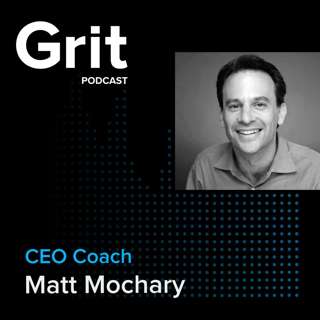
#139 CEO Coach, Matt Mochary: Coaching Greatness
Guest: Matt Mochary, CEO of Mochary MethodMatt Mochary was only 31 when he sold the company he co-founded, Totality, to Verizon, “and I made enough money that that was it,” he recalls. “I didn’t have to make more money anymore.” Instead, he decided to pursue projects that in one way or another would help other people, including a documentary about the slums of Rio de Janeiro and a program to train ex-convicts in the skills of legitimate work. Today, he coaches tech and finance leaders such as Brian Armstrong (CEO Coinbase), Bastian Lehmann (CEO Postmates), Sam Altman (CEO OpenAI), and Steve Huffman (CEO Reddit). All the money earned from that work, he says, bypasses his bank account and is funding the development of software that will teach tech workers the “Mochary Method.”In this episode, Matt and Joubin discuss information asymmetry, GPT-4, focusing on fun, coaching software, saving people, the slums of Rio and the South Bronx, surfing vs. friends, the merits of crappy solutions, why companies fail, shadowing the CEO, feedback and resentment, pissing people off, the danger of “excellence,” and energy audits.In this episode, we cover:Putting in effort, finding value (01:11)OpenAI CEO Sam Altman (05:43)Immediate responsiveness (09:48)“Mount Rushmore” referrals (11:54)When Matt’s coaching was free (15:08)His Hungarian grandfather and World War II (19:56)The hero complex (25:12)Stepping away from the game (31:30)Billionaires and inner peace (38:45)The phases of company-building (40:54)The problems Matt helps leaders solve (47:48)“It’s fun to be a founder!” (54:35)Craving feedback (56:48)The zones of excellence and genius (01:02:19)“Today, what went right?” (01:09:12)Growing too early (01:12:32)Who Matt is hiring and what “grit” means to him (01:15:00)Links:Connect with MattTwitterLinkedInConnect with JoubinTwitterLinkedInEmail: grit@kleinerperkins.com Learn more about Kleiner PerkinsThis episode was edited by Eric Johnson from LightningPod.fm
22 Maj 20231h 16min
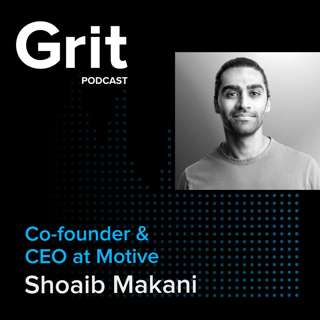
#138 CEO Motive, Shoaib Makani w/ Ilya Fushman: Powering the Physical Economy
Guest: Shoaib Makani, CEO of Motive“When we fail,” says Shoaib Makani, “it is because we have not understood the customer problem deeply and allowed them to guide us.” This wisdom is hard-won: Motive’s first product, an app for fleet management of trucks, idled for four years before becoming a runaway success story. Emboldened by this, the CEO tried to make an orthogonal push into all kinds of freight, “guns blazing,” only to realize six months in that he had way overestimated Motive’s competitive advantage. Retreating from freight was “painful,” Shoaib recalls, but helped the company extend its existing lead in trucking — and may have saved the whole business. In this episode — joined by special guest Ilya Fushman from Kleiner Perkins — Shoaib and Joubin discuss curiosity for the world, first impressions, reorienting yourself, electronic logging devices, directly connecting with customers, growing up as a CEO, waiting for the market, having a “low discount rate on the future,” the physical economy TAM, AI dash cams, and pricing in risk, and running out of runway.In this episode, we cover:Shoaib’s Pakistani parents and doing extra homework (01:17)Explaining and experiencing startups (04:26)“High standards are infectious” (08:15)What Motive does (10:08)How Shoaib and Ilya met (10:54)The origins of Motive as “Keep Truckin’” (14:06)Working with friends (17:27)First-time founders (21:56)Deep empathy for users (24:01)Monetization and second-guessing (25:48)Sudden success and scale (29:12)Recruiting top talent (31:04)Shoaib and Ilya’s personal-professional relationship (32:07)“I knew the board I wanted” (34:32)Motive’s failed expansion into freight (36:21)Realizing and correcting the error (39:26)How to make smarter future bets (44:09)Second and third products (47:29)Back to the core mission (50:36)Autonomous driving vs. AI assistants (52:17)Thinking about competition (55:05)A tough conversation about runway (58:52)Sticking your neck out for your partner (01:04:09)Losing Ilya as a board member (01:06:23)Who Motive is hiring (01:08:32)What “grit” means to Shoaib (01:09:32)Links:Connect with ShoaibTwitterLinkedInConnect with IlyaTwitterLinkedInConnect with JoubinTwitterLinkedInEmail: grit@kleinerperkins.com Learn more about Kleiner PerkinsThis episode was edited by Eric Johnson from LightningPod.fm
15 Maj 20231h 10min





















