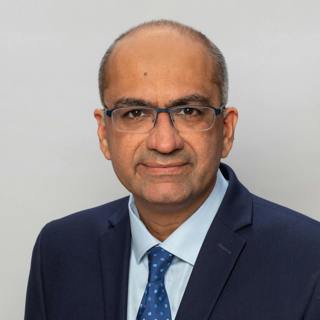
Ep. 243 Better Abscess Drainage with Dr. John Pavlus

Ep. 243 Better Abscess Drainage with Dr. John Pavlus

In this episode, our hosts Drs. Michael Barraza and Aaron Fritts interview Dr. John Pavlus about his methods of drain placement, monitoring, and removal, as well as his vision to design an ideal drainage system. --- CHECK OUT OUR SPONSOR Medtronic Abre Venous Stent https://www.medtronic.com/abrevenous --- EARN CME Reflect on how this Podcast applies to your day-to-day and earn AMA PRA Category 1 CMEs: https://earnc.me/5KfOLv --- SHOW NOTES In this episode, our hosts Drs. Michael Barraza and Aaron Fritts interview Dr. John Pavlus about his methods of drain placement, monitoring, and removal, as well as his vision to design an ideal drainage system. Dr. Pavlus became interested in abscess drains when he noticed that across different institutions had very different indications, types, and methods of putting in drains. Dr. Pavlus prefers to place drains under ultrasound guidance, and he will also obtain a CT image afterwards to ensure the drain is in place. The doctors discuss their favorite guidewires to use: Dr. Pavlus prefers the Coons wire and Dr. Barraza prefers the Amplatz wire. For deep pelvic cul-de-sac abscesses, Dr. Pavlus describes how he obtains transgluteal access and uses a Hawkins needle. Liver abscesses can be challenging, due to their variety of drainage contents (hematoma, bile, necrotic material), and increased time of drainage. We also discuss the debate between suction bulbs and gravity drainage bags, noting that research studies and personal experiences have not shown significant differences in the rate of fistula formation with either method. One exception is post-operative spinal drainage, where using suction could confer the risk of removing CSF. To assess when a drain needs to be removed, Dr. Pavlus monitors the output and obtains a CT. He prefers to take ownership of drain care and remove drains that he originally placed, but if needed, he also collaborates with trauma surgeons to ensure that drains and sutures are removed properly. Dr. Pavlus also recognizes the need to standardize follow up care for drains. Dr. Barraza describes a workflow for drain checks at his fellowship site, which included daily rounds and a standardized checklist for each patient. Finally, Dr. Pavlus speaks about his ongoing mission to design an ideal drainage system for various dwell times, viscosity of contents, and catheter sizes.

Avsnitt(642)

Ep. 518 Long-Term Outcomes of Prostatic Artery Embolization (PAE) with Dr. Shivank Bhatia

Ep. 518 Long-Term Outcomes of Prostatic Artery Embolization (PAE) with Dr. Shivank Bhatia

Do we finally have definitive data on the efficacy of prostate artery embolization (PAE)? Dr. Shivank Bhatia (interventional radiologist at University of Miami) joins host Dr. Michael Barraza to discu...

18 Feb 202555min
Ep. 517 Complex HCC Patients and the "Grey Zone": What to Do When You Don’t Know What to Do

Ep. 517 Complex HCC Patients and the "Grey Zone": What to Do When You Don’t Know What to Do

Treatment of hepatocellular carcinoma (HCC), like that of many other cancers, spans a spectrum from curative to palliative intent. To explore the "grey zone" of treatment goals for intermediate-stage ...

14 Feb 202540min
Ep. 516 Dialysis Procedures: New Tools for Better Outcomes with Dr. Ari Kramer and Dr. Omar Davis

Ep. 516 Dialysis Procedures: New Tools for Better Outcomes with Dr. Ari Kramer and Dr. Omar Davis

Given the challenges that our dialysis patients face, how can we as providers stay sharp with the latest access techniques to help ensure the best possible outcomes? Dr. Omar Davis (interventional nep...

11 Feb 20251h 13min
Ep. 515 Curative Intent Therapies for HCC: Today and Tomorrow

Ep. 515 Curative Intent Therapies for HCC: Today and Tomorrow

For hepatocellular carcinoma (HCC) patients who are not candidates for liver transplant or resection, lesion ablation can be a curative treatment. With multiple ablation options available and still un...

7 Feb 202553min
Ep. 514 Deep Sedation in IR: Intro to Ketamine with Dr. Amy Deipolyi

Ep. 514 Deep Sedation in IR: Intro to Ketamine with Dr. Amy Deipolyi

When deep sedation is required, it can be challenging to implement due to the difficulty of scheduling dedicated anesthesia coverage in the IR suite. Dr. Amy Deipolyi (interventional radiologist and D...

4 Feb 202534min

Ep. 513 Combination Therapy and Clinical trials for Advanced HCC: What They Really Mean

Ep. 513 Combination Therapy and Clinical trials for Advanced HCC: What They Really Mean

In the past five years, the use of immunotherapeutic agents for advanced cancers has emerged as a promising alternative to tyrosine kinase inhibitors and chemotherapy, making it an exciting time to be...

31 Jan 202548min
Ep. 512 The "Alzate Maneuver”: Flipping Retrograde Access with Dr. Gregg Alzate

Ep. 512 The "Alzate Maneuver”: Flipping Retrograde Access with Dr. Gregg Alzate

Proximity to innovation often gives rise to further innovation. This trend is especially true in interventional radiology. Dr. Gregg Alzate (interventional radiologist in San Diego, California) joins ...

28 Jan 202550min
Ep. 511 How to Simplify Dosing: Understanding Y-90 Dosimetry from Simple to Complex

Ep. 511 How to Simplify Dosing: Understanding Y-90 Dosimetry from Simple to Complex

Of all the topics covered during interventional radiology training, dosimetry education is often delayed until after IRs enter clinical practice. In this episode, Drs. Tyler Sandow and Sabeen Dhand ho...

24 Jan 202555min

Populärt inom Utbildning

historiepodden-se
rss-bara-en-till-om-missbruk-medberoende-2
det-skaver
alska-oss
harrisons-dramatiska-historia
nu-blir-det-historia
johannes-hansen-podcast
rss-foraldramotet-bring-lagercrantz
roda-vita-rosen
rss-viktmedicinpodden
not-fanny-anymore
sektledare
rss-sjalsligt-avkladd
i-vantan-pa-katastrofen
sa-in-i-sjalen
allt-du-velat-veta
rib-podcast
rss-basta-livet
rss-max-tant-med-max-villman
rss-traningsklubben