
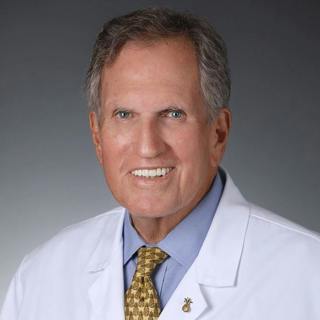
Ep. 291 Percutaneous Creation of a Distal Deep Venous Arterialization (dDVA) with Dr. August Ysa

Ep. 291 Percutaneous Creation of a Distal Deep Venous Arterialization (dDVA) with Dr. August Ysa

In this episode, host Dr. Sabeen Dhand interviews Dr. August Ysa, vascular surgeon in Spain, about distal deep venous arterialization, including indications, patient selection, and how to perform his gunsight technique. --- CHECK OUT OUR SPONSORS Viz.ai https://www.viz.ai/ BD Rotarex Atherectomy System https://www.bd.com/rotarex Reflow Medical https://www.reflowmedical.com/ --- SHOW NOTES We begin by discussing his training and background. Initially trained in Barcelona before moving to Bilbao as a young vascular surgeon. He came to the US briefly to train at Montefiore and Houston Methodist. When attending the LINNC in Europe one year he saw a live endovascular case, which is when he decided to devote his career to peripheral arterial disease (PAD), specifically below the knee (BTK) and below the ankle (BTA) interventions. He currently works with Dr. Marta Lobato, and they have done around 25 combined deep venous arterializations (DVAs) in their practice. They love this technique because it gives someone previously faced with amputation a new chance. It is a technique to reroute blood flow to get oxygen to a wound and promote wound healing. There are two types of DVA: proximal DVA, which is done closer to the origin of the posterior tibial artery (PTA), and distal DVA, which is at the level of the ankle, and usually also involves the PTA. Thus far, it is unknown which technique is better in terms of limb salvage, and data shows both techniques yield 60-70% limb salvage rates. One advantage to distal DVA is lower rates of post-DVA storm, a type of ischemic steal syndrome. Availability of devices and lower cost also make distal DVA more appealing. DVA is never the first option, traditional recanalization techniques are always explored first. Wounds that are not candidates for DVA are large infected wounds or areas of necrotic tissue. This is because it takes 6-8 weeks to establish the newly created connection, and if the wound is already past the point of healing, DVA will not help. Other reasons DVA can fail is due to choosing the wrong candidates. Mean wound healing time after DVA is 4-7 months, so patients need to be able to commit to close follow up and wound care, and they must have the social support to be compliant with frequent clinic visits. Finally, Dr. Ysa explains his venous arterialization simplification technique (VAST). Before the procedure, he always does a venous ultrasound to rule out prior DVT and evaluate the status of the main veins of the foot. He uses two snares via the gunsight approach, which most IRs are familiar with from TIPS procedures. It involves overlapping two snares and then performing a through and through puncture from the PTA to the posterior tibial vein (PTV). The PTA is generally used over the anterior tibial or the peroneal artery due to its robust connections with the lateral plantar and the plantar arch. He then performs balloon angioplasty (BA) on the PTV. He initially uses the PTA for sizing, but generally goes bigger, between 4-5mm. For valves, he usually does regular BA but will sometimes use a cutting balloon. Two weeks post-DVA he gets an ultrasound, and at one month he gets an angiogram to evaluate the new tract. He has his patients take a single antiplatelet and a blood thinner after the procedure. He considers DVA to have failed if there is progression of wound necrosis. --- RESOURCES Dr. Ysa LinkedIn: https://www.linkedin.com/in/august-ysa-56a99a174/ YouTube DVA Webinar with Dr. Ysa and Dra. Lobato: https://www.youtube.com/watch?v=kDW5Rg5g49I Ep. 93 - DVA for CLI with Dr. Fadi Saab: https://www.backtable.com/shows/vi/podcasts/93/deep-venous-arterialization-for-cli Live Interventional Neuroradiology, Neurology and Neurosurgery Course (LINNC): https://www.linnc.com Patterns of Failure in DVA Paper: https://www.clijournal.com/article/patterns-failure-deep-venous-arterialization-and-implications-management

Avsnitt(638)

Ep. 530 Evolution of IR: A Conversation with Dr. Barry Katzen

Ep. 530 Evolution of IR: A Conversation with Dr. Barry Katzen

In honor of the 50th annual meeting of the Society of Interventional Radiology (SIR) in Nashville, let’s take it back to the beginning of IR and review how the field became what it is today. Guest hos...

1 Apr 202546min
Ep. 529 Building a Social Media Presence in IR with Dr. Gustavo Elias

Ep. 529 Building a Social Media Presence in IR with Dr. Gustavo Elias

Is social media an effective patient acquisition tool for interventional radiologists? In a word: absolutely. Learn how to reach more patients in this week’s BackTable Podcast, where Dr. Gustavo Elias...

28 Mars 202529min

Ep. 528 Approach to Microwave Liver Ablations with Dr. Asad Baig

Ep. 528 Approach to Microwave Liver Ablations with Dr. Asad Baig

Let’s talk liver ablations. This week’s episode of the BackTable Podcast provides a thorough review of modern microwave ablation methods, tools, and tech, featuring Dr. Asad Baig (interventional radio...

25 Mars 20251h 3min

Ep. 527 Managing Hereditary Hemorrhagic Telangiectasia and Pulmonary AVMs with Dr. Clifford Weiss

Ep. 527 Managing Hereditary Hemorrhagic Telangiectasia and Pulmonary AVMs with Dr. Clifford Weiss

Targeted, image-guided interventions can make a big difference for patients with hereditary hemorrhagic telangiectasia (HHT). Learn how in this week’s BackTable episode featuring Dr. Clifford R. Weiss...

21 Mars 202527min
Ep. 526 Radiology Private Equity Update with Dr. Ben White

Ep. 526 Radiology Private Equity Update with Dr. Ben White

Teleradiology, artificial intelligence, and private equity takeovers—how do we navigate these rapid changes in the radiology landscape? In this episode, our co-hosts Dr. Ally Baheti and Dr. Mike Barra...

18 Mars 20251h 7min

Ep. 525 Principles to Practice: An HCC Tumor Board

Ep. 525 Principles to Practice: An HCC Tumor Board

Do you ever wish you could be a fly on the wall at a tumor board meeting? In this episode of BackTable, we’re excited to give you an insider’s view of the real case discussions that take place during ...

14 Mars 202559min

Ep. 524 Collaborative Oncology: Surgeon’s Perspective and Role in Locoregional Therapy with Dr. Robert Martin

Ep. 524 Collaborative Oncology: Surgeon’s Perspective and Role in Locoregional Therapy with Dr. Robert Martin

Medical, surgical, radiation, and interventional oncology all play vital roles in delivering care to patients battling liver cancer. How do we optimize outcomes when so many specialties have something...

11 Mars 202542min
Ep. 523 Getting Started in Interventional Oncology: Tips for Starting your Career

Ep. 523 Getting Started in Interventional Oncology: Tips for Starting your Career

Are you seeking to build your reputation and patient base within interventional oncology? In this episode, host Dr. Zachary Berman interviews Dr. Siddarth Padia, Dr. Tyler Sandow, Dr. Kavi Krishnasamy...

7 Mars 202545min

Populärt inom Utbildning

historiepodden-se
rss-bara-en-till-om-missbruk-medberoende-2
det-skaver
alska-oss
harrisons-dramatiska-historia
sektledare
nu-blir-det-historia
rss-viktmedicinpodden
johannes-hansen-podcast
roda-vita-rosen
allt-du-velat-veta
i-vantan-pa-katastrofen
rss-sjalsligt-avkladd
rss-max-tant-med-max-villman
rss-basta-livet
rss-om-vi-ska-vara-arliga
rikatillsammans-om-privatekonomi-rikedom-i-livet
rss-relationsrevolutionen
not-fanny-anymore
sa-in-i-sjalen