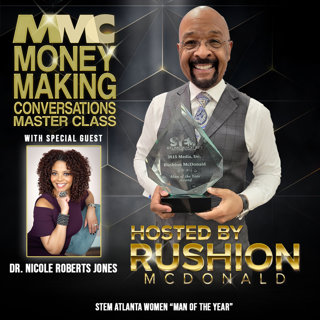
Interview with New Edition

Interview with New Edition

Avsnitt(3941)

Brand Building: He discusses the importance of supplements in underserved communities, and the need to prepare younger generations for healthier futures.

Brand Building: He discusses the importance of supplements in underserved communities, and the need to prepare younger generations for healthier futures.

Two-time Emmy and Three-time NAACP Image Award-winning, television Executive Producer Rushion McDonald interviewed Demond Martin. ✅ Summary of the Interview: Demond Martin on Money Making Conversations Masterclass Demond Martin—co‑founder and CEO of Well With All, a Black‑owned purpose‑driven wellness brand—joins Rushion McDonald to discuss health equity, entrepreneurship, his life story, his upcoming book Friends of the Good, and his new $1M AI Health Equity Prize. Martin shares how his difficult upbringing in the projects and rural North Carolina shaped his commitment to giving back. After a successful 21‑year career as the only Black partner at a major hedge fund, he launched Well With All to merge consumer products, wellness, and social impact. The brand donates 20% of its profits to health‑equity initiatives. He discusses product innovation, the importance of supplements in underserved communities, the power of Black longevity, and the need to prepare younger generations for healthier futures. He also explains his upcoming book—which uses Aristotle’s philosophy of “friends of the good” to show how meaningful relationships enable success. The conversation is energetic, inspirational, and focused on using business as a force for social good. 🎯 Purpose of the Interview The interview aims to: 1. Introduce Well With All A wellness company offering supplements and energy drinks while funding health‑equity solutions. 2. Share Martin’s Personal Journey From poverty, trauma, and instability → to White House, Harvard Business School, and a top hedge fund. 3. Promote His Book, Friends of the Good A philosophy‑driven exploration of friendship, mentorship, and community. 4. Announce the $1 Million AI Prize A major initiative to scale AI tools that close health‑equity gaps. 5. Encourage Health Awareness in Underserved Communities Particularly around longevity, dietary choices, energy consumption, and supplement use. 🔑 Key Takeaways 1. Health Equity Drives the Mission Martin emphasizes that health is a human right and disparities in nutrition, maternal health, and mental‑health access must be addressed. 2. Well With All = Social Impact + Consumer Products The company donates 20% of profits and creates healthier alternatives (energy drinks, supplements) to replace harmful daily habits like sugary sodas. 3. Personal Story Fuels Commitment He overcame poverty, a traumatic home life, and limited opportunity—and believes he survived because others poured into him. 4. Mentorship Changed His Life Major turning points included: Student body president at UNC Charlotte Assistant to the White House Chief of Staff HBS acceptance Training under hedge‑fund leader Phil Gross 5. Expertise Matters His success with Well With All is grounded in 21 years as an investor specializing only in consumer companies. 6. AI Can Close Health Gaps The $1M Well With All Prize supports AI tools already impacting at least 1,000 lives with the potential to scale to 100,000+. 7. Black Longevity Documentary His company created a film (NAACP Image Award–nominated) featuring Black elders aged 85–106 to redefine narratives around Black health. 8. The Power of Friendship His book teaches readers how to identify “friends of the good,” the relationships that define one’s path and joy. 🗣️ Notable Quotes from Demond Martin (from the transcript) (All quotes sourced from:) On Health Equity “Health is a human right. Everyone deserves nutritious food… everyone deserves to see a doctor.” “Where With All is not just a brand—it's a movement.” On His Upbringing “I grew up in the projects… lived in a trailer… had a heroin addict as a stepfather. I’ve seen things that gave me perspective.” On Perspective and Survival “If this was me at 14… I’d be dead or in jail.” On His Mission “I need to start giving back today. I’ve lived a life of giving back—my parents and grandparents instilled that in me.” On Product Philosophy “Small, incremental choices add up. Replacing one sugary soda a day is 45,000 fewer calories a year.” On Expertise “All I did for 21 years is invest in consumer companies. That was my expertise.” On Friendship & His Book “Show me your friends, I’ll show you your future.” “Friendship is one of the most essential elements of joy.” On Confidence & Mastery “Five years into my career, I knew I knew what the hell I was doing.” On AI “We’re not rewarding ideas—we’re rewarding impact.” #SHMS #STRAW #BESTSupport the show: https://www.steveharveyfm.com/See omnystudio.com/listener for privacy information.

26 Jan 30min

Uplift: Motivational speaker and co‑founder of Next Level Living, which feeds a thousand children weekly in South Africa.

Uplift: Motivational speaker and co‑founder of Next Level Living, which feeds a thousand children weekly in South Africa.

Two-time Emmy and Three-time NAACP Image Award-winning, television Executive Producer Rushion McDonald interviewed Jeremy Anderson. SUMMARY OF THE INTERVIEW The conversation between Rushion McDonald and Jeremy Anderson on Money Making Conversations Masterclass covers Jeremy’s personal transformation, his mission-driven approach to motivational speaking, the creation of Next Level Speakers Academy, the power of environment and mindset, and his philanthropic work in South Africa. The interview highlights values such as purpose over profit, taking ownership, perseverance, and maximizing one’s potential. [ PURPOSE OF THE INTERVIEW The purpose of the episode is to: 1. Introduce Jeremy Anderson’s Work Showcase Jeremy’s role as a premier motivational speaker, founder of Next Level Speakers Academy, and co‑founder of Next Level Living, which feeds a thousand children weekly in South Africa. [ 2. Inspire Listeners Toward Purpose‑Driven Success Encourage viewers to move from “wasted potential” to purposeful, impactful living by believing in themselves and pursuing their gifts. 3. Demonstrate How Jeremy’s Principles Apply Broadly Rushion emphasizes that Jeremy’s business, branding, and mindset strategies apply not just to speakers, but to entrepreneurs, executives, and everyday people. 4. Promote Actionable Personal Growth The interview seeks to motivate listeners to take ownership, adopt non‑negotiable success habits, and maximize opportunities. KEY TAKEAWAYS 1. Wasted Potential is a Universal Struggle Jeremy defines wasted potential as having greatness inside but failing to believe in it or pursue it. Many people don’t lack talent — they lack belief and action. 2. Purpose Over Profit He warns new speakers not to chase “the bag.”Impact first → income follows. If your heart is for people, success comes naturally. 3. Your Story Is Your Superpower Every struggle someone has overcome is a testimony meant to help others. Keeping quiet keeps your gift hidden. 4. Maximize Every Opportunity Whether you’re speaking, laying concrete, or running a small business, get every drop out of every engagement — testimonials, photos, referrals, and relationship‑building. citeturn1search1 5. Environment and Mindset Matter True growth starts by changing your internal environment.Jeremy’s life changed when teachers chose to see the best in him, showing that belief from others can shift self-belief. 6. Non‑Negotiables Build Discipline Success requires habits you don’t negotiate with: early rising, prayer, meditation, cold plunges, challenging discomfort, and consistent personal development. 7. Extreme Ownership Replaces Excuses Greatness comes from responsibility, not excuses. Jeremy demands accountability from his teams and himself. 8. Brand Is Built on Transparency Jeremy’s brand centers on perseverance, faith, and family—not perfection. He shares both triumphs and private struggles. 9. Giving Back Is Central to His Purpose Next Level Living feeds 1,000 children weekly and sponsors students in South Africa through college. Impact must extend beyond business. NOTABLE QUOTES FROM THE INTERVIEW On Purpose & Potential “Don’t come to me for profits. Come to me for purpose. Don’t come to me for income. Come to me for impact.” “It’s only a testimony if you testify.” “Most people don’t believe and they don’t pursue — that’s wasted potential.” On Mindset & Environment “I wasn’t living a life of purpose… I had to stop blaming others and go all in on me.” “Sometimes the shackles we have are in our mind.” On Discipline “Success requires non‑negotiables.” (Waking early, prayer, meditation, discomfort training) “People want comfort — but everything great comes with discomfort.” On Value “If you want to be valuable, you must have value.” “They’re not paying me top dollar because I'm motivational. I solve a problem.” On Legacy & Family “My brand is perseverance and family.” “These things don’t happen to me — they happen for me.” On Accountability “No excuses — take ownership.” “I’ve never met anyone who became great from excuses.” On Giving Back “We’ve been feeding a thousand starving children every week since 2018.” “We put 60 kids through college — and we’re just getting started.” #SHMS #STRAW #BESTSupport the show: https://www.steveharveyfm.com/See omnystudio.com/listener for privacy information.

26 Jan 32min

Brand Building: Private therapy practice focused on culturally sensitive therapy for Black and Brown communities.

Brand Building: Private therapy practice focused on culturally sensitive therapy for Black and Brown communities.

Two-time Emmy and Three-time NAACP Image Award-winning, television Executive Producer Rushion McDonald interviewed April Lancit. Founder of a private therapy practice focused on culturally sensitive therapy for Black and Brown communities. Main Topics: Cultural differences in therapy Challenges in modern relationships and marriage The impact of technology on human connection The role of therapy in addressing generational trauma and stress The future of therapy in the age of AI 💡 Key Insights 1. Culturally Sensitive Therapy April emphasizes the importance of therapists understanding the lived experiences of marginalized communities. Black and Brown clients often face unique challenges that require a nuanced, empathetic approach. 2. Modern Relationship Struggles Top issues in marriage therapy: finances, infidelity, and communication. Communication is often overlooked but is foundational to resolving other issues. 3. Technology & Disconnection The rise of remote living and digital communication is reducing opportunities for organic human interaction. Couples are increasingly using text messages—even within the same home—to communicate, which can erode intimacy. 4. Therapy as a Preventative Tool Therapy shouldn't be reserved for crises; it can be a proactive tool for personal and relational growth. Pre-marriage counseling is often skipped or done too late, missing key conversations about values, finances, and intimacy. 5. AI in Therapy April sees potential in AI as a supplementary tool but stresses it cannot replace the human connection essential to effective therapy. 🧠 Final Message April encourages people to seek therapy not out of crisis, but as a way to grow and connect more deeply—with themselves and others. She remains hopeful that with intention and effort, society can rebuild meaningful human connections. #SHMS #STRAW #BESTSupport the show: https://www.steveharveyfm.com/See omnystudio.com/listener for privacy information.

26 Jan 28min

Money Tips: Millennial millionaire says real estate is always going to be good bet. Bad debt is the credit card.

Money Tips: Millennial millionaire says real estate is always going to be good bet. Bad debt is the credit card.

Two-time Emmy and Three-time NAACP Image Award-winning, television Executive Producer Rushion McDonald interviewed Dr. Justin M. Lee. Purpose of the Interview To showcase Dr. Lee’s journey from a young real estate agent to a multi-industry entrepreneur. To inspire listeners with strategies for wealth-building through real estate, construction, and logistics. To encourage financial literacy, ownership, and collaboration within underserved communities. To issue a call to action for minorities to explore opportunities like Amazon DSP and real estate investment. Key Takeaways Early Career & Education Started young in real estate, embraced discomfort in rooms dominated by older professionals. Leveraged millennial tech skills (social media marketing) to help veteran brokers grow. Earned a doctorate degree and became a licensed real estate broker. Social Media as a Business Tool Built a strong presence on TikTok (90K followers) and other platforms. Helped older real estate firms thrive by creating digital visibility. Emphasized that “business must look as good online as in person.” Financial Literacy & Homeownership African-American communities often lack foundational financial knowledge. Key barriers: misunderstanding credit, fear of debt, and lack of exposure to ownership benefits. Advocates teaching the difference between good debt (real estate) and bad debt (consumer credit). Real Estate Process Initial onboarding: credit score, income, tax filing. Connect clients with lenders, secure pre-approval, then negotiate and close within 30–45 days. Uses property tours as motivation even for those not yet approved. Pooling Resources for Wealth Industry dominated by white men and foreign investors who use syndication. Dr. Lee created a private family fund with fraternity brothers and friends. Acquired 150+ apartment units and commercial properties by pooling resources and forming LLCs. Amazon DSP Opportunity Owns an Amazon Delivery Service Partner business (42 trucks, 200 employees). Offers minorities a chance to apply for DSP with $10K grant. Taught him true CEO skills: HR, payroll, compliance, and scaling operations. Construction Business Entered construction after experiencing exploitation in fix-and-flip projects. Learned the business side (permits, change orders) and got licensed. Built major projects like a 10,000 sq. ft. restaurant in Atlanta. Advocates for Black representation in construction, an industry dominated by whites and Hispanics. Personal Background Raised in New Orleans during Katrina by a single mother and grandparents. Mother invested FEMA checks into real estate, teaching him property management and renovation skills early. Believes knowledge is power and emphasizes planning and consistency. Notable Quotes On embracing discomfort:“I learned to embrace the uncomfort and make it one of my biggest strengths.” On social media:“You have to make your business look the same way online as in person.” On financial literacy:“Real estate is always going to be good debt. Bad debt is the Macy’s card.” On collaboration:“Pooling resources shows how far we can go and how fast we can go—but together.” On planning:“If you don’t plan, you plan to fail. All you have to do is stick to the plan.” #SHMS #STRAW #BESTSupport the show: https://www.steveharveyfm.com/See omnystudio.com/listener for privacy information.

26 Jan 22min

Education Tip: Educates you on how to avoid student loan debt and developed a process to simplify scholarship applications.

Education Tip: Educates you on how to avoid student loan debt and developed a process to simplify scholarship applications.

Two-time Emmy and Three-time NAACP Image Award-winning, television Executive Producer Rushion McDonald, interviewed Jocelyn Pearson. Purpose of the Interview The interview on Money Making Conversations Masterclass with Rushion McDonald and Jocelyn Pearson aimed to: Share Jocelyn’s journey of graduating debt-free by securing $126,350 in scholarships. Educate families on how to avoid student loan debt through her proven system, The Scholarship System. Dispel myths about scholarships and provide actionable steps for parents and students. Key Takeaways Scholarship System Approach Jocelyn developed a six-step process to simplify scholarship applications and avoid overwhelm. Focus on breaking the process into small, manageable steps rather than a vague “go get money” directive. Common Myths Debunked Too early or too late to apply: Start by junior year; it’s never too late—even college seniors can apply. Only perfect students or low-income families qualify: Many scholarships don’t require high GPA or athletic ability. All good scholarships are gone: Smaller, local scholarships ($500–$5,000) add up over time. It takes too much time: With a system and reusable materials, effort decreases each year. Avoiding Scholarship Scams Beware of “easy,” “enter to win,” or sweepstakes-style scholarships—they often sell personal data. Real scholarships require effort and personalization. Role of Parents Parents should help with planning and identifying legitimate scholarships but not complete applications for students. Committees can detect when parents write essays. AI in Scholarship Applications Jocelyn warns against copy-pasting AI-generated essays. Her platform introduced TESS, an AI assistant for ethical guidance and support. Financial Aid Basics Submit FAFSA even if you think you won’t qualify; some colleges and states require it. Combine all sources—government aid, institutional aid, and private scholarships. For Current College Students Check with financial aid offices, academic departments, and organizations for scholarships available after freshman year. Entrepreneurial Journey Jocelyn turned her passion into a business by starting with a book, building an email list, and launching webinars. She emphasizes persistence and ignoring naysayers. Notable Quotes “I had to accumulate my way to getting college paid for—the mere mortals’ way to going to college without tons of debt.” “Most families want scholarships, but they get stuck in the overwhelm.” “There’s no big red easy button—but with clear steps, it feels less daunting.” “We’re saying no to the broken system… It takes, on average, 21 years to pay off student loans.” “With great power comes great responsibility—AI can help, but only if used ethically.” #SHMS #STRAW #BESTSupport the show: https://www.steveharveyfm.com/See omnystudio.com/listener for privacy information.

25 Jan 28min

Info You Can Use: She shows you how to take control of your financial future.

Info You Can Use: She shows you how to take control of your financial future.

Two-time Emmy and Three-time NAACP Image Award-winning, television Executive Producer Rushion McDonald interviewed Dr. Leketa Hawkins. Also known as the Pocketbook Strategist. She is a financial literacy advocate and business consultant based in North Carolina, offering tools and resources to help individuals and small business owners take control of their financial futures. 🔑 Key Themes and Takeaways: 💼 About Dr. Leketa Hawkins Founder of PocketbookStrategies.com, which offers financial literacy programs, tools, and resources. Also runs Hawdleigh.com, a platform for financial education courses and templates. Her mission is to provide low-cost or no-cost financial education to underserved communities. 💡 Financial Literacy & Upbringing Like many, Leketa grew up in a household where money was not discussed—a common cultural norm that left many unprepared for adult financial responsibilities. She emphasizes the importance of breaking generational cycles by involving children in financial conversations early. 🧠 Emotional Spending One of the most common financial pitfalls she sees is emotional spending—buying things to cope with stress, boredom, or celebration. She recommends tracking spending for one week to identify patterns and triggers. Online shopping makes emotional spending easier and more dangerous due to its convenience. 📊 Budgeting Strategies Advocates for the 50/30/20 rule: 50% for needs 30% for wants 20% for savings or debt Encourages people to “name your money before you spend it”—assign every dollar a purpose. 👧🏾 Youth Financial Literacy Stresses the importance of teaching kids that money is a tool, not a goal. Encourages parents to: Let kids ask financial questions. Teach saving from every dollar earned. Explain compound interest and the value of investing. 👩🏽‍💼 Empowering Women Financially Many women feel overwhelmed or disempowered financially. Dr. Hawkins encourages women to take small steps toward financial clarity and view financial wellness as a form of self-love. 💬 Final Lessons “Money doesn’t change who you are—it amplifies who you are.” Understanding the difference between assets and liabilities is foundational: Assets put money in your pocket. Liabilities take money out. #SHMS #STRAW #BEST #AMISupport the show: https://www.steveharveyfm.com/See omnystudio.com/listener for privacy information.

25 Jan 21min

Money Tips: She discusses home financing options such as Reverse Mortgages, Zero Down Payment Programs and FHA 203K Program.

Money Tips: She discusses home financing options such as Reverse Mortgages, Zero Down Payment Programs and FHA 203K Program.

Two-time Emmy and Three-time NAACP Image Award-winning, television Executive Producer Rushion McDonald interviewed Latrease Price-Gistard. Purpose of the Interview The interview aims to educate listeners on the mortgage industry, highlight the role and benefits of working with an independent mortgage broker, and provide practical advice on home financing options, credit challenges, and programs that support homeownership. It also shares Latrease’s entrepreneurial journey and lessons learned. Key Takeaways Background and Career Path Latrease has a finance degree and started in investment operations in 1999. Transitioned from auto financing and co-owning a car dealership to mortgage lending. Became an independent mortgage broker in 2022 after being laid off during rising interest rates. Role of an Independent Mortgage Broker Holds her own license and partners with multiple lenders to offer tailored loan products. Advocates for borrowers to ensure they get the right product, not just approval. Specializes in helping first-time buyers, self-employed individuals, and those with unique challenges. Home Financing Insights Reverse Mortgages: Typically for seniors 62+, often used by those 75+ with equity and limited retirement funds. Provides tax-free cash without monthly payments; debt settled upon sale or refinance. Zero Down Payment Programs: Offers up to 3% for down payment, attached to the mortgage; other programs provide up to 5% for down payment and closing costs. FHA 203K Program: Allows buyers to finance home purchase and renovations in one loan—ideal for fixer-uppers. Credit Challenges Programs exist for credit scores as low as 500, but require higher down payments (10–20%) and result in higher interest rates. Latrease consults and provides “what-if” scenarios to help clients improve credit over time. Entrepreneurial Lessons Mistakes: Starting without enough capital and a strong pipeline; economic timing matters. Advice: Build capital, secure a solid client pipeline, and understand market conditions before going independent. Notable Quotes On independence:“As a broker, you serve as that advocate for your borrower to make sure they’re getting the right loan product.” On reverse mortgages:“The beauty of it is there are no monthly payments going back to the institution. The debt is paid off when the home is sold or refinanced.” On credit challenges:“Programs go as low as 500 credit score, but those borrowers need 10–20% down.” On entrepreneurial advice:“Make sure you have strong capital and a solid pipeline before stepping out on faith.” On perseverance:“It’s all about follow-through. It’s all about your dream and whether you want to make it happen.” #SHMS #STRAW #BESTSupport the show: https://www.steveharveyfm.com/See omnystudio.com/listener for privacy information.

25 Jan 26min

Money Tips: He emphasizes discipline, leadership, risk-taking, and strategies for building generational wealth.

Money Tips: He emphasizes discipline, leadership, risk-taking, and strategies for building generational wealth.

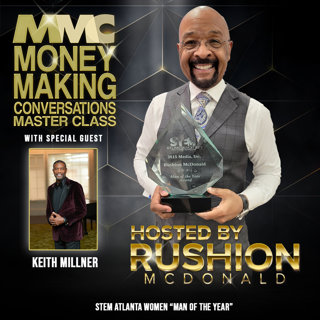
Two-time Emmy and Three-time NAACP Image Award-winning, television Executive Producer Rushion McDonald interviewed Keith Milner. Purpose of the Interview The interview aims to inspire aspiring entrepreneurs by sharing Keith Milner’s journey from corporate America to entrepreneurship. It emphasizes discipline, leadership, risk-taking, and strategies for building generational wealth, particularly for underrepresented communities. Key Takeaways Foundational Lessons from Childhood Growing up in a disciplined, hardworking family taught Keith accountability, integrity, and the principle of choices and consequences. Education was highly valued in his household, shaping his drive for success. Corporate vs. Entrepreneurial Mindset Corporate careers can feel secure but are often riskier because you lack control over your destiny. Entrepreneurship offers greater control and potential for generational wealth. Leadership and Teamwork Lessons from sports—teamwork, discipline, and leadership—translate directly into business success. Establishing a common goal and coaching employees is crucial, but underperformers must eventually be let go. Risk and Value Many African-Americans view entrepreneurship as risky, but Keith argues it’s less risky than employment in an at-will state. Success depends on creating value that customers are willing to pay for. Franchising Journey Relationships opened doors to Jersey Mike’s franchise ownership. Entrepreneurship requires hands-on involvement—Keith still works in his stores when needed. Advice for Aspiring Entrepreneurs Adopt a growth mindset and positive attitude. Follow the Five P’s: Plan, Prepare, Produce, Pivot, Persevere. Understand that entrepreneurship is a daily grind—“Every morning in the jungle, the lion wakes up running.” Notable Quotes On discipline and accountability:“If you said you were going to do something, you did it. If you were told to do something, you got it done.” On choices:“We make choices every day, and if you don’t make the right choice, there are consequences.” On entrepreneurship vs. employment:“Entrepreneurship and small business ownership is the best way to create generational wealth.” On leadership:“There are very few things in life you can do alone. You need people, you need a team.” On success formula:“You control the inputs, and therefore you can charge what you want—as long as you generate enough value.” On entrepreneurial mindset:“Plan, Prepare, Produce, Pivot, Persevere.” Swahili proverb:“Every morning in the jungle, the lion wakes up running… The question becomes, who’s going to run the fastest?” #SHMS #STRAW #BESTSupport the show: https://www.steveharveyfm.com/See omnystudio.com/listener for privacy information.

25 Jan 22min

Populärt inom Komedi

mellan-himmel-och-jord-med-jlc
den-som-skrattar-forlorar-podcast-2
ursakta
jocke-jonna-sanningen-maste-fram
hogt-i-tak-2
mardromsgasten
filip-fredrik-svarar
alex-sigges-podcast
skaringer-nessvold
killradet
alla-goda-ting-ar-tre
rss-vafalls
da-ar-vi-igang
kafferepet
filip-fredrik-podcast
rss-vastgotapodden
flashback-forever
hor-har
bygga-at-idioter
vad-blir-det-for-mord