The Ecstasy of an Open Brain
Radiolab8 Nov 2024

The Ecstasy of an Open Brain

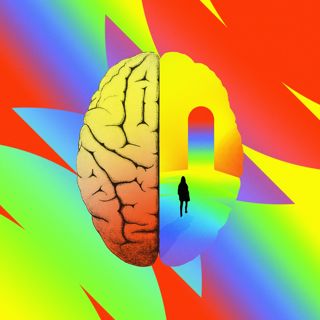
As we grow up, there are little windows of time when we can learn very, very fast, and very, very deeply. Scientists call these moments, critical periods. Real, neurological, biological states when our brain can soak up information like a sponge. Then, these windows of learning close. Locking us in to certain behaviors and skills for the rest of our lives. But … what if we could reopen them? Today, we consider a series of discoveries that are reshaping our understanding of when and how we can learn. And what that could mean for things like PTSD, brain disease, or strokes. And cuddle puddles. It’s a mind-bending discussion. Literally and figuratively.

This is the second episode in an ongoing series hosted by Molly Webster, in conversation with scientists and science-y people, doing work at the furthest edges of what we know. More to come!

Previous episodes in the series:
Up in Smoke (https://zpr.io/zrN5fgZwiWiR)

Special thanks to Gül Dölen, at the University of California, Berkeley, along with researcher Romain Nardou. Plus, Charles Philipp and David Herman.

We have some exciting news! In the “Zoozve” episode, Radiolab named its first-ever quasi-moon, and now it's your turn! Radiolab has teamed up with The International Astronomical Union to launch a global naming contest for one of Earth’s quasi-moons. This is your chance to make your mark on the heavens. Vote on your favorites starting in November: https://radiolab.org/moon

EPISODE CREDITS:
Hosted by - Molly Webster
Reported by - Molly Webster
Produced by -Sindhu Gnanasambandan
with help from - Timmy Broderick and Molly Webster
Original music and sound design contributed by - Dylan Keefe
with mixing help from - Jeremy Bloom
Fact-checking by - Emily Krieger
and Edited by - Soren Wheeler

EPISODE CITATIONS:

Science Articles -

Gul’s 2019 paper: Oxytocin-dependent reopening of a social reward learning critical period with MDMA (https://zpr.io/wfQjeA6PGCBv) on the feel-good brain chemical oxytocin, and how it reopens social reward learning when combined with MDMA.

Gul’s 2023 paper: Psychedelics reopen the social reward learning critical period (https://zpr.io/TKDKEwiLwGRN) on the role of psychedelics in social reward learning.

Sign-up for our newsletter. It includes short essays, recommendations, and details about other ways to interact with the show. Sign up (https://radiolab.org/newsletter)!

Radiolab is supported by listeners like you. Support Radiolab by becoming a member of The Lab (https://members.radiolab.org/) today.

Follow our show on Instagram, Twitter and Facebook @radiolab, and share your thoughts with us by emailing radiolab@wnyc.org.


Leadership support for Radiolab’s science programming is provided by the Gordon and Betty Moore Foundation, Science Sandbox, a Simons Foundation Initiative, and the John Templeton Foundation. Foundational support for Radiolab was provided by the Alfred P. Sloan Foundation.


Hosted by Simplecast, an AdsWizz company. See pcm.adswizz.com for information about our collection and use of personal data for advertising.

Det här avsnittet är hämtat från ett öppet RSS-flöde och publiceras inte av Podme. Det kan innehålla reklam.

Avsnitt(662)

Neither Confirm Nor Deny

Neither Confirm Nor Deny

In an episode we first ran back in 2014, we explore how a sunken nuclear submarine, a crazy billionaire, and a mechanical claw gave birth to a phrase that has hounded journalists and lawyers for 40 ye...

17 Juli 0s

The Holy Shiver

The Holy Shiver

Lauren Brown gets goosebumps. A lot. Sometimes several times a day. When her partner, writer Carmen Maria Machado, noticed it...she couldn't stop thinking about it. Why does she get them in so many di...

10 Juli 0s

Atomic Artifacts

Atomic Artifacts

Back in the 1950s, facing the threat of nuclear annihilation, federal officials sat down and pondered what American life would actually look like after an atomic attack. They faced a slew of practical...

3 Juli 40min

The Gondolier

The Gondolier

Back in 2017, reporters Kristen Clark and David Conrad came to us with a story that dug into the difficult and often dark places discrimination creates. We start in Venice, Italy, where they meet gond...

26 Juni 1h 13min

This is Your Brain on Hormones

This is Your Brain on Hormones

After reading something that said her menstrual cycle changes her brain each month, Senior Correspondent Molly Webster goes on a reporting mission to see if that’s true, and, if so, how. This journey ...

19 Juni 39min

Bonus: Wild Animal Dads from Terrestrials

Bonus: Wild Animal Dads from Terrestrials

In honor of Father's Day, here is a family friendly bonus episode from our kids' podcast Terrestrials.  What does it really mean to be a dad? In the animal world, fathers have long been painted as ag...

18 Juni 35min

On the Media: American Emergency

On the Media: American Emergency

A little while back, our friends over at On the Media released a gripping and immersive reporting series about FEMA, the agency that is supposed to be there for all of us in the wake of disaster. In A...

12 Juni 55min

Oliver Sipple

Oliver Sipple

One morning, Oliver Sipple went out for a walk. A couple hours later, to his own surprise, he saved the life of the President of the United States. In a story we reported back in 2017, we explain how ...

5 Juni 1h 3min

Populärt inom Vetenskap

p3-dystopia
dumma-manniskor
allt-du-velat-veta
hacka-livet
svd-nyhetsartiklar
medicinvetarna
bildningspodden
sexet
rss-spraket
rss-vetenskapsradion-2
psykopatpodden
rss-arkeologi-historia-podden-som-graver-i-vart-kulturlandskap
det-morka-psyket
rss-ufobortom-rimligt-tvivel
vetenskapsradion
rss-ronden
4health-med-anna-sparre
rss-vetenskapsradion
rss-broccolipodden-en-podcast-som-inte-handlar-om-broccoli
kvalificerat-hemligt-poddradio