
Cathy O'Neil on Pernicious Machine Learning Algorithms and How to Audit Them

Cathy O'Neil on Pernicious Machine Learning Algorithms and How to Audit Them

In this week's podcast InfoQ’s editor-in-chief Charles Humble talks to Data Scientist Cathy O’Neil. O'Neil is the author of the blog mathbabe.org. She was the former Director of the Lede Program in Data Practices at Columbia University Graduate School of Journalism, Tow Center and was employed as Data Science Consultant at Johnson Research Labs. O'Neil earned a mathematics Ph.D. from Harvard University. Topics discussed include her book “Weapons of Math Destruction,” predictive policing models, the teacher value added model, approaches to auditing algorithms and whether government regulation of the field is needed. Why listen to this podcast: - There is a class of pernicious big data algorithms that are increasingly controlling society but are not open to scrutiny. - Flawed data can result in an algorithm that is, for instance, racist and sexist. For example, the data used in predictive policing models is racist. But people tend to be overly trusting of algorithms because they are mathematical. - Data scientists have to make ethical decisions even if they don’t acknowledge it. Often problems stem from an abdication of responsibility. - Auditing for algorithms is still a very young field with ongoing academic research exploring approaches. - Government regulation of the industry may well be required. Notes and links can be found on http://bit.ly/2eYVb9q Weapons of math destruction 0m:43s - The central thesis of the book is that whilst not all algorithms are bad, there is a class of pernicious big data algorithms that are increasingly controlling society. 1m:32s - The classes of algorithm that O'Neil is concerned about - the weapons of math destruction - have three characteristics: they are widespread and impact on important decisions like whether someone can go to college or get a job, they are somehow secret so that the people who are being targeted don’t know they are being scored or don’t understand how their score is computed; and the third characteristic is they are destructive - they ruin lives. 2m:51s - These characteristics undermine the original intention of the algorithm, which is often trying to solve big society problems with the help of data. More on this: Quick scan our curated show notes on InfoQ. http://bit.ly/2eYVb9q You can also subscribe to the InfoQ newsletter to receive weekly updates on the hottest topics from professional software development. bit.ly/24x3IVq

Det här avsnittet är hämtat från ett öppet RSS-flöde och publiceras inte av Podme. Det kan innehålla reklam.

Avsnitt(396)

AI, ML, and Data Engineering InfoQ Trends Report 2026

AI, ML, and Data Engineering InfoQ Trends Report 2026

In this episode of the podcast, members of the InfoQ AI and MIL editorial staff and friends of InfoQ discuss the current trends in the domain of AI, ML and Data Engineering. One of the regular featur...

30 Okt 1h 11min

The Future of Web Apps: Will AI Agents Generate UIs on the Fly?

The Future of Web Apps: Will AI Agents Generate UIs on the Fly?

Rachel Lee Nabors, former React core team member, dives into the architecture and philosophy behind local-first applications, exploring how small language models (SLMs) running directly on-device can ...

19 Okt 47min

What Does It Really Mean To Program With AI: A Conversation with Joy Ebertz

What Does It Really Mean To Program With AI: A Conversation with Joy Ebertz

In this podcast, Michael Stiefel spoke to Joy Ebertz about how the use of artificial intelligence is changing the way architects and developers do their jobs. Focusing on the long term success of the ...

12 Okt 44min

Future Cybersecurity: Hardware Memory Safety, Automated Governance and Post-Quantum Cryptography

Future Cybersecurity: Hardware Memory Safety, Automated Governance and Post-Quantum Cryptography

In this episode, Chris Swan, engineer at Atsign and security track host at QCon London, reflects on the ideas shared during QCon London 2026 and teases topics of the future edition. The discussion exp...

5 Okt 34min

The AI Revolution Fails Without Psychological Safety For Developers: A Conversation with Erin Doyle

The AI Revolution Fails Without Psychological Safety For Developers: A Conversation with Erin Doyle

In this podcast, Michael Stiefel spoke to Erin Doyle about how artificial intelligence tools are transforming the software development process, and how they are affecting software engineers. Architect...

28 Sep 54min

The Future of AI: From Enterprise Adoption to Open Source Sovereignty

The Future of AI: From Enterprise Adoption to Open Source Sovereignty

In this episode, a panel of AI experts, Meryem Arik (DoubleWord), Clara Higuera Cabañes (BBVA), and Jeff Smith (C Proof), demystify the current state of AI in the enterprise. The discussion navigates ...

25 Sep 52min
Securing AI Agents: Identity, Authorisation, and the DPACT Framework

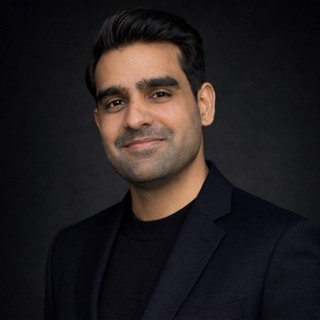
Securing AI Agents: Identity, Authorisation, and the DPACT Framework

In this episode, Sahil Agarwal talks about the critical challenges of identity, authorisation, and security in the age of AI agents. Sahil introduces the DPACT framework (Delegation, Policy, Auditabil...

21 Sep 41min

How Will We Train Developers If AI Does the Routine Work: A Conversation with Scott Hanselman

How Will We Train Developers If AI Does the Routine Work: A Conversation with Scott Hanselman

In this podcast Michael Stiefel spoke to Scott Hanselman about developing new software engineers when artificial intelligence agents are doing most of the work on which junior developers were trained....

14 Sep 36min

Populärt inom Teknik

uppgang-och-fall
bilar-med-sladd
elbilsveckan
rss-snacka-om-ai
rss-ai-med-jonas-benjamin
rss-veckans-ai
natets-morka-sida
rss-elektrikerpodden
market-makers
skogsforum-podcast
rss-uppgang-och-fall
bli-saker-podden
rss-technokratin
vi-bilagares-podcast
rss-en-ai-till-kaffet
garagehang
gubbar-som-tjotar-om-bilar
rss-it-sakerhetspodden
rss-ai-gothenburg-podcast
bosse-bildoktorn-och-hasse-p