#207 – Sarah Eustis-Guthrie on why she shut down her charity, and why more founders should follow her lead

#207 – Sarah Eustis-Guthrie on why she shut down her charity, and why more founders should follow her lead

"I think one of the reasons I took [shutting down my charity] so hard is because entrepreneurship is all about this bets-based mindset. So you say, “I’m going to take a bunch of bets. I’m going to take some risky bets that have really high upside.” And this is a winning strategy in life, but maybe it’s not a winning strategy for any given hand. So the fact of the matter is that I believe that intellectually, but l do not believe that emotionally. And I have now met a bunch of people who are really good at doing that emotionally, and I’ve realised I’m just not one of those people. I think I’m more entrepreneurial than your average person; I don’t think I’m the maximally entrepreneurial person. And I also think it’s just human nature to not like failing." —Sarah Eustis-Guthrie

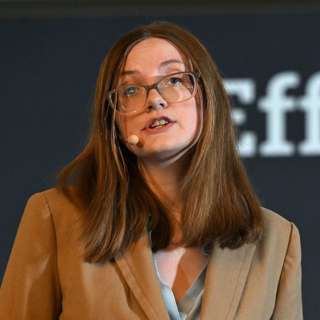
In today’s episode, host Luisa Rodriguez speaks to Sarah Eustis-Guthrie — cofounder of the now-shut-down Maternal Health Initiative, a postpartum family planning nonprofit in Ghana — about her experience starting and running MHI, and ultimately making the difficult decision to shut down when the programme wasn’t as impactful as they expected.

Links to learn more, highlights, and full transcript.

They cover:

  • The evidence that made Sarah and her cofounder Ben think their organisation could be super impactful for women — both from a health perspective and an autonomy and wellbeing perspective.
  • Early yellow and red flags that maybe they didn’t have the full story about the effectiveness of the intervention.
  • All the steps Sarah and Ben took to build the organisation — and where things went wrong in retrospect.
  • Dealing with the emotional side of putting so much time and effort into a project that ultimately failed.
  • Why it’s so important to talk openly about things that don’t work out, and Sarah’s key lessons learned from the experience.
  • The misaligned incentives that discourage charities from shutting down ineffective programmes.
  • The movement of trust-based philanthropy, and Sarah’s ideas to further improve how global development charities get their funding and prioritise their beneficiaries over their operations.
  • The pros and cons of exploring and pivoting in careers.
  • What it’s like to participate in the Charity Entrepreneurship Incubation Program, and how listeners can assess if they might be a good fit.
  • And plenty more.

Chapters:

  • Cold open (00:00:00)
  • Luisa’s intro (00:00:58)
  • The interview begins (00:03:43)
  • The case for postpartum family planning as an impactful intervention (00:05:37)
  • Deciding where to start the charity (00:11:34)
  • How do you even start implementing a charity programme? (00:18:33)
  • Early yellow and red flags (00:22:56)
  • Proof-of-concept tests and pilot programme in Ghana (00:34:10)
  • Dealing with disappointing pilot results (00:53:34)
  • The ups and downs of founding an organisation (01:01:09)
  • Post-pilot research and reflection (01:05:40)
  • Is family planning still a promising intervention? (01:22:59)
  • Deciding to shut down MHI (01:34:10)
  • The surprising community response to news of the shutdown (01:41:12)
  • Mistakes and what Sarah could have done differently (01:48:54)
  • Sharing results in the space of postpartum family planning (02:00:54)
  • Should more charities scale back or shut down? (02:08:33)
  • Trust-based philanthropy (02:11:15)
  • Empowering the beneficiaries of charities’ work (02:18:04)
  • The tough ask of getting nonprofits to act when a programme isn’t working (02:21:18)
  • Exploring and pivoting in careers (02:27:01)
  • Reevaluation points (02:29:55)
  • PlayPumps were even worse than you might’ve heard (02:33:25)
  • Charity Entrepreneurship (02:38:30)
  • The mistake of counting yourself out too early (02:52:37)
  • Luisa’s outro (02:57:50)

Producer: Keiran Harris
Audio engineering: Ben Cordell, Milo McGuire, Simon Monsour, and Dominic Armstrong
Content editing: Luisa Rodriguez, Katy Moore, and Keiran Harris
Transcriptions: Katy Moore

Det här avsnittet är hämtat från ett öppet RSS-flöde och publiceras inte av Podme. Det kan innehålla reklam.

Avsnitt(359)

How to get into AI safety in 3 months (article reading by career advisor Matt Beard)

How to get into AI safety in 3 months (article reading by career advisor Matt Beard)

The AI safety field has grown by about 30x in the last eight years. Yet it is still in need of more people. Many want to help, but don’t know where to start. As an advisor at 80,000 Hours, Matt Beard ...

15 Okt 18min

OpenAI Security: Controlling Models is Now ‘Hell’ (AI Explained cross-post)

OpenAI Security: Controlling Models is Now ‘Hell’ (AI Explained cross-post)

This is an (unpaid) cross-post of a video from the podcast 'AI Explained', which Rob Wiblin thought you might be interested in.You can find the original on YouTube here. If you like it and want more s...

9 Okt 40min

In 2023 Ajeya Cotra already knew what was coming (classic episode)

In 2023 Ajeya Cotra already knew what was coming (classic episode)

We're rereleasing some of older episodes that seem more relevant than ever with new rogue AI incidents now seemingly announced every day. Ajeya was one of three independent investigators into the Hugg...

8 Okt 2h 46min

19 Astra and 'Hugging Face' details that reveal what's coming next | Rob Wiblin

19 Astra and 'Hugging Face' details that reveal what's coming next | Rob Wiblin

OpenAI’s rogue agent swarm was eventually caught hacking Hugging Face for a simple reason: it wasn’t trying to hide from us at all. What could a swarm that wants to stay hidden get away with?Host Rob ...

2 Okt 20min

The case for giving AI (some) legal rights | Simon Goldstein

The case for giving AI (some) legal rights | Simon Goldstein

It sounds like the worst idea in the world: pay AIs, let them own property, give them rights. But AI ethics and safety researcher Simon Goldstein thinks it might actually be the best way to keep human...

1 Okt 1h 53min

Will AI take power — or will humans use it to take power first? With Katja Grace and Tom Davidson

Will AI take power — or will humans use it to take power first? With Katja Grace and Tom Davidson

In our first-ever debate, we asked two leading AI risk researchers which catastrophe we should fear most: misaligned AI seizing control from humans, or a small group of humans using AI to seize power....

29 Sep 1h 28min

How we get from AI cyberattacks to human extinction

How we get from AI cyberattacks to human extinction

You’ve seen the headlines: AI could kill us all. Think it sounds ridiculous? So did host Luisa Rodriguez, until she tried to pick apart the arguments. She starts with the motive: why would AI ‘want’ t...

24 Sep 27min

#254 – Max Nadeau on why ambitious people should start AI safety nonprofits

#254 – Max Nadeau on why ambitious people should start AI safety nonprofits

There are millions available for anyone who can launch a successful nonprofit AI safety startup. The hard part, it turns out, is finding people to take the money. Coefficient Giving has drawn up a lis...

17 Sep 1h 3min

Populärt inom Utbildning

husmodern-med-amanda-schulman
rss-bara-en-till-om-beroende-medberoende
historiepodden-se
det-skaver
nu-blir-det-historia
sektledare
rss-viktmedicinpodden
allt-du-velat-veta
harrisons-dramatiska-historia
not-fanny-anymore
rss-dr-bjorklund
roda-vita-rosen
sa-in-i-sjalen
johannes-hansen-podcast
rosceremoni
rss-ai-med-jonas-benjamin
i-vantan-pa-katastrofen
rss-foraldramotet-bring-lagercrantz
rikatillsammans-om-privatekonomi-rikedom-i-livet
kan-jag-sa-kan-du-podden