243: Saving Lives Before Disaster Strikes - Ron Harris on Proactive Risk Reduction
Seismic Soundoff21 Nov 2024

243: Saving Lives Before Disaster Strikes - Ron Harris on Proactive Risk Reduction

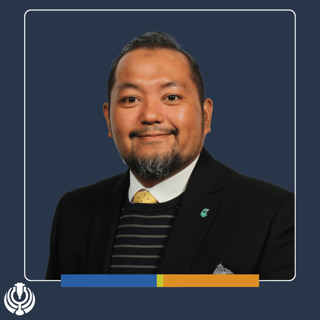
"The 2004 Indian Ocean tsunami was a wake-up call. It showed me that even the best science fails without effective communication and proactive strategies to save lives." In this episode, host Andrew Geary talks with Ron Harris, Geological Sciences Professor at Brigham Young University, about his groundbreaking work in disaster preparedness. Ron shares insights from his Global Sustainability lecture (supported by the Baker Hughes Foundation) and the Geoscientists without Borders Java WAVES project, which focuses on how scientific research can save lives in disaster-prone regions. KEY POINTS & TAKEAWAYS > Proactive Disaster Preparedness: Ron champions moving beyond reactive approaches, using community-based education to prepare for potential hazards before they occur. > The "20-20-20" Evacuation Principle: This innovative rule helps communities quickly self-evacuate after earthquakes. By combining scientific data with simple messaging, Ron created a lifesaving tool anyone can understand and implement. > Science Meets Community Action: Through his WAVES team, Geoscientists without Borders, and In Harm's Way, Ron proves that bridging scientific insights with local leadership can dramatically reduce disaster risks. > Cultural Engagement: Ron has found powerful ways to boost community preparedness by collaborating with Indonesian scouting groups and integrating local heroes into disaster messaging. > A Challenge to Future Geoscientists: Ron encourages young researchers to align their skills with societal needs, demonstrating how scientific expertise can create real-world impact. LINKS * Support GWB - https://seg.org/programs/geoscientists-without-borders/ * Register for Ron's talk - https://seg.org/education/lectures/seg-global-sustainability-lectures-ron-harris/ * Visit https://seg.org/podcasts/episode-243-saving-lives-before-disaster-strikes-ron-harris-on-proactive-risk-reduction/ to discover past podcasts on humanitarian geophysics and all the links for this episode. GUEST BIO Professor Ron Harris specializes in plate tectonics and associated geophysical hazards. He received his BSc. in Geology from the University of Oregon, an MSc. in Geophysics from the Geophysical Institute of Alaska, and a Ph.D. in Geodynamics from University College London, UK. Ron has worked for oil, mining, and environmental companies, for the U.S. Geological Survey, and with the governments of several developing countries threatened by natural hazards. Dr. Harris has taught at universities in the U.S., Great Britain, Oman, Taiwan, and Indonesia. He has been invited to make over 200 presentations, has 95 peer-reviewed publications, written books and garnered several research grants and awards. Dr. Harris’ research integrates many sub-disciplines, but the common thread is applying geoscience to societal needs. He founded the nonprofit organization In Harm's Way, which identifies areas most vulnerable to natural disasters and helps community-based organizations communicate risk and implement effective risk-reduction strategies that save thousands of lives. SHOW CREDITS Andrew Geary at TreasureMint hosted, edited, and produced this episode. The SEG podcast team comprises Jennifer Cobb, Kathy Gamble, and Ally McGinnis. If you have episode ideas or feedback for the show or want to sponsor a future episode, email the show at podcast@seg.org.

Avsnitt(301)

OTC 2026 Emerging Leaders on the Future of Offshore Energy Collaboration

OTC 2026 Emerging Leaders on the Future of Offshore Energy Collaboration

“Nothing can happen in a vacuum anymore. We need to have the developers talking to the geoscientists, talking to the environmental professionals.” Two OTC 2026 Emerging Leaders share why the future o...

23 Apr 28min

Why Seismic Acquisition Is Making a Quiet Comeback

Why Seismic Acquisition Is Making a Quiet Comeback

"What has happened in the last few years is exploration overall has taken a little bit of a backseat. So they are starting to relook at seismic acquisition to explore new areas and solve more complex ...

16 Apr 27min

From Hype to Reality: What Machine Learning Can Actually Do

From Hype to Reality: What Machine Learning Can Actually Do

“You can't be stationary in this field. I've never seen anything like it." Machine learning is changing geophysics faster than most people expected, but knowing what actually works versus what is hyp...

9 Apr 27min

DAS and Seismic Innovation: What Geophysicists Need to Know

DAS and Seismic Innovation: What Geophysicists Need to Know

"For early career geophysicists, I think it's really important to understand that DAS is going to have a unique role in reservoir management, be it onshore or offshore." Distributed acoustic sensing ...

19 Mars 27min

From Oil and Gas to Offshore Wind: Why Everyone Meets at OTC

From Oil and Gas to Offshore Wind: Why Everyone Meets at OTC

“And what the world really needs is this flexibility on energy and the agility to ensure access and affordability. And that's where steering the offshore energy business is really critical.” Offshore...

12 Mars 29min

Applying Near-Surface Geophysics to Agricultural Challenges

Applying Near-Surface Geophysics to Agricultural Challenges

“It’s not only about discovering resources, but about safeguarding them and safeguarding our future. When you understand the subsurface, you understand the foundation of food security, water security,...

5 Mars 26min

Inside the Workflow - Unsupervised Machine Learning for Seismic Interpretation

Inside the Workflow - Unsupervised Machine Learning for Seismic Interpretation

“The major pitfall of machine learning of any kind is to be overly confident in the results. We run the risk of garbage in gospel out.” This discussion offers a rare chance to go a little deeper into...

19 Feb 35min

Why High-Performance Computing Is No Longer Optional in Geophysics

Why High-Performance Computing Is No Longer Optional in Geophysics

“I think that for geophysicists out there, people need to realize that it's an integrated career path. You can't separate the geophysics from the HPC anymore, if we ever did to begin with.” High-perf...

12 Feb 21min

Populärt inom Vetenskap

p3-dystopia
dumma-manniskor
allt-du-velat-veta
kapitalet-en-podd-om-ekonomi
det-morka-psyket
rss-ufo-bortom-rimligt-tvivel-2
rss-spraket
svd-nyhetsartiklar
rss-vetenskapsradion-2
medicinvetarna
rss-vetenskapsradion
bildningspodden
sexet
paranormalt-med-caroline-giertz
dumforklarat
halsorevolutionen
hacka-livet
rss-odla
vetenskapsradion
rss-tidslinjen-podcast