


08 - Greg Ip on Risks, Financial Disasters, and Helicopter Money
Can trying to be safe actually be dangerous? Greg Ip, chief economics commentator of the Wall Street Journal, says yes in his new book, Foolproof: How Safety Can be Dangerous and How Danger Makes Us Safe. When we try to be too safe, we become complacent. Ip argues that the stability of the '80s and '90s made us take risks that culminated in the 2008 disaster. Being too safe can also explain non-economic problems such as forest fires and football injuries. Ip also shares his thoughts on Fed policy and the possibility of a "helicopter drop" of money. David's blog: http://macromarketmusings.blogspot.com/ David's Twitter: https://twitter.com/DavidBeckworth Greg Ip's WSJ archive: http://www.wsj.com/news/author/8223 Greg Ip's Twitter: https://twitter.com/greg_ip Links from today's show http://www.amazon.com/Foolproof-Safety-Dangerous-Danger-Makes/dp/0316286044 http://www.amazon.com/Little-Book-Economics-Economy-Profits/dp/0470621664 http://blogs.wsj.com/economics/ http://blogs.wsj.com/economics/2016/03/21/the-time-and-place-for-helicopter-money/
30 Maj 201657min

07 - George Selgin on the Productivity Norm, Deflation, and Monetary History
George Selgin, director of the Cato Institute's Center for Monetary and Financial Alternatives, makes the case that central banks, rather than focusing on the price level or inflation rate, should instead allow inflation to reflect changes in productivity growth. According to this productivity norm, deflation can actually be a good thing if it reflects improved productivity. Selgin examines the Great Deflation of the late 1800s and dispels some of the popular myths surrounding that period. He also discusses what the Fed got wrong in the lead-up to the recent financial crisis. David's blog: http://macromarketmusings.blogspot.com/ David's Twitter: https://twitter.com/DavidBeckworth Georg Selgin's Cato archive: http://www.cato.org/people/george-selgin George Selgin's Twitter: https://twitter.com/georgeselgin Links from today's show: http://www.iea.org.uk/sites/default/files/publications/files/upldbook98pdf.pdf https://www.minneapolisfed.org/research/sr/sr331.pdf http://voxeu.org/article/historical-look-deflation http://hope.dukejournals.org/content/27/4/705.full.pdf+html (subscription required)
23 Maj 20161h 1min

06 - Ramesh Ponnuru on the Politics of Monetary Policy
National Review senior editor Ramesh Ponnuru discusses his adventure into monetary economics. He shares his thoughts on some of the current-day misconceptions surrounding Federal Reserve policy and makes the case for a more nuanced, yet rules-based approach toward monetary policy. *Note: The host and guest briefly mention 2016 presidential candidate Ted Cruz and Cruz's views on monetary policy. This episode was recorded before Cruz suspended his presidential campaign. David's blog: http://macromarketmusings.blogspot.com/ David's Twitter: https://twitter.com/DavidBeckworth Ramesh Ponnuru's NRO archive: http://www.nationalreview.com/author/ramesh-ponnuru Ramesh's Twitter: https://twitter.com/rameshponnuru Links from today's show: http://www.nytimes.com/2016/01/27/opinion/subprime-reasoning-on-housing.html https://www.nationalreview.com/nrd/articles/300951/monetary-regime-change https://www.nationalreview.com/nrd/articles/378042/right-goal-central-banks http://www.bloomberg.com/view/articles/2015-08-14/fallible-fed-needs-a-few-good-rules https://newrepublic.com/article/97013/obama-federal-reserve-inflation-loose-money
16 Maj 201651min

05 - Miles Kimball on Negative Interest Rates, Equity Requirements, and Schools of Thought in Macro
Miles Kimball, professor of economics at the University of Michigan and blogger at "Confessions of a Supply-Side Liberal," joins the show to discuss negative interest rates. Kimball explains how the natural rate of interest can go below zero and why central banks should act accordingly. He also makes the case for higher equity requirements for financial institutions. David's blog: macromarketmusings.blogspot.com Miles Kimball's blog: http://blog.supplysideliberal.com/ David's Twitter: https://twitter.com/DavidBeckworth Miles Kimball's Twitter: https://twitter.com/mileskimball Links from today's show: http://blog.supplysideliberal.com/post/56311827170/the-medium-run-natural-interest-rate-and-the https://www.imf.org/external/pubs/ft/wp/2015/wp15224.pdf https://dl.dropboxusercontent.com/u/19721014/National%20Institute%20Economic%20Review-2015-Kimball-R5-R14.pdf http://bankersnewclothes.com/
9 Maj 201659min

04 - Cardiff Garcia on Economics Journalism, Safe Assets, and Inflation
Cardiff Garcia, the US editor of the Financial Times blog, Alphaville, discusses the world of economics journalism, the 2008 crisis, and current monetary policy, both in the United States and abroad. He also shares his thoughts on the demand for so-called "safe assets" in a time of crisis and the difficulties of inflation-targeting. David's blog: http://macromarketmusings.blogspot.com/ http://ftalphaville.ft.com/ David's Twitter: https://twitter.com/DavidBeckworth Cardiff's Twitter: https://twitter.com/CardiffGarcia
2 Maj 20161h 1min
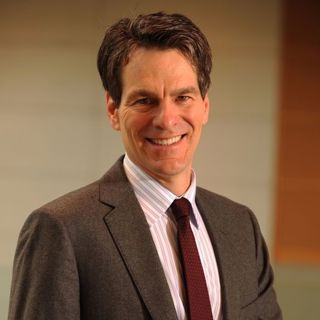
03 - John Cochrane on Finance, the Fiscal Theory of the Price Level, and Blogging
In this episode, John Cochrane, senior fellow at the Hoover Institution and blogger at The Grumpy Economist, discusses his journey into economics and finance with host David Beckworth. They also discuss the controversial fiscal theory of the price level, which argues that fiscal policy, not monetary policy set by central banks, primarily determines inflation. David's blog: http://macromarketmusings.blogspot.com/ John Cochrane's blog: http://johnhcochrane.blogspot.com/ John Cochrane's Twitter: https://twitter.com/JohnHCochrane Links from today's conversation: http://faculty.chicagobooth.edu/john.cochrane/research/papers/Campbell_Cochrane_By_Force_of_Habit_(JPE).pdf http://faculty.chicagobooth.edu/john.cochrane/research/papers/New_Structure.pdf http://isites.harvard.edu/fs/docs/icb.topic500592.files/sargent%20wallace.pdf
25 Apr 201657min
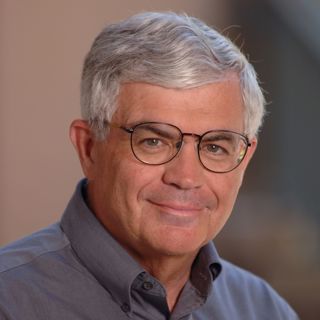
02 - John Taylor on the Taylor Rule, the 2008 Crisis, and Fed Reform
John Taylor of Stanford University and the Hoover Institution joins host David Beckworth to discuss Taylor's famous monetary rule for central banks in setting interest rates in response to changes in inflation and output. They discuss how Taylor discovered the rule and how it has performed over time. Taylor also shares his thoughts for improving current Federal Reserve policy. David's blog: http://macromarketmusings.blogspot.com John Taylor's blog: http://economicsone.com/ Links from today's conversation: http://web.stanford.edu/~johntayl/Papers/Discretion.PDF http://www.federalreserve.gov/newsevents/speech/yellen20120606a.htm http://www.hoover.org/sites/default/files/research/docs/jmcb_lecture.pdf http://www.hoover.org/press-releases/hoover-press-getting-track-how-government-actions-and-interventions-caused-prolonged https://huizenga.house.gov/uploadedfiles/3189.fed.reform.section.by.section.pdf
18 Apr 201656min

01 - Scott Sumner on *The Midas Paradox*, the Fed, and More
Welcome to Macro Musings, a new podcast exploring the important macroeconomic issues of the past, present, and future. In the inaugural episode, Scott Sumner joins host David Beckworth to talk about Scott's new book *The Midas Paradox*, which advances a bold new explanation of what caused the Great Depression. They also discuss Scott's path into macro and monetary economics as well as what the Fed got wrong in 2008. David's blog: http://macromarketmusings.blogspot.com Scott's blog: http://www.themoneyillusion.com/ Links from today's conversation: http://www.amazon.com/The-Midas-Paradox-Government-Depression/dp/1598131508 http://www.nytimes.com/2016/01/27/opinion/subprime-reasoning-on-housing.html?_r=0
31 Mars 201655min





















