
#209 – Rose Chan Loui on OpenAI’s gambit to ditch its nonprofit

#209 – Rose Chan Loui on OpenAI’s gambit to ditch its nonprofit

One OpenAI critic calls it “the theft of at least the millennium and quite possibly all of human history.” Are they right?

Back in 2015 OpenAI was but a humble nonprofit. That nonprofit started a for-profit, OpenAI LLC, but made sure to retain ownership and control. But that for-profit, having become a tech giant with vast staffing and investment, has grown tired of its shackles and wants to change the deal.

Facing off against it stand eight out-gunned and out-numbered part-time volunteers. Can they hope to defend the nonprofit’s interests against the overwhelming profit motives arrayed against them?

That’s the question host Rob Wiblin puts to nonprofit legal expert Rose Chan Loui of UCLA, who concludes that with a “heroic effort” and a little help from some friendly state attorneys general, they might just stand a chance.

Links to learn more, highlights, video, and full transcript.

As Rose lays out, on paper OpenAI is controlled by a nonprofit board that:

  • Can fire the CEO.
  • Would receive all the profits after the point OpenAI makes 100x returns on investment.
  • Is legally bound to do whatever it can to pursue its charitable purpose: “to build artificial general intelligence that benefits humanity.”

But that control is a problem for OpenAI the for-profit and its CEO Sam Altman — all the more so after the board concluded back in November 2023 that it couldn’t trust Altman and attempted to fire him (although those board members were ultimately ousted themselves after failing to adequately explain their rationale).

Nonprofit control makes it harder to attract investors, who don’t want a board stepping in just because they think what the company is doing is bad for humanity. And OpenAI the business is thirsty for as many investors as possible, because it wants to beat competitors and train the first truly general AI — able to do every job humans currently do — which is expected to cost hundreds of billions of dollars.

So, Rose explains, they plan to buy the nonprofit out. In exchange for giving up its windfall profits and the ability to fire the CEO or direct the company’s actions, the board will become minority shareholders with reduced voting rights, and presumably transform into a normal grantmaking foundation instead.

Is this a massive bait-and-switch? A case of the tail not only wagging the dog, but grabbing a scalpel and neutering it?

OpenAI repeatedly committed to California, Delaware, the US federal government, founding staff, and the general public that its resources would be used for its charitable mission and it could be trusted because of nonprofit control. Meanwhile, the divergence in interests couldn’t be more stark: every dollar the for-profit keeps from its nonprofit parent is another dollar it could invest in AGI and ultimately return to investors and staff.

Chapters:

  • Cold open (00:00:00)
  • What's coming up (00:00:50)
  • Who is Rose Chan Loui? (00:03:11)
  • How OpenAI carefully chose a complex nonprofit structure (00:04:17)
  • OpenAI's new plan to become a for-profit (00:11:47)
  • The nonprofit board is out-resourced and in a tough spot (00:14:38)
  • Who could be cheated in a bad conversion to a for-profit? (00:17:11)
  • Is this a unique case? (00:27:24)
  • Is control of OpenAI 'priceless' to the nonprofit in pursuit of its mission? (00:28:58)
  • The crazy difficulty of valuing the profits OpenAI might make (00:35:21)
  • Control of OpenAI is independently incredibly valuable and requires compensation (00:41:22)
  • It's very important the nonprofit get cash and not just equity (and few are talking about it) (00:51:37)
  • Is it a farce to call this an "arm's-length transaction"? (01:03:50)
  • How the nonprofit board can best play their hand (01:09:04)
  • Who can mount a court challenge and how that would work (01:15:41)
  • Rob's outro (01:21:25)

Producer: Keiran Harris
Audio engineering by Ben Cordell, Milo McGuire, Simon Monsour, and Dominic Armstrong
Video editing: Simon Monsour
Transcriptions: Katy Moore

Avsnitt(321)

#121 – Matthew Yglesias on avoiding the pundit's fallacy and how much military intervention can be used for good

#121 – Matthew Yglesias on avoiding the pundit's fallacy and how much military intervention can be used for good

If you read polls saying that the public supports a carbon tax, should you believe them? According to today's guest — journalist and blogger Matthew Yglesias — it's complicated, but probably not. Link...

16 Feb 20223h 4min

#120 – Audrey Tang on what we can learn from Taiwan’s experiments with how to do democracy

#120 – Audrey Tang on what we can learn from Taiwan’s experiments with how to do democracy

In 2014 Taiwan was rocked by mass protests against a proposed trade agreement with China that was about to be agreed without the usual Parliamentary hearings. Students invaded and took over the Parlia...

2 Feb 20222h 5min
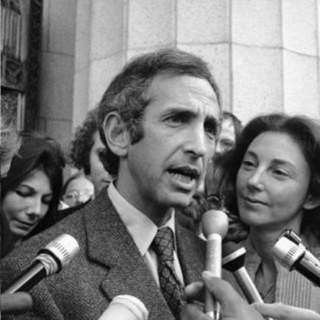
#43 Classic episode - Daniel Ellsberg on the institutional insanity that maintains nuclear doomsday machines

#43 Classic episode - Daniel Ellsberg on the institutional insanity that maintains nuclear doomsday machines

Rebroadcast: this episode was originally released in September 2018.In Stanley Kubrick’s iconic film Dr. Strangelove, the American president is informed that the Soviet Union has created a secret dete...

18 Jan 20222h 35min

#35 Classic episode - Tara Mac Aulay on the audacity to fix the world without asking permission

#35 Classic episode - Tara Mac Aulay on the audacity to fix the world without asking permission

Rebroadcast: this episode was originally released in June 2018. How broken is the world? How inefficient is a typical organisation? Looking at Tara Mac Aulay’s life, the answer seems to be ‘very’. A...

10 Jan 20221h 23min
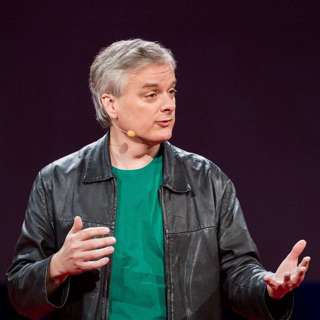
#67 Classic episode – David Chalmers on the nature and ethics of consciousness

#67 Classic episode – David Chalmers on the nature and ethics of consciousness

Rebroadcast: this episode was originally released in December 2019. What is it like to be you right now? You're seeing this text on the screen, smelling the coffee next to you, and feeling the warmth...

3 Jan 20224h 42min
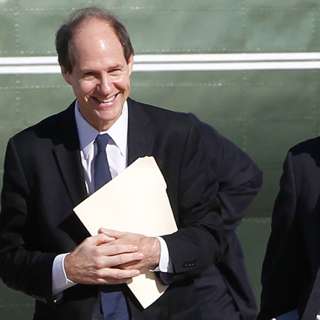
#59 Classic episode - Cass Sunstein on how change happens, and why it's so often abrupt & unpredictable

#59 Classic episode - Cass Sunstein on how change happens, and why it's so often abrupt & unpredictable

Rebroadcast: this episode was originally released in June 2019. It can often feel hopeless to be an activist seeking social change on an obscure issue where most people seem opposed or at best indiff...

27 Dec 20211h 43min

#119 – Andrew Yang on our very long-term future, and other topics most politicians won’t touch

#119 – Andrew Yang on our very long-term future, and other topics most politicians won’t touch

Andrew Yang — past presidential candidate, founder of the Forward Party, and leader of the 'Yang Gang' — is kind of a big deal, but is particularly popular among listeners to The 80,000 Hours Podcast....

20 Dec 20211h 25min
#118 – Jaime Yassif on safeguarding bioscience to prevent catastrophic lab accidents and bioweapons development

#118 – Jaime Yassif on safeguarding bioscience to prevent catastrophic lab accidents and bioweapons development

If a rich country were really committed to pursuing an active biological weapons program, there’s not much we could do to stop them. With enough money and persistence, they’d be able to buy equipment,...

13 Dec 20212h 15min

Populärt inom Utbildning

historiepodden-se
rss-bara-en-till-om-missbruk-medberoende-2
det-skaver
harrisons-dramatiska-historia
nu-blir-det-historia
rss-viktmedicinpodden
roda-vita-rosen
johannes-hansen-podcast
allt-du-velat-veta
sektledare
rss-sjalsligt-avkladd
i-vantan-pa-katastrofen
not-fanny-anymore
rss-beratta-alltid-det-har
rss-max-tant-med-max-villman
alska-oss
sa-in-i-sjalen
rikatillsammans-om-privatekonomi-rikedom-i-livet
rss-basta-livet
polisutbildningspodden