#209 – Rose Chan Loui on OpenAI’s gambit to ditch its nonprofit

#209 – Rose Chan Loui on OpenAI’s gambit to ditch its nonprofit

One OpenAI critic calls it “the theft of at least the millennium and quite possibly all of human history.” Are they right?

Back in 2015 OpenAI was but a humble nonprofit. That nonprofit started a for-profit, OpenAI LLC, but made sure to retain ownership and control. But that for-profit, having become a tech giant with vast staffing and investment, has grown tired of its shackles and wants to change the deal.

Facing off against it stand eight out-gunned and out-numbered part-time volunteers. Can they hope to defend the nonprofit’s interests against the overwhelming profit motives arrayed against them?

That’s the question host Rob Wiblin puts to nonprofit legal expert Rose Chan Loui of UCLA, who concludes that with a “heroic effort” and a little help from some friendly state attorneys general, they might just stand a chance.

Links to learn more, highlights, video, and full transcript.

As Rose lays out, on paper OpenAI is controlled by a nonprofit board that:

  • Can fire the CEO.
  • Would receive all the profits after the point OpenAI makes 100x returns on investment.
  • Is legally bound to do whatever it can to pursue its charitable purpose: “to build artificial general intelligence that benefits humanity.”

But that control is a problem for OpenAI the for-profit and its CEO Sam Altman — all the more so after the board concluded back in November 2023 that it couldn’t trust Altman and attempted to fire him (although those board members were ultimately ousted themselves after failing to adequately explain their rationale).

Nonprofit control makes it harder to attract investors, who don’t want a board stepping in just because they think what the company is doing is bad for humanity. And OpenAI the business is thirsty for as many investors as possible, because it wants to beat competitors and train the first truly general AI — able to do every job humans currently do — which is expected to cost hundreds of billions of dollars.

So, Rose explains, they plan to buy the nonprofit out. In exchange for giving up its windfall profits and the ability to fire the CEO or direct the company’s actions, the board will become minority shareholders with reduced voting rights, and presumably transform into a normal grantmaking foundation instead.

Is this a massive bait-and-switch? A case of the tail not only wagging the dog, but grabbing a scalpel and neutering it?

OpenAI repeatedly committed to California, Delaware, the US federal government, founding staff, and the general public that its resources would be used for its charitable mission and it could be trusted because of nonprofit control. Meanwhile, the divergence in interests couldn’t be more stark: every dollar the for-profit keeps from its nonprofit parent is another dollar it could invest in AGI and ultimately return to investors and staff.

Chapters:

  • Cold open (00:00:00)
  • What's coming up (00:00:50)
  • Who is Rose Chan Loui? (00:03:11)
  • How OpenAI carefully chose a complex nonprofit structure (00:04:17)
  • OpenAI's new plan to become a for-profit (00:11:47)
  • The nonprofit board is out-resourced and in a tough spot (00:14:38)
  • Who could be cheated in a bad conversion to a for-profit? (00:17:11)
  • Is this a unique case? (00:27:24)
  • Is control of OpenAI 'priceless' to the nonprofit in pursuit of its mission? (00:28:58)
  • The crazy difficulty of valuing the profits OpenAI might make (00:35:21)
  • Control of OpenAI is independently incredibly valuable and requires compensation (00:41:22)
  • It's very important the nonprofit get cash and not just equity (and few are talking about it) (00:51:37)
  • Is it a farce to call this an "arm's-length transaction"? (01:03:50)
  • How the nonprofit board can best play their hand (01:09:04)
  • Who can mount a court challenge and how that would work (01:15:41)
  • Rob's outro (01:21:25)

Producer: Keiran Harris
Audio engineering by Ben Cordell, Milo McGuire, Simon Monsour, and Dominic Armstrong
Video editing: Simon Monsour
Transcriptions: Katy Moore

Avsnitt(324)

#19 - Samantha Pitts-Kiefer on working next to the White House trying to prevent nuclear war

#19 - Samantha Pitts-Kiefer on working next to the White House trying to prevent nuclear war

Rogue elements within a state’s security forces enrich dozens of kilograms of uranium. It’s then assembled into a crude nuclear bomb. The bomb is transported on a civilian aircraft to Washington D.C, ...

14 Feb 20181h 4min
#18 - Ofir Reich on using data science to end poverty & the spurious action-inaction distinction

#18 - Ofir Reich on using data science to end poverty & the spurious action-inaction distinction

Ofir Reich started out doing math in the military, before spending 8 years in tech startups - but then made a sharp turn to become a data scientist focussed on helping the global poor. At UC Berkeley...

31 Jan 20181h 18min
#17 - Will MacAskill on moral uncertainty, utilitarianism & how to avoid being a moral monster

#17 - Will MacAskill on moral uncertainty, utilitarianism & how to avoid being a moral monster

Immanuel Kant is a profoundly influential figure in modern philosophy, and was one of the earliest proponents for universal democracy and international cooperation. He also thought that women have no ...

19 Jan 20181h 52min
#16 - Michelle Hutchinson on global priorities research & shaping the ideas of intellectuals

#16 - Michelle Hutchinson on global priorities research & shaping the ideas of intellectuals

In the 40s and 50s neoliberalism was a fringe movement within economics. But by the 80s it had become a dominant school of thought in public policy, and achieved major policy changes across the Englis...

22 Dec 201755min
#15 - Phil Tetlock on how chimps beat Berkeley undergrads and when it’s wise to defer to the wise

#15 - Phil Tetlock on how chimps beat Berkeley undergrads and when it’s wise to defer to the wise

Prof Philip Tetlock is a social science legend. Over forty years he has researched whose predictions we can trust, whose we can’t and why - and developed methods that allow all of us to be better at p...

20 Nov 20171h 24min
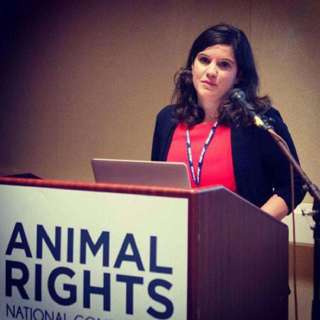
#14 - Sharon Nunez & Jose Valle on going undercover to expose animal abuse

#14 - Sharon Nunez & Jose Valle on going undercover to expose animal abuse

What if you knew that ducks were being killed with pitchforks? Rabbits dumped alive into containers? Or pigs being strangled with forklifts? Would you be willing to go undercover to expose the crime? ...

13 Nov 20171h 25min
#13 - Claire Walsh on testing which policies work & how to get governments to listen to the results

#13 - Claire Walsh on testing which policies work & how to get governments to listen to the results

In both rich and poor countries, government policy is often based on no evidence at all and many programs don’t work. This has particularly harsh effects on the global poor - in some countries governm...

31 Okt 201752min
#12 - Beth Cameron works to stop you dying in a pandemic. Here’s what keeps her up at night.

#12 - Beth Cameron works to stop you dying in a pandemic. Here’s what keeps her up at night.

“When you're in the middle of a crisis and you have to ask for money, you're already too late.” That’s Dr Beth Cameron, who leads Global Biological Policy and Programs at the Nuclear Threat Initiative...

25 Okt 20171h 45min

Populärt inom Utbildning

historiepodden-se
rss-bara-en-till-om-missbruk-medberoende-2
det-skaver
alska-oss
harrisons-dramatiska-historia
nu-blir-det-historia
rss-viktmedicinpodden
sektledare
johannes-hansen-podcast
not-fanny-anymore
allt-du-velat-veta
rss-sjalsligt-avkladd
roda-vita-rosen
i-vantan-pa-katastrofen
rss-max-tant-med-max-villman
sa-in-i-sjalen
rss-om-vi-ska-vara-arliga
rikatillsammans-om-privatekonomi-rikedom-i-livet
polisutbildningspodden
rss-basta-livet