
40: The AIM Curriculum with Mark Dixon and Dana Paliliunas
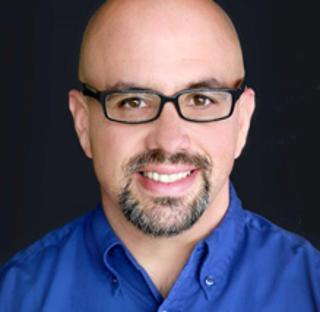
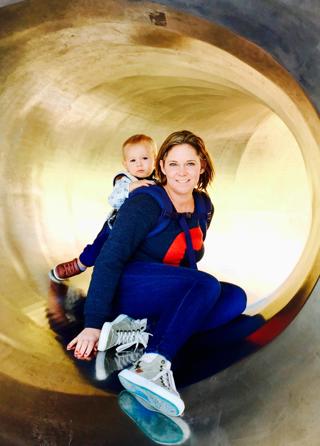
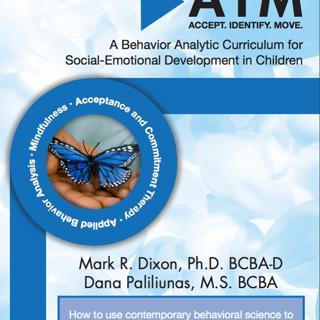
Mark Dixon and Dana Paliliunas join me for Session 40 to discuss the new curriculum they just published, which is called Accept, Identify, and Move. In short, it's a curriculum guide to help kiddos by combining Mindfulness, Acceptance and Commitment Therapy, and Applied Behavior Analysis. In this episode, we touch on a wide range of topics, including classroom interventions, school wide supports, the role of Mark's previous works (e.g., PEAK and ACT for Children with Autism and Emotional Challenges), and even disseminating and teaching complex topics to school personnel. So even if you don't work in school settings, or if you are an ACT-skeptic, I think there are plenty of lessons that are contained in this episode. I've had a chance to review excerpts of the book and in short, it looks fantastic. Personally, I can see many applications of this work in my practice as a school-based consultant. It's available right now at the Shawnee Scientific Press website. We also get into tons of listener questions on Mark's PEAK curriculum. In fact, we could probably do an entire Q & A show on PEAK given its popularity. In that segment of the show, we discuss the PEAK ABA YouTube channel and the PEAK ABA Solutions training arm. You can find links to these resources here and here. This episode is supported by Chartlytics. Chartlytics is a single, comprehensive system for behavior reduction and academic improvement through Precision Teaching. It is based on 50+ years of peer-reviewed research and experience in applied academic and behavioral settings. Chartlytics has modernized the science of Precision Teaching by simplifying the data collection, visual analysis and reporting processes. It is fully automated and easy to use. It produces dramatic, rapid and reliable results, with elegant and simple visual displays. Chartlytics offers an intensive 2-day workshop on Precision Teaching and the Standard Celeration Chart at locations throughout the United States. Participants learn how to supercharge their ABA programs using this powerful technology, which can often produce 10 times the change in targeted pinpoint behaviors - academic, skill, or behavior reduction. For more information, please visit Chartlytics.com/events. Finally visit chartlytics.com/matt for an exclusive offer that provides the following: A brief video showing the effects of using Precision Teaching along with the Chartlytics platform in a clinic that serves children with Autism. A free 1-credit Type 2 BACB Continuing Education webinar, which features Drs. Rick Kubina and Amanda Kelly. A free eBook on precision teaching. Thanks for checking out this show! If you get value from the podcast, please consider visiting iTunes to provide a rating and review. Also, if you have a chance to share this podcast (in person, or online) with like minded behavioral folks, that would be awesome too!
28 Nov 20171h 19min

39: Rick Kubina Schools Me
Precision Teaching (PT), and the Standard Celeration Charting that goes along with it, is an area of Behavior Analysis that I've never really understood. In fairness, I never really took the time to learn it either. That said, since the inception of this podcast, I have had numerous emails from listeners asking me to interview Rick Kubina on this very topic. For various reasons that I describe in our interview, I was scared reluctant to do so, but I'm so glad that Rick and I finally carved out time to record this show. Rick, with Captain James Tiberius Kirk In this episode, Rick covers the basics of PT, why the Standard Celeration Chart is a superior measurement tool, and answers numerous listener questions. Throughout our conversation, we mentioned a few articles and other resources, which can be found here: Rick's YouTube channel, which has some nice primers on the SCC The Chartlytics website and YouTube channel The Precision Teaching Book, by Kubina & Yurich (2012) The Standard Celeration Society's website and Facebook page A cool study (Datchuk & Kubina, 2017) on using these strategies for improving sentence writing Kubina et al. (2015). A Critical Review of Line Graphs in Behavior Analytic Journals So when you listen to this episode, you'll hear me profess my ignorance on all things PT. However, I will be taking action to remediate this by attending Rick's 2-day PT workshop that's coming up in Las Vegas. Rick, and the company he co-founded, Chartlytics, also have workshops that are coming up in Miami and Pittsburg, with more to be scheduled. If you are interested in diving into PT like I am, but can't get away to attend one of Rick's workshops, the folks at Chartlytics have put together a comprehensive online learning package that includes 30 hours of instruction, the Kubina & Yurich textbook, and a very special bonus that you'll have to see to appreciate. To sweeten the deal, they are offering a huge discount for listeners of The Behavioral Observations Podcast. You can check out the deal by clicking the here.
10 Nov 20171h 35min

38: The Next Gen Revolution Summit
Hi Folks, I am on day 2 of not having any power (huge windstorm hit New Hampshire on Sunday night/Monday morning), so please excuse the lack of show notes for this episode. I'll update as soon as I can. So here's the Twitter version: I speak with five out of the seven or eight speakers at the 2017 NextGen Revolution Summit Conference, which is being held in Miami, FL on 11/11/17. It is also available to live stream on the interwebs! If you're interested in checking it out, and you want to save a few bucks, use the promo code MATT at checkout. It's well worth checking out, so if you want more details, head over to https://nextgenrevolutionsummit.com/ for more info!
31 Okt 201755min

37: Sustainability & Straws with Amanda Kelly
Do you want to hear a cool story about using Behavior Analysis to improve the environment? Glad you asked! Dr. Amanda Kelly returns to the podcast to discuss her #nostrawforme campaign. What started out as essentially a self-management intervention is evolving into movement to reduce the usage of disposable or single-use items. Personally, I rarely use straws, but this conversation prompted me to think about other ways in which I consume single-use items, such as paper towels, aluminum cans, and so forth. I hope you find this conversation just as thought provoking. And feel free to share these thoughts in the comments! Here are some links to things Amanda talked about: The Lonely Whale Foundation ABAI's Behavior Analysis for Sustainable Societies SIG A paper from Dr. Scott Geller's early seat belt work The Behavior Analyst's special edition on sustainability Research Gate If you enjoy this episode, please take a minute to head over to iTunes and leave a rating and review. In-person referrals to like minded behavior-folks are always appreciated as well! This podcast is sponsored by Britton Behavioral Consulting. Dr. Lisa Britton, BCBA-D specializes in providing independent fieldwork supervision in a remote context. If you listen to Session 29, you'll learn that she has a wealth of experience in both the practice of Behavior Analysis, as well some great processes in place for mentoring soon-to-be BCBA's. I have corresponded with previous mentees of hers, and to a person, they sang her praises as a supervisor. Also, if you need BACB Type 2 continuing education, why not earn them while you're on the go? How does this work? Again, glad you asked. Click here to find out more.
22 Okt 20171h 14min

36: Parent Training with Brandon Franklin
How do you get parents to become effective agents of change as it relates to their children's problem behavior? If you're like me, you've struggled to explain the complexities of the functional nature of problem behavior to lay people. Clearly, avoiding our technical language helps with this, but working with parents in particular, it can be difficult to teach how to reinforce desired responses, what behaviors to attend to, what disruptive events to ignore, and so on. As Pat Friman and I discussed in Session 10, sometimes we as Behavior Analysts have trouble applying our training to our own parenting as well. Thankfully, Brandon Franklin stops by the podcast to talk about the parent training program he and his colleagues at Clinical Behavior Analysis are using. They've developed a program called RAPID training (not to be confused with Rapid Prompting ;-) ) that they've found great success with (click here for their handout on this program). This program was adapted from a book by Drs. Rex Forehand and Nicholas Long called Parenting the Strong-Willed Child: The clinically proven five week program for parents of two to six year olds. I had the chance to read much of it before the interview, and I think it's a great book that most parents will get a lot out of. In the interview, we even joked about handing the book out to random people in the street, in grocery stores, certain friends who struggle with parenting, and so forth. Not to turn this post into a review per se, but the book is well worth checking out. In this episode, you will learn the specific steps to the RAPID program, specifically the components of Rewarding, Attending, Providing Breaks, Ignoring, and Direction Giving. You will also learn about the various populations and settings in which the folks at CBA have used this intervention. Because parent training is such a hot topic in our field right now, I received tons of listener questions, so Brandon and I spend some time going through those as well. I hope you enjoy this conversation as much as I did. Brandon and his colleagues at CBA are doing some really great things in our field. They're expanding quite a bit right now, so if you're wondering what it would be like to work CBA, you can reach out to them here (for transparency sake, there is no sponsorship arrangement here). Speaking of sponsors though, this podcast is sponsored by Britton Behavioral Consulting. Dr. Lisa Britton, BCBA-D specializes in providing independent fieldwork supervision in a remote context. If you listen to Session 29, you'll learn that she has a wealth of experience in both the practice of Behavior Analysis, as well some great processes in place for mentoring soon-to-be BCBA's. I have corresponded with previous mentees of hers, and to a person, they sang her praises as a supervisor. Also, if you need BACB Type 2 continuing education, why not earn them while you're on the go? How does this work? Glad you asked. Click here to find out more.
6 Okt 20171h 34min

35: Kim & Tim Heald Talk ABA Clinics
In session 35, I get a chance to chat with some fellow residents of the Granite State, the husband and wife duo Kim and Tim Heald. In this episode, we discuss the nitty gritty associated with starting an ABA Clinic. Having a clinic is an alluring idea. The obvious benefits include the promise of increased efficiency and quality control. That said, through this discussion, you'll learn there's a lot more to operating a clinic than finding the ideal location. The Healds open up about the challenges of running a clinic, such as putting together an effective team, establishing a common organizational culture, coaching staff performance, and even working together as a married couple. During this interview, Tim and Kim mentioned a few resources, and as promised, here are the links to them: The Lean Startup by Eric Reis William Abernathy's Pay for Performance compensation systems Click here to learn more about Constellations Behavioral Services. In other podcast-related news, on September 27th, at 8 PM Eastern Daylight Time, Megan will be joining me and the members of The Behavioral Observations Membership group for a Zoom meeting. In this meeting, members will have the opportunity to ask Megan about instructional control, alternatives to escape, the PEAK ABA curriculum, and anything else (ABA related, of course!). We will also have none other than Greg Hanley joining us sometime in November (date TBA). If you're interested in learning more, then click here. This podcast is sponsored by Britton Behavioral Consulting. Dr. Lisa Britton, BCBA-D specializes in providing independent fieldwork supervision in a remote context. If you listen to Session 29, you'll learn that she has a wealth of experience in both the practice of Behavior Analysis, as well some great processes in place for mentoring soon-to-be BCBA's. I have corresponded with previous mentees of hers, and to a person, they sang her praises as a supervisor.
14 Sep 201758min

34: Megan Miller on Instructional Control & Alternatives to Escape Extinction
OK folks, it's back to school time in New Hampshire and elsewhere, so I thought it would be timely to bring Dr. Megan Miller of Navigation Behavioral Consulting back on the show to talk about effective strategies for obtaining instructional control, as well as dealing with disruptive behavior without using extinction. These are topics that Megan presents on frequently, and many of these themes can be found in the book that she co-wrote with Robert Schramm, The Seven Steps to Earning Instructional Control. Megan also has a more specific training on this (CE's available!) for on her agency's website for those looking for additional information on this topic. Finally, on September 27th, at 8 PM Eastern Daylight Time, Megan will be joining me and the members of The Behavioral Observations Membership group for a Zoom meeting. In this meeting, members will have the opportunity to ask Megan about instructional control, alternatives to escape, the PEAK ABA curriculum, and anything else (ABA related, of course!). We will also have none other than Greg Hanley joining us sometime in November (date TBA). If you're interested in learning more, then click here. Megan mentioned a few studies and other resources in our conversation, so here are the links: Differential Reinforcement of Alternative Behavior and Demand Fading in the Treatment of Escape-Maintained Destructive Behavior (Piazza, Moes, & Fisher, 1996). Assessment of the Relative Effects of Attention and Escape on Noncompliance (Rodriguez, Thompson, & Bayhnam, 2010). The Use of Positive and Negative Reinforcement in the Treatment of Escape-Maintained Destructive Behavior (Piazza et al, 1997). Robert Schramm's YouTube channel. This podcast is sponsored by Britton Behavioral Consulting. Dr. Lisa Britton, BCBA-D specializes in providing independent fieldwork supervision in a remote context. If you listen to Session 29, you'll learn that she has a wealth of experience in both the practice of Behavior Analysis, as well some great processes in place for mentoring soon-to-be BCBA's. I have corresponded with previous mentees of hers, and to a person, they sang her praises as a supervisor.
6 Sep 20171h 9min

33: The ABA Study Group Interviews Me
The ABA Study Group is a Facebook group that is dedicated to helping people learn about behavior analysis, prepare for the BACB exam, and for those already certified, to maintain fluency with the terminology of our field. As of this writing, they have over 15,000 members so they certainly have found an audience for their work. One of the cool things that the ABA Study Group does is host frequent Zoom meetings. For those who don't know, Zoom is an online video meeting platform which allows members of the group to meet face-to-face, and the group hosts these meetings to cover specific topics for those who are learning about Behavior Analysis. Getting back to this episode, about a month ago, Roger Matar and Celia Heyman reached out to me and invited me to speak with the group on one of their Zoom calls. Specifically, they turned the tables on me, so to speak, and interviewed me for a change. What I learned from this is that I have a even deeper respect for what my guests go through! In other words, asking the questions is WAY easier than answering them!!! In all honesty, there were a few answers that I provided that I would have liked a second try on. I guess if there is a lesson in this for others, it would be to practice interviewing with peers if you're in a stage of your career in which you're applying for jobs, internships, and so on. Self deprecation aside, I had a great time, and I truly appreciated everyone who attended the Zoom call. Again, I can't overstate the good work that the study group is doing, so if you're not familiar with them, I highly suggest checking them out. Finally, after re-listening to the interview, I realized that I neglected to credit my good friend, John Corley, who is a constant source of technical assistance. When I first thought about starting a podcast, John was one of my biggest cheerleaders, and he provided (and continues to provide) tons of assistance. Despite his help, it is important to note that all technical errors are mine. John and me, August 2017 This podcast is sponsored by Britton Behavioral Consulting. Dr. Lisa Britton, BCBA-D specializes in providing independent fieldwork supervision in a remote context. If you listen to Session 29, you'll learn that she has a wealth of experience in both the practice of Behavior Analysis, as well some great processes in place for mentoring soon-to-be BCBA's. I have corresponded with previous mentees of hers, and to a person, they sang her praises as a supervisor.
24 Aug 20171h 13min