75: Karst de Jong
HMA Podcast19 Okt 2019

75: Karst de Jong

So happy to introduce my guest today, Classical Pianist, Music Theorist and Improviser, Professor Karst de Jong!

Karst de Jong studied classical Piano and Music Theory at the Royal Conservatory of The Hague. In 1991 he was appointed as a professor of music theoretical subjects at the Conservatory of Amsterdam and the Royal Conservatory of The Hague. He specialized in piano improvisation and the relation between analysis and interpretation of the piano literature. Since 2003 he has been appointed professor of improvisation and composition-techniques at the ESMUC in Barcelona. He regularly gives concerts with classical and jazz improvisations, both as a soloist and with different instrumental combinations. He has performed concerts in various countries in Europe, the US, China and Japan. He published articles on improvisation and music theory and appeared at numerous conferences.

He is a cofounder and board member of the Dutch Belgian society of Music Theory and was an editor of the Dutch Journal of Music Theory. Karst de Jong has taught many masterclasses of improvisation at internationally renowned festivals. As an educator he was closely involved in two important European Erasmus+ strategic partnerships: METRIC, which deals with improvisation in the curricula of higher music education in Europe and NAIP, the European Master of New Audiences and Innovative Practices. He released two CD's with solo-piano improvisations, Improdisiac I & II.

During the first semester of the academic year 2019-2020 Karst de Jong will be a visiting professor at the Yong Siew Toh Conservatory of the National University of Singapore.

-----

2:16 What's your musical background?
3:20 Do you have Absolute or Perfect Pitch?
4:04 Were you always experimenting and improvising from the beginning?
4:48 What sort of things would you improvise?
5:36 What kind of music were you listening to growing up?
6:26 Did you receive a pretty standard approach to learning classical repertoire?
7:10 How many years did you have lessons? How many teachers?
7:57 What's it like to grow up in Holland, musically?
8:59 Did you keep your improvising going into your teenage years? Did you also play jazz?
9:58 What was your understanding of theory growing up?
11:19 What was your music theory training like?
13:22 Did you agree with all the theory that you were taught?
14:05 What did your teachers do differently from conventional teachers?
15:03 How does the mind work differently in improvisation?
15:56 When did that insight click for you?
17:31 How do you get kids to integrate theory when they've never really thought about it?
19:26 What are the common mistakes students make when trying to learn to improvise?
20:03 What would students be trying to hear from you in call and response?
20:28 How would students know what would be the right response, in call and response?
20:47 Would a pianist play two hands?
21:34 As an example, what's a challenge for another instrument?
22:16 After call and response, what's next for students?
23:03 More on transposition
23:18 How about changing from the major to the minor?
23:30 Is there any implied bass to the melodic ideas you are playing?
24:21 Do string players imagine the bass while playing?
25:20 Are the counterpoint rules still in place during live playing?
26:05 What advice can you give to other teachers who want to run a classical improvisational model
27:34 What would you do in a 1 hour class with an ensemble?
28:34 Can you give an example of working on 1 idea
29:54 Talk about your new approach to harmonic analysis
32:56 Why did you choose the minor 3rd as a strong progression?
33:31 Is that the same with C to Eb?
34:46 How effective has it been with students?
35:40 How does someone learn music theory with the goal of practical composition and improvisation
37:28 How does this change your perception of traditional harmony
38:01 If a parent wanted to start their child's music journey correctly, what should they do?
39:36 How should somebody look at a piece they've played, break it down and play around with it?
40:25 Would you analyze late romantic music with your new method of analysis?
41:09 What materials someone can check out online about improvisation in classical music?
43:05 Talking about YST Classified where Karst plays 3 jazz standards in a classical virtuoso style
44:09 Were those performances completely improvised?
44:45 Do you still maintain the basso continuo?
45:13 Do you have to maintain the jazz harmony?
46:12 How do you improvise in the style of Bach?
46:48 What kind of ideas do you commonly use?
48:00 Is counterpoint the basis of it all and what's the best way to learn it?
48:52 What counterpoint resources can you recommend?
49:29 How would we start introducing improvisation into earlier music education?
50:30 How has the culture around classical improvisation changed over the last few decades?
52:18 How does the audience respond to improvisation vs standard repertoire?
53:52 Does the audience listen closer when the performer is improvising?
54:47 What do you see for the future of classical music?
56:02 Wrapping Up

Avsnitt(84)

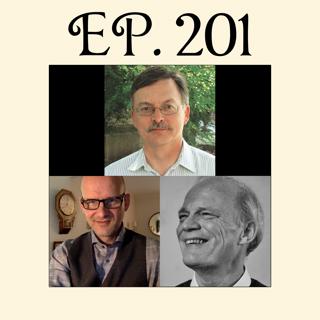
201: Counterpoint Panel: Why "Harmony" Classes Fail, Fux Myths, Bach Traps & Better Methods

201: Counterpoint Panel: Why "Harmony" Classes Fail, Fux Myths, Bach Traps & Better Methods

Counterpoint is the "huge topic" that crowns the Neapolitan method and the Paris Conservatoire tradition—and yet it's often taught today in ways that leave students confused, discouraged, and musicall...

5 Jan 1h 24min
182: Giovanna Barbati (Partimento and Improvisation on the Cello)

182: Giovanna Barbati (Partimento and Improvisation on the Cello)

Today I speak to cellist and viola da gamba player Giovanna Barbati, whose repertoire extends from early to contemporary music and who has a special interest in improvisation. She appears frequently a...

3 Juni 20241h 41min

144: Sietze de Vries (Classical Improviser, Organist)

144: Sietze de Vries (Classical Improviser, Organist)

Professor Sietze de Vries, famed for his mastery in classical improvisation, joins the show to talk about his education, training, approach to music, music education, and demonstrates classical improv...

17 Maj 20241h 37min

158: Nicholas Baragwanath (Hexachordal Italian Solfeggio)

158: Nicholas Baragwanath (Hexachordal Italian Solfeggio)

Professor Nicholas Baragwanath, author of the groundbreaking "Solfeggio Tradition" (published by Oxford University Press), returns to the show to talk about Hexachordal Italian Solfeggio. This was the...

17 Maj 20241h 9min

157: Ewald Demeyere (Fedele Fenaroli's Partimenti and Pedagogy)

157: Ewald Demeyere (Fedele Fenaroli's Partimenti and Pedagogy)

Professor Ewald Demeyere returns on the show to discuss his critical edition of Fenaroli's partimenti collection and discusses Fenaroli's approach to pedagogy and partimento realization.

1 Apr 20241h 59min

154: Partimento Panel (Gjerdingen, Sanguinetti, van Tour, Cafiero)

154: Partimento Panel (Gjerdingen, Sanguinetti, van Tour, Cafiero)

In this episode, I am joined by eminent professors Robert O. Gjerdingen, Giorgio Sanguinetti, Peter van Tour, and Rosa Cafiero, in a special panel session about the subject of partimento. We discuss t...

1 Mars 20241h 32min

174: Niels Berentsen (1300-1500 Polyphony | Improvising Vocal Counterpoint)

174: Niels Berentsen (1300-1500 Polyphony | Improvising Vocal Counterpoint)

I talk to Professor Niels Berentsen about the beginnings of improvised counterpoint, the reconstruction of incomplete music by Johannes Ciconia, computational analysis of counterpoint, teaching 15th/1...

1 Feb 20241h 19min

167: Solfeggio Panel (Baragwanath, Gjerdingen, IJzerman, van Tour)

167: Solfeggio Panel (Baragwanath, Gjerdingen, IJzerman, van Tour)

Today we have a special episode dedicated to Solfeggio, featuring Professors Nicholas Baragwanath, Job IJzerman, Robert O. Gjerdingen, and Peter van Tour. The famed students of the 18th-century Neapol...

1 Feb 20241h 23min

Populärt inom Utbildning

historiepodden-se
rss-bara-en-till-om-missbruk-medberoende-2
det-skaver
nu-blir-det-historia
harrisons-dramatiska-historia
not-fanny-anymore
rss-viktmedicinpodden
johannes-hansen-podcast
allt-du-velat-veta
rss-foraldramotet-bring-lagercrantz
sektledare
roda-vita-rosen
i-vantan-pa-katastrofen
sa-in-i-sjalen
rss-max-tant-med-max-villman
rss-sjalsligt-avkladd
rikatillsammans-om-privatekonomi-rikedom-i-livet
sex-pa-riktigt-med-marika-smith
rss-relationsrevolutionen
rss-pa-insidan-med-bjorn-rudman