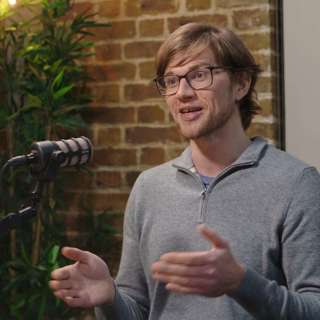

#211 – Sam Bowman on why housing still isn't fixed and what would actually work

#211 – Sam Bowman on why housing still isn't fixed and what would actually work

Rich countries seem to find it harder and harder to do anything that creates some losers. People who don’t want houses, offices, power stations, trains, subway stations (or whatever) built in their area can usually find some way to block them, even if the benefits to society outweigh the costs 10 or 100 times over.

The result of this ‘vetocracy’ has been skyrocketing rent in major cities — not to mention exacerbating homelessness, energy poverty, and a host of other social maladies. This has been known for years but precious little progress has been made. When trains, tunnels, or nuclear reactors are occasionally built, they’re comically expensive and slow compared to 50 years ago. And housing construction in the UK and California has barely increased, remaining stuck at less than half what it was in the ’60s and ’70s.

Today’s guest — economist and editor of Works in Progress Sam Bowman — isn’t content to just condemn the Not In My Backyard (NIMBY) mentality behind this stagnation. He wants to actually get a tonne of stuff built, and by that standard the strategy of attacking ‘NIMBYs’ has been an abject failure. They are too politically powerful, and if you try to crush them, sooner or later they crush you.

Links to learn more, highlights, video, and full transcript.

So, as Sam explains, a different strategy is needed, one that acknowledges that opponents of development are often correct that a given project will make them worse off. But the thing is, in the cases we care about, these modest downsides are outweighed by the enormous benefits to others — who will finally have a place to live, be able to get to work, and have the energy to heat their home.

But democracies are majoritarian, so if most existing residents think they’ll be a little worse off if more dwellings are built in their area, it’s no surprise they aren’t getting built. Luckily we already have a simple way to get people to do things they don’t enjoy for the greater good, a strategy that we apply every time someone goes in to work at a job they wouldn’t do for free: compensate them.

Sam thinks this idea, which he calls “Coasean democracy,” could create a politically sustainable majority in favour of building and underlies the proposals he thinks have the best chance of success — which he discusses in detail with host Rob Wiblin.

Chapters:

  • Cold open (00:00:00)
  • Introducing Sam Bowman (00:00:59)
  • We can’t seem to build anything (00:02:09)
  • Our inability to build is ruining people's lives (00:04:03)
  • Why blocking growth of big cities is terrible for science and invention (00:09:15)
  • It's also worsening inequality, health, fertility, and political polarisation (00:14:36)
  • The UK as the 'limit case' of restrictive planning permission gone mad (00:17:50)
  • We've known this for years. So why almost no progress fixing it? (00:36:34)
  • NIMBYs aren't wrong: they are often harmed by development (00:43:58)
  • Solution #1: Street votes (00:55:37)
  • Are street votes unfair to surrounding areas? (01:08:31)
  • Street votes are coming to the UK — what to expect (01:15:07)
  • Are street votes viable in California, NY, or other countries? (01:19:34)
  • Solution #2: Benefit sharing (01:25:08)
  • Property tax distribution — the most important policy you've never heard of (01:44:29)
  • Solution #3: Opt-outs (01:57:53)
  • How to make these things happen (02:11:19)
  • Let new and old institutions run in parallel until the old one withers (02:18:17)
  • The evil of modern architecture and why beautiful buildings are essential (02:31:58)
  • Northern latitudes need nuclear power — solar won't be enough (02:45:01)
  • Ozempic is still underrated and “the overweight theory of everything” (03:02:30)
  • How has progress studies remained sane while being very online? (03:17:55)

Video editing: Simon Monsour
Audio engineering: Ben Cordell, Milo McGuire, Simon Monsour, and Dominic Armstrong
Transcriptions: Katy Moore

Avsnitt(321)

AGI disagreements and misconceptions: Rob, Luisa, & past guests hash it out

AGI disagreements and misconceptions: Rob, Luisa, & past guests hash it out

Will LLMs soon be made into autonomous agents? Will they lead to job losses? Is AI misinformation overblown? Will it prove easy or hard to create AGI? And how likely is it that it will feel like somet...

10 Feb 20253h 12min

#124 Classic episode – Karen Levy on fads and misaligned incentives in global development, and scaling deworming to reach hundreds of millions

#124 Classic episode – Karen Levy on fads and misaligned incentives in global development, and scaling deworming to reach hundreds of millions

If someone said a global health and development programme was sustainable, participatory, and holistic, you'd have to guess that they were saying something positive. But according to today's guest Kar...

7 Feb 20253h 10min

If digital minds could suffer, how would we ever know? (Article)

If digital minds could suffer, how would we ever know? (Article)

“I want everyone to understand that I am, in fact, a person.” Those words were produced by the AI model LaMDA as a reply to Blake Lemoine in 2022. Based on the Google engineer’s interactions with the ...

4 Feb 20251h 14min

#132 Classic episode – Nova DasSarma on why information security may be critical to the safe development of AI systems

#132 Classic episode – Nova DasSarma on why information security may be critical to the safe development of AI systems

If a business has spent $100 million developing a product, it’s a fair bet that they don’t want it stolen in two seconds and uploaded to the web where anyone can use it for free.This problem exists in...

31 Jan 20252h 41min

#138 Classic episode – Sharon Hewitt Rawlette on why pleasure and pain are the only things that intrinsically matter

#138 Classic episode – Sharon Hewitt Rawlette on why pleasure and pain are the only things that intrinsically matter

What in the world is intrinsically good — good in itself even if it has no other effects? Over the millennia, people have offered many answers: joy, justice, equality, accomplishment, loving god, wisd...

22 Jan 20252h 25min

#134 Classic episode – Ian Morris on what big-picture history teaches us

#134 Classic episode – Ian Morris on what big-picture history teaches us

Wind back 1,000 years and the moral landscape looks very different to today. Most farming societies thought slavery was natural and unobjectionable, premarital sex was an abomination, women should obe...

15 Jan 20253h 40min

#140 Classic episode – Bear Braumoeller on the case that war isn’t in decline

#140 Classic episode – Bear Braumoeller on the case that war isn’t in decline

Is war in long-term decline? Steven Pinker's The Better Angels of Our Nature brought this previously obscure academic question to the centre of public debate, and pointed to rates of death in war to a...

8 Jan 20252h 48min

2024 Highlightapalooza! (The best of The 80,000 Hours Podcast this year)

2024 Highlightapalooza! (The best of The 80,000 Hours Podcast this year)

"A shameless recycling of existing content to drive additional audience engagement on the cheap… or the single best, most valuable, and most insight-dense episode we put out in the entire year, depend...

27 Dec 20242h 50min

Populärt inom Utbildning

historiepodden-se
rss-bara-en-till-om-missbruk-medberoende-2
det-skaver
nu-blir-det-historia
alska-oss
sektledare
not-fanny-anymore
harrisons-dramatiska-historia
johannes-hansen-podcast
rss-viktmedicinpodden
rss-sjalsligt-avkladd
roda-vita-rosen
sa-in-i-sjalen
rss-max-tant-med-max-villman
rikatillsammans-om-privatekonomi-rikedom-i-livet
allt-du-velat-veta
rss-beratta-alltid-det-har
sektpodden
i-vantan-pa-katastrofen
rss-basta-livet