Probing beyond our Solar System, sea pollinators, and a book on the future of nutrition

Probing beyond our Solar System, sea pollinators, and a book on the future of nutrition

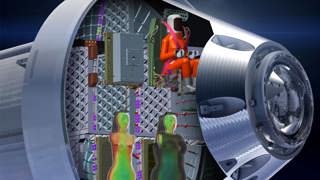
On this week’s show: Plans to push a modern space probe beyond the edge of the Solar System, crustaceans that pollinate seaweed, and the latest in our series of author interviews on food, science, and nutrition After visiting the outer planets in the 1980s, the twin Voyager spacecraft have sent back tantalizing clues about the edge of our Solar System and what lies beyond. Though they may have reached the edge of the Solar System or even passed it, the craft lack the instruments to tell us much about the interstellar medium—the space between the stars. Intern Khafia Choudhary talks with Contributing Correspondent Richard Stone about plans to send a modern space probe outside the Solar System and what could be learned from such a mission. Next up on the show, Myriam Valero, a population geneticist at the evolutionary biology and ecology of algae research department at Sorbonne University, talks with host Sarah Crespi about how a little crustacean might help fertilize a species of algae. If the seaweed in the study does use a marine pollinator, it suggests there may have been a much earlier evolutionary start for pollination partnerships. Finally, we have the next in our series on books exploring the science of food and agriculture. This month, host Angela Saini talks with biochemist T. Colin Campbell about his book The Future of Nutrition: An Insider’s Look at the Science, Why We Keep Getting It Wrong, and How to Start Getting It Right. This week’s episode was produced with help from Podigy. [Image: Johns Hopkins APL/Mike Yakovlev; Music: Jeffrey Cook] [alt: illustration of an interstellar probe crossing the boundary of the heliosphere with podcast symbol overlay] Authors: Sarah Crespi; Rich Stone; Angela Saini; Khafia Choudhary ++ LINKS FOR MP3 META Episode page: https://www.science.org/doi/10.1126/science.ade1292 About the Science Podcast: https://www.science.org/content/page/about-science-podcast Learn more about your ad choices. Visit megaphone.fm/adchoices

Det här avsnittet är hämtat från ett öppet RSS-flöde och publiceras inte av Podme. Det kan innehålla reklam.

Avsnitt(641)

A team effort to save a giant fish, the power of moonlight, and how scientists can navigate a tough political environment

A team effort to save a giant fish, the power of moonlight, and how scientists can navigate a tough political environment

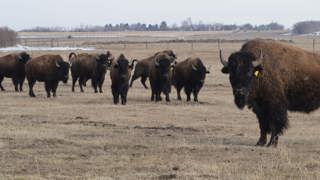
First up on the podcast, along Brazil’s Juruá River, local residents have been working with scientists to manage a giant fish called the arapaima—affecting the land, the people, and the economy. Contr...

7 Maj 53min

Watching a spiders’ heart beat, epigenetic ethics, and what science biographies reveal about fame

Watching a spiders’ heart beat, epigenetic ethics, and what science biographies reveal about fame

First up on the podcast, Online News Editor David Grimm shares a batch of fun stories with podcast host Sarah Crespi—from spider hearts racing when traffic gets loud to a disease-preventing house. Sta...

30 Apr 46min

Cleaning up uranium mining, and how the heart avoids cancer

Cleaning up uranium mining, and how the heart avoids cancer

First up on the podcast, freelance science and environmental journalist Quentin Septer joins host Sarah Crespi to talk about a controversial uranium mine getting fast-tracked in South Dakota. Septer c...

23 Apr 30min

The normals | Episode 3

The normals | Episode 3

The final of a three-part limited Science Podcast series that looks at the history of normal human subjects in research In episode two, we heard what happened to the normals program after church volu...

21 Apr 33min

How to keep quantum computers cool, whether prediction markets harm public health, and podcasting on podcasting

How to keep quantum computers cool, whether prediction markets harm public health, and podcasting on podcasting

First up on the podcast, quantum computers require extremely low temperatures—less than 1°C away from absolute zero. But getting down to those temperatures has usually required dilution fridges using ...

16 Apr 50min

The Normals | Episode 2

The Normals | Episode 2

Last time on The Normals, we learned that in the 1950s, the National Institutes of Health (NIH) wanted to recruit many healthy volunteers for basic research. Two peace churches, the Mennonites and the...

14 Apr 27min

A chimpanzee ‘civil war,’ and NASA plans for nuclear propulsion

A chimpanzee ‘civil war,’ and NASA plans for nuclear propulsion

First up on the podcast, freelance science journalist Hannah Richter joins host Sarah Crespi to discuss NASA’s plans to send a nuclear-powered spacecraft to Mars in less than 3 years. Having not launc...

9 Apr 42min

The Normals | Episode 1

The Normals | Episode 1

How do we know what's normal in a person? In the early 1950s, the National Institutes of Health (NIH) set out to do something unprecedented. It wanted to start studying normal humans on a grand scale....

7 Apr 23min

Populärt inom Politik & nyheter

aftonbladet-krim
p3-krim
aftonbladet-daily
motiv
politiken
svenska-fall
rss-krimstad
flashback-forever
spar
rss-krimreportrarna
rss-vad-fan-hande
rss-sanning-konsekvens
kungligt
rss-flodet
rss-frandfors-horna
blenda-2
dagens-eko
olyckan-inifran
rss-aftonbladet-krim
krimmagasinet