#155 How to create a PPN 06/21 Carbon Reduction Plan
The ISO Show15 Nov 2023

#155 How to create a PPN 06/21 Carbon Reduction Plan

Sustainability has become a top topic to address in the last few years, both for businesses and individuals. In fact, 90% of business leaders think sustainability is important, but only 60% actually have a sustainability Strategy.

The demand for tangible action is becoming more pressing as we inch close to the 2030 milestone of the Paris Agreement.

To encourage action from businesses, we're seeing more public and private sector contracts include a tendering requirement to show your commitment to sustainability. One such example is the need for a PPN 06/21 Carbon Reduction Plan.

In this weeks' episode David Algar, Principal Carbonologist® at Carbonology, joins Mel to explain how to create a Carbon Reduction Plan, shares some top tips on presentation and how Carbonology® can support you.

You'll learn

· How to create a Carbon Reduction Plan

· How Carbonology® can help you align that plan with ISO 14064 and PAS 2060

· Addressing difficult tendering questions

· How to best present your Carbon Reduction Plan

Resources

Carbonology

Book a call with David Algar

A quick Guide to creating your PPN 06/21 Carbon Reduction Plan

In this episode, we talk about:

[00:24] What are PPN 06/21 Carbon Reduction Plans? – Go back and listen to our previous episode to learn more.

[00:42] Episode Summary – Today we'll be talking about how to create a Carbon Reduction Plan (CRP), how to deal with difficult tendering questions and the best ways in which to present your CRP.

[02:46] How do you actually calculate the emissions? We have gone into this in a lot more detail on a previous episode, but to summarise:-

Emissions are calculated by taking your activity data, such as kWh of electricity, or miles driven in a vehicle, and multiplying it by an emission conversion factor.

Specific emission conversion factors are available from DEFRA for specific activity data, they are also year-specific.

The hard part is sourcing your activity data, accounting for missing information, performing estimates, and ensuring the overall methodology is accurate.

This is all done in alignment with ISO1464-1, as well as the PPN guidelines, so one of the very first things we'll do with you is define your organisational and reporting boundaries,

[05:27] How can a business set carbon reduction targets and forecast emissions? This is tricky as it involves trying to predict the future, not just in the short term, but potentially several decades ahead depending on your goal.

The good thing is you know the end destination of your carbon pathway: little to no emissions by 2050.

Using this and some simple maths you can at least map out where you should be each year when moving forward from the base year, the base year being the period you use to compare future results against.

Usually the base year is the first year you complete calculations, but this can change over time. We're finding some clients are opting to change their base year to account for the disruption of COVID-19 on operations

[06:40] How do you actually set the targets?: When we look at target setting and emission forecasts we generally take 2 approaches:

Milestones:

· The first, and our most common approach, is about setting milestones based on specific carbon reduction initiatives the business can implement, at specific dates.

· For instance, all company vehicles being hybrid by 2025 and fully EV by 2035? Or what if we phased out gas by a certain date? Or cut out all single use plastics?

· Using this milestone method for the forecasting can be tricky, but you can end up with a carbon pathway that is more representative of real life.

Straight line method:

· The second is what we refer to as the 'straight line' method. This is a simpler approach that involves doing some simple maths to plan out your carbon targets for each year, without factoring in specific milestones or events.

· We refer to this unofficially as the 'straight line' method as the graph showing your carbon pathway is pretty much a straight line from your base year towards net zero, using the milestones method gives a 'bumpy' line due to the influence of specific milestones at specific years.

[08:35] A tip for setting targets for the first time is by thinking 'what if? This is essentially looking at the thing you're doing now and replacing it with a more sustainable alternative. For instance, calculating what your business travel emissions would be last year if they were all completed in hybrids, or if domestic flights were replaced by train journeys.

Doing these 'what if?' calculations is a bit hypothetical as operations are likely to change over the years, but it still helps give you a specific target to aim for a specific GHG sources.

[10:40] How can you influence carbon reduction in areas where you have no direct control? Some areas will be out of your control, for instance if you ship goods in from around the world you can't necessarily decide how they get to you, or if they are transported via more sustainable transport.

· One thing you can do is aim to set a good example yourself as a business

· You could also adopt the PPN framework yourself and request it from anyone that is aiming to win your business

· Another quick win is actually speaking to your suppliers. If you use a local delivery firm you could speak to them about their plans for an electric fleet, or more sustainable packaging. Or if you use a data centre, you could enquire about if is run on renewable energy sources

[13:15] But what if we are planning to grow as a business? Results are expected to fluctuate over time, so if they go up after the base year this shouldn't impact your success or failure in your tender submission. The aim is obviously to decrease on average over time

If you know for certain that they will increase in the next few years, for instance through opening new sites, making acquisitions, or just natural growth, that's ok.

You could pick a new base year if operations significantly change as this will give a more realistic figure to work down from. You can also use this as an opportunity to evidence efficiency improvements through intensity metrics, such as your tonnes of carbon per employee, or relative to your revenue.

[15:15] In what other ways can Carbonology help to support you? – Once everyone is happy with the CRP, you'll then have to actually use it in tenders. The fun thing about tenders is that they can all ask different questions, despite PPN having technical requirements, so you can't always have the information to hand before submitting one.

We can't write your tender submissions for you, but we can provide guidance and pull out the necessary figures if requested, for instance if you need certain numbers to support with your Social Value Model reporting.

[16:20] How can this help on your journey to Carbon Neutrality? – If you've gone through all the hard work to create a PPN 06/21 Carbon Reduction Plan, you'll be in the ideal position to achieve carbon neutrality of your operations via PAS 2060.

The next step would be creating a PAS 2060 Qualifying Explanatory Statement, or QES, which details how you have achieved carbon neutrality through offsetting, and your commitment to maintain this for future reporting periods.

[17:25] Where does the verification come into play? If you've already calculated your emissions you may be asked to have them independently verified by an independent third party.

We've recently developed a process so we can check over you GHG calculations, policies, procedure and overall alignment with the standard.

As part of this, Carbonology can provide a verification report with all findings and opportunities for improvement, as a well as a verification statement to show you have had emission independently verified in alignment with ISO 14064.

For further information, David has prepared a quick guide for creating your PPN 06/21 Carbon Reduction Plan. Feel free to download it here.

Lastly, if you have an questions or would like to learn more about how Carbonology can help you, feel free to book a call in via David's Calendly.

We'd love to hear your views and comments about the ISO Show, here's how:

Share the ISO Show on Twitter or Linkedin

Leave an honest review on iTunes or Soundcloud. Your ratings and reviews really help and we read each one.

Subscribe to keep up-to-date with our latest episodes:

Stitcher | Spotify | YouTube |iTunes | Soundcloud | Mailing List

Det här avsnittet är hämtat från ett öppet RSS-flöde och publiceras inte av Podme. Det kan innehålla reklam.

Avsnitt(200)

#258 What is BS 99001? Quality Management For The Built Environment

#258 What is BS 99001? Quality Management For The Built Environment

Many of you will be familiar with ISO 9001, the leading Quality Management Standard, which provides a solid foundation for managing any business. However, for certain industries, ISO 9001 alone is not...

16 Sep 44min
#257 How to meet legislative and ISO requirements in leasehold properties

#257 How to meet legislative and ISO requirements in leasehold properties

Many businesses do not own the property they operate in, this can lead to complex questions over who has ownership over certain property and facility related legal obligations. Managing areas such as...

19 Aug 33min
#256 BedX – Supporting Businesses Looking To Tender For Universal Bedfordshire and Beyond

#256 BedX – Supporting Businesses Looking To Tender For Universal Bedfordshire and Beyond

There has been a lot of buzz around the upcoming Universal Project currently in development in Bedfordshire. It's estimated to generate around £50 billion in economic benefit, along with the creation ...

5 Aug 45min

#255 AI Due Diligence - Information Security Checks Before You Integrate AI

#255 AI Due Diligence - Information Security Checks Before You Integrate AI

AI can be fantastic for relieving a lot of administrative burdens, allowing individuals to focus on more complex tasks that need a human touch. However, many are all too quick to install and integrate...

22 Juli 19min
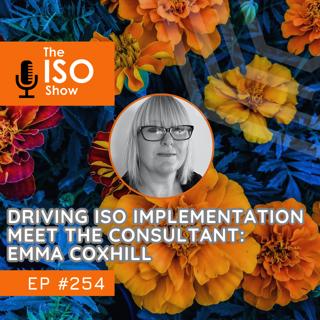
#254 Driving ISO Implementation – Meet the Consultant: Emma Coxhill

#254 Driving ISO Implementation – Meet the Consultant: Emma Coxhill

The path towards becoming an ISO consultant is often a meandering one. It's not often a career that many aspire to, yet despite that, there are still thousands of ISO professionals worldwide. We're c...

1 Juli 25min
#253 Building The Case For Health & Safety Regulations & Standards

#253 Building The Case For Health & Safety Regulations & Standards

Everyone who goes to work should have the right to go home after work. This is a sentiment that wasn't necessarily formally recognised until the 1970's here in the UK.   Health & Safety often gets mo...

24 Juni 27min
#252 Wavenet's On-going Commitment to Best Practice – Successfully Maintaining Seven ISO Standards

#252 Wavenet's On-going Commitment to Best Practice – Successfully Maintaining Seven ISO Standards

Anyone that has undergone the ambitious task of Implementing an ISO Standard will know how much work goes into creating and maintaining a single ISO certification. Now imagine juggling seven ISO certi...

17 Juni 33min
#251 Driving The Demand For GHG Emissions - How Davies Group Tackled Carbon Verification

#251 Driving The Demand For GHG Emissions - How Davies Group Tackled Carbon Verification

Watch the video interview here Carbon verification is quickly becoming a necessary step for many businesses, whether due to regulatory compliance, market demand or as part of a voluntary scheme. The...

10 Juni 34min

Populärt inom Business & ekonomi

framgangspodden
varvet
rss-jossan-nina
rss-borsens-finest
svd-tech-brief
24fragor
avanzapodden
badfluence
uppgang-och-fall
rss-inga-dumma-fragor-om-pengar
lastbilspodden
fill-or-kill
rss-dagen-med-di
rss-kort-lang-analyspodden-fran-di
rikatillsammans-om-privatekonomi-rikedom-i-livet
tabberaset
bathina-en-podcast
kapitalet-en-podd-om-ekonomi
borsmorgon
affarsvarlden