#163 The environmental value of circular design with Design Conformity
The ISO Show30 Jan 2024

#163 The environmental value of circular design with Design Conformity

Did you know that in the UK alone, 22 million pieces of furniture are discarded each year, the majority of which goes directly to landfill. That amounts to an estimated 670,000 tonnes of furniture wasted, where a significant portion could be recycled and reused. (Source)

It's clear to see the need for a more sustainable approach to furniture design, manufacture and lifecycle, which is where today's guest, Design Conformity, come in.

Design Conformity live and breathe circular design, the process for creating products sustainably from the beginning, and offer a Life Cycle Assessment Certification Process which has already led to significant carbon reductions.

Mel is joined by Adam Hamilton-Fletcher, Founder and Director at Design Conformity, to discuss the application of circular design within the furniture manufacture industry and explain how their Life Cycle Assessment certification process can help businesses reduce their carbon footprint.

You'll learn

· Who are Design Conformity?

· What is circular design and how does it help companies reduce their carbon footprint?

· What are the benefits of Design Conformity's certification?

· Can sustainability be of financial and environmental benefit to businesses?

· Examples of circular design in practice

Resources

· The ISO Show

· Design Conformity

· Carbon Calculator

· Circular Design Guide

In this episode, we talk about:

[00:25] Introducing today's guest – We welcome Adam Hamilton-Fletcher, Founder and Director at Design Conformity, onto the show. Design Conformity are currently setting the standard in retail sustainability, particularly in relation to the furniture industry.

[01:30] Who are Design Conformity? Adam worked in the manufacturing industry for about 15 years, designing lighting systems for major retailers like boots, Next, Marks & Spencers and Morrisons. He worked primarily with the lighting used in displays, and had been tasked with selling lighting products. In order to do so, he needed to develop a specification to help understand customer requirements, which would then be used to develop their ideal solution.

The problem: There were little to no Standards in UK and Europe for the retail display industry.

Which directly led to the creation of Design Conformity – who started out as an electrical and lighting Standard certification company, that developed into a full carbon certification company.

They aim to become the gold Standard for sustainable furniture design.

[03:10] What is Circular Design? – Circular design is born out of this principle of a circular economy. To compare, a linear economy is when we take a raw material, use it, process it, and then it's just disposed of, usually straight to landfill.

Whereas, circular economy is where we take that waste product and we design it so that it can be repurposed and refreshed and reused. Those materials can then eventually be recycled – so the goal is to not use any raw materials at any point.

Circular design is the intent to minimise environmental impact, to design equipment that could be reused and repurposed, and then at the end of its life be recycled.

[04:05] How do Design Conformity operate? – Design Conformity look at the way that companies design their furniture and then take them through a learning process (online course).

They help businesses to understand how to design a product in such a way where it can be repurposed or reused, where raw material usage can be reduced and where the shipping requirements can be reduced.

They provide guidance and advice on recommended materials, including the provision on an online carbon calculator.

They also provide reporting in alignment with existing carbon standards, such as ISO 14064, for product evaluation.

[06:55] How can the Carbon Calculator help? By selecting a product of a particular type, you can use the estimator by entering the details of where and what you're manufacturing, and then it will give you a carbon footprint for that, which you can use to compare that against other industry designers.

It displays these other designers anonymously, but you can get a feel for if your product is above or below the average for carbon emissions.

[08:55] An example of the Carbon Calculator in practice – Design Conformity recently worked with Costa Coffee, who were looking to reduce the environmental impact of their of their shops and coffee lounges. The beginning of that process is to work with their manufacturers, to identify the environmental impact of the furniture that they've got.

They used the Carbon Calculator to help create an initial benchmark, which highlighted key indicators that can lead to carbon reductions.

[09:35] Design Conformity's Certification – They've borrowed the concept used by existing Energy Performance Certificates, by having a carbon efficiency index, ranging from C1 – C7.

Their score is a bit more unique however as it incorporates elements of circular design. Their score is based on a products total carbon emissions, divided by it's size and total lifespan. An Ecolabel is then awarded based on the final score.

[11:45] What are the benefits of Design Conformity's certification?:-

· It's a mix between carbon reporting and a carbon rating.

· It's easier for consumers to understand the benefits in comparison to companies that advertise compliance with ISO 14064 and PAS 2060.

· Not just a green label, as reporting is a key component of gaining certification.

· It provides a cradle to cradle analysis on a products carbon footprint and translates that into something that is recognisable.

[14:15] Are businesses right to be skeptical about the value of the cost versus the value of environmental certification?– 100%! It's not uncommon for eco labels to be more of a marketing tool rather than a tool for tangible carbon reduction. A lot of them out there are unregulated and are contributing to green washing.

That's where Design Conformity's differs, as they actually collate and process real data to provide tangible value and add credibility to their claims.

[16:10] Will there be a time where sustainability can be of financial and environmental benefit to businesses? – Yes, absolutely! And if there is a way to do that, it's through Circular Design.

As an example, if you're a manufacturing company that's producing shelving, you need to buy in steel, which can fluctuate a lot in price at any given time. But you don't need to buy more steel every time, where instead you could get your original product back, reprocess and redistribute.

Adam has experience of suppliers who are practicing this, they purchase their products back at 40%-50% of the price, saving a lot of money in raw material!

[19:00] Examples of companies who have embraced circular design –

Tesco: They've introduced a policy whereby they purchase metal shelving, use it for 5 years, then take it back out of the store to get powder coated, cleaned and reintroduced to the store. That reduces the carbon footprint by 70% in comparison to buying a new shelving set!

Boots: Their beauty halls wanted to introduce a lot of new brands, which meant a lot more displays were needed. Boots started working with Design Conformity towards earning their certification, specifically in relation to the lighting they used in stores. With Design Confomity's help, they managed to reduce the carbon footprint at selected stores by 39%!

[21:20] Circular Design Guide – 14 people were involved in creating this guide, which is designed to give you an introduction to and overview of circular design. Access it over on their website.

If you'd like assistance with any ISO Standards, get in contact with Blackmores and we'll be happy to help 😊

We'd love to hear your views and comments about the ISO Show, here's how:

Share the ISO Show on Twitter or Linkedin

Leave an honest review on iTunes or Soundcloud. Your ratings and reviews really help and we read each one.

Subscribe to keep up-to-date with our latest episodes:

Stitcher | Spotify | YouTube |iTunes | Soundcloud | Mailing List

Det här avsnittet är hämtat från ett öppet RSS-flöde och publiceras inte av Podme. Det kan innehålla reklam.

Avsnitt(200)

#258 What is BS 99001? Quality Management For The Built Environment

#258 What is BS 99001? Quality Management For The Built Environment

Many of you will be familiar with ISO 9001, the leading Quality Management Standard, which provides a solid foundation for managing any business. However, for certain industries, ISO 9001 alone is not...

16 Sep 44min
#257 How to meet legislative and ISO requirements in leasehold properties

#257 How to meet legislative and ISO requirements in leasehold properties

Many businesses do not own the property they operate in, this can lead to complex questions over who has ownership over certain property and facility related legal obligations. Managing areas such as...

19 Aug 33min
#256 BedX – Supporting Businesses Looking To Tender For Universal Bedfordshire and Beyond

#256 BedX – Supporting Businesses Looking To Tender For Universal Bedfordshire and Beyond

There has been a lot of buzz around the upcoming Universal Project currently in development in Bedfordshire. It's estimated to generate around £50 billion in economic benefit, along with the creation ...

5 Aug 45min

#255 AI Due Diligence - Information Security Checks Before You Integrate AI

#255 AI Due Diligence - Information Security Checks Before You Integrate AI

AI can be fantastic for relieving a lot of administrative burdens, allowing individuals to focus on more complex tasks that need a human touch. However, many are all too quick to install and integrate...

22 Juli 19min
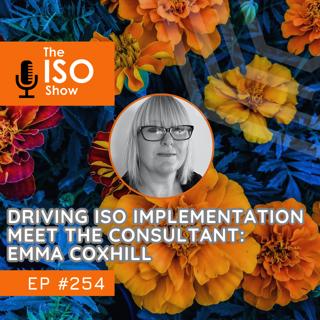
#254 Driving ISO Implementation – Meet the Consultant: Emma Coxhill

#254 Driving ISO Implementation – Meet the Consultant: Emma Coxhill

The path towards becoming an ISO consultant is often a meandering one. It's not often a career that many aspire to, yet despite that, there are still thousands of ISO professionals worldwide. We're c...

1 Juli 25min
#253 Building The Case For Health & Safety Regulations & Standards

#253 Building The Case For Health & Safety Regulations & Standards

Everyone who goes to work should have the right to go home after work. This is a sentiment that wasn't necessarily formally recognised until the 1970's here in the UK.   Health & Safety often gets mo...

24 Juni 27min
#252 Wavenet's On-going Commitment to Best Practice – Successfully Maintaining Seven ISO Standards

#252 Wavenet's On-going Commitment to Best Practice – Successfully Maintaining Seven ISO Standards

Anyone that has undergone the ambitious task of Implementing an ISO Standard will know how much work goes into creating and maintaining a single ISO certification. Now imagine juggling seven ISO certi...

17 Juni 33min
#251 Driving The Demand For GHG Emissions - How Davies Group Tackled Carbon Verification

#251 Driving The Demand For GHG Emissions - How Davies Group Tackled Carbon Verification

Watch the video interview here Carbon verification is quickly becoming a necessary step for many businesses, whether due to regulatory compliance, market demand or as part of a voluntary scheme. The...

10 Juni 34min

Populärt inom Business & ekonomi

framgangspodden
varvet
rss-jossan-nina
rss-borsens-finest
svd-tech-brief
24fragor
avanzapodden
badfluence
uppgang-och-fall
rss-inga-dumma-fragor-om-pengar
lastbilspodden
fill-or-kill
rss-dagen-med-di
rss-kort-lang-analyspodden-fran-di
rikatillsammans-om-privatekonomi-rikedom-i-livet
tabberaset
bathina-en-podcast
kapitalet-en-podd-om-ekonomi
borsmorgon
affarsvarlden