Quantum Leap: Hybrid Algorithms Propel Computing Revolution | Leo's Tech Talk

Quantum Leap: Hybrid Algorithms Propel Computing Revolution | Leo's Tech Talk

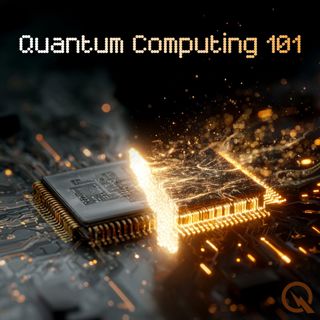
This is your Quantum Computing 101 podcast.

I'm Leo, your Learning Enhanced Operator, here to dive into the fascinating world of quantum computing. Let's get straight to it.

Quantum computing is on the cusp of revolutionizing how we approach complex problems. One of the most exciting developments is the rise of hybrid quantum-classical algorithms. These algorithms combine the strengths of both quantum and classical computing to tackle problems that are too large for either system alone.

Take, for example, the Variational Quantum Eigensolver (VQE). This algorithm is used for quantum chemistry and material science, where the quantum processor calculates the energy levels of a molecule, and the classical computer optimizes the results. It's a perfect blend of quantum power and classical precision.

Companies like IonQ are at the forefront of this technology. Their trapped ion approach uses actual atoms, making their qubits inherently perfect and perfectly identical. This is crucial because qubits must be as identical as possible to build reliable interactions between them. In contrast, solid-state systems can suffer from manufacturing errors, leading to immense issues[1].

The Quantum Approximate Optimization Algorithm (QAOA) is another hybrid algorithm making waves. It's designed for combinatorial optimization problems, where the quantum processor generates candidate solutions, and the classical computer selects the best. This approach is particularly useful for current quantum hardware, which may not yet be capable of running a full quantum algorithm independently due to noise, error rates, and hardware constraints[2].

Industry leaders are predicting significant advancements in quantum computing this year. Julian Brownlow Davies, VP of Advanced Services at Bugcrowd, notes that quantum computers will start to pose a legitimate threat to traditional encryption methods, accelerating efforts to adopt quantum-resistant cryptographic algorithms[3].

But what does this mean for practical applications? Dr. Jans Aasman, CEO of Franz, believes that new quantum machine learning techniques will transform drug discovery by enabling quantum computers to perform highly accurate molecular simulations that were previously impossible with classical computing[3].

In the world of quantum computing, 2025 is shaping up to be a pivotal year. With hybrid quantum-classical algorithms leading the charge, we're on the brink of unlocking unprecedented solutions and discoveries in science and physics. As Bill Wisotsky, Principal Technical Architect at SAS, puts it, investing in quantum computers promises once-in-a-century breakthroughs[3].

So, there you have it – a glimpse into the exciting world of quantum computing and the hybrid solutions that are changing the game. Stay tuned for more updates from the quantum frontier.

For more http://www.quietplease.ai


Get the best deals https://amzn.to/3ODvOta

This content was created in partnership and with the help of Artificial Intelligence AI

Avsnitt(286)

QIAPO Hybrid Revolution: How German Quantum-Classical Fusion Solves Real Logistics and Chip Manufacturing Nightmares

QIAPO Hybrid Revolution: How German Quantum-Classical Fusion Solves Real Logistics and Chip Manufacturing Nightmares

This is your Quantum Computing 101 podcast.Imagine you're deep in a Saarland University lab, the hum of cryostats vibrating like a cosmic heartbeat, lasers slicing through the chill as neutral atoms d...

25 Mars 3min

Quantum Meets GPU: How Hybrid Computing Just Cracked the Drug Discovery Code at GTC 2026

Quantum Meets GPU: How Hybrid Computing Just Cracked the Drug Discovery Code at GTC 2026

This is your Quantum Computing 101 podcast.Imagine this: just days ago, at NVIDIA's GTC 2026 in San Jose, UCL researchers, partnering with NVIDIA, Technical University of Munich, LMU, and IQM Quantum ...

23 Mars 3min

Classiq CUDA-Q Fusion: How 31 Qubits Slashed Options Pricing From 67 Minutes to 2.5 on NVIDIA GPUs

Classiq CUDA-Q Fusion: How 31 Qubits Slashed Options Pricing From 67 Minutes to 2.5 on NVIDIA GPUs

This is your Quantum Computing 101 podcast.Imagine this: just days ago, on March 16th, Classiq unveiled their game-changing integration with NVIDIA's CUDA-Q, slashing a 31-qubit financial options-pric...

22 Mars 4min

Quantum Meets GPU Power: How Classiq and NVIDIA Slashed Computing Time from 67 Minutes to 2.5

Quantum Meets GPU Power: How Classiq and NVIDIA Slashed Computing Time from 67 Minutes to 2.5

This is your Quantum Computing 101 podcast.Imagine standing in a cryogenic chamber, the air humming with the faint chill of liquid helium, as qubits dance in superposition like fireflies in a midnight...

20 Mars 3min

Quantum Meets Silicon: How NVIDIA GPUs Cut Options Pricing from 67 Minutes to 2.5 on 31 Qubits

Quantum Meets Silicon: How NVIDIA GPUs Cut Options Pricing from 67 Minutes to 2.5 on 31 Qubits

This is your Quantum Computing 101 podcast.Imagine this: just days ago, on March 18, 2026, IBM announced that quantum pioneer Charles H. Bennett received the A.M. Turing Award—computing's Nobel Prize—...

18 Mars 3min

Quantum-Classical Hybrid Computing: IBM's Blueprint for the Next Computing Revolution

Quantum-Classical Hybrid Computing: IBM's Blueprint for the Next Computing Revolution

This is your Quantum Computing 101 podcast.Welcome back to Quantum Computing 101. I'm Leo, and what I'm about to share with you represents a genuine watershed moment in how we're bringing quantum comp...

16 Mars 3min

IBM's Quantum-Classical Fusion: How Hybrid Supercomputers Are Rewriting the Rules of Reality in 2026

IBM's Quantum-Classical Fusion: How Hybrid Supercomputers Are Rewriting the Rules of Reality in 2026

This is your Quantum Computing 101 podcast.Imagine this: just days ago, on March 12, 2026, IBM unveiled their quantum-centric supercomputing blueprint, a game-changer fusing quantum processors with cl...

13 Mars 3min

Quantum Computing Breakthrough: How IBM Created a Molecule That Doesnt Exist in Nature Using Hybrid AI Systems

Quantum Computing Breakthrough: How IBM Created a Molecule That Doesnt Exist in Nature Using Hybrid AI Systems

This is your Quantum Computing 101 podcast.Good afternoon, listeners. I'm Leo, and three days ago, something extraordinary happened that perfectly captures where quantum computing stands right now. IB...

9 Mars 3min

Populärt inom Politik & nyheter

svenska-fall
rss-krimstad
aftonbladet-krim
p3-krim
flashback-forever
blenda-2
rss-sanning-konsekvens
politiken
aftonbladet-daily
rss-krimreportrarna
motiv
rss-vad-fan-hande
spar
grans
rss-frandfors-horna
rss-flodet
svd-ledarredaktionen
dagens-eko
olyckan-inifran
spotlight