Understanding the ROI of Cattle Buildings

Understanding the ROI of Cattle Buildings

Cattle Barns

Bill Rubis – Vice President at TenCorp, INC In 2010, they designed and built our first deep-pit cattle barn.

Exploring the profitability of feeding cattle in confinement settings.

As the cattle production industry has evolved over the years, there has been a significant shift to feeding cattle indoors.Just like no two cattle operations are the same, confinement buildings come in all shapes and sizes. Typically, they can be divided into a few broad categories.

One major difference is the manure handling style:

  • deep-pit
  • In deep-pit buildings the cattle are on concrete slats (usually covered with rubber mats) and manure is stored underneath the building and pumped annually
  • bed-pack.
  • With bed-pack buildings there is usually a concrete or earthen floor that is covered with bedding (most commonly shredded cornstalk bales).

The other key feature is the roof shape. Cattle buildings usually have one of three roof types:

  • Hoop (a curved roof usually covered by a canvas fabric)
  • Mono-slope (where one eave is higher than the other)
  • Gable (a traditional peaked roof).
  • Mono-slope and gable roofed buildings can be made out of both wood and steel.

Why should our listeners look into confinement feeding for cattle?

  • Weather
  • Feed Conversion
  • Why better?
  • Consistent feed intake
  • Space or Sq Ft
  • More valuable manure

What are some draw backs from confinement feeding?

  • Large capital investment
  • Anything else?

Let’s now look more indepth to the types of barns you build the most of – the deep-pit barn. What are some benefits over others?

The benefits of this type of deep-pit cattle barn include:

  • Reduction in labor expenses: 0.14 hours vs. 0.38 hours in a bed-pack confinement (per head-space/year)
  • Elimination of bedding expenses
  • Reduction of building size: stocking density of 22 sf (in a slatted barn), vs. 40 sf (in bed pack)
  • Reduction in manure management expenses – only requires 1 pump/year
  • Is this true?
  • Increased manure nutrient levels
  • Why?
  • Increased cattle comfort
  • How

What are the features of TenCorp, Inc. Standard Barns:

  • Gable Roof Structure
  • With properly designed ridge openings and sidewall height, the gable roof structure provides the ideal ventilation for cattle in every season. Fresh air is drawn in from both sides of the building, and is pulled through the open ridge due to the “stack effect”.
  • Wood-Framed Structure
  • The wood-framed structure provides superior strength for the cattle barn. The roof system includes 1/2″ plywood and felt paper above the purlins. This eliminates condensation issues that are common with metal building systems.

Pen Configurations

  • The pen sizes are designed to ensure that the cattle are housed as efficiently as possible, while still maintaining adequate bunk space for access to feed.
  • Why does pen size matter?
  • How do we determine pen and barn size?
  • How do we determine bunk space?
  • How do we determine the amount of water access?

Now cattle feeders don’t just need a good confinement to maximize their efficiency.We also need to be able to provide top quality feed to the cattle. Why is this important?

Every cattle production site needs to be able to properly store commodities for use in their operation.

  • TenCorp, Inc. provides storage solutions for every size of operation — from silage pads, to commodity sheds.
  • Pads-A simple, yet effective solution allows producers to stockpile grain for future use.
  • Bunkers allow more grain to be stored in a smaller area.
  • TenCorp, Inc. works with our customers to determine:
  • Storage capacity needs
  • Ideal width, based on daily usage
  • Length of bunker required
  • Bunker options included poured-in-place walls, or pre-cast panels.
  • Commodity sheds provide storage capacity for the feed stock needed for mixing in the daily feed rations.
  • Our commodity sheds are overbuilt, in order to withstand the day-to-day use required for feeding cattle.
  • Shed features 8-foot concrete base walls, with 10-foot framed walls above. This provides ample head-height for loading equipment.
  • The number of storage bays and sizes are modified in order to meet our customers’ needs.

What else are we missing for our listeners to learn or know about feeding cattle in confinements?

What’s the useful life of the buildings?

How do we work around regulations locally getting permits to build these?

What does the future of EPA regulations or methane emissions look like for farmers?

  • Does this include the use of aerobic digesters?

Anything else?

  • Are we working to help the processing end of the cattle industry?
  • Any new plants going up or planned to go up?

Contact information

What does being successful mean to you?

Summary

Challenge

Want Farm4Profit Merch? Custom order your favorite items today!

https://farmfocused.com/farm-4profit/

Don’t forget to like the podcast on all platforms and leave a review where ever you listen!

Website: www.Farm4Profit.com

Shareable episode link: https://intro-to-farm4profit.simplecast.com

Email address: Farm4profitllc@gmail.com

Call/Text: 515.207.9640

Subscribe to YouTube: https://www.youtube.com/channel/UCSR8c1BrCjNDDI_Acku5Xqw

Follow us on TikTok: https://www.tiktok.com/@farm4profitllc

Connect with us on Facebook: https://www.facebook.com/Farm4ProfitLLC/

Farm4Profit Media is not a financial, legal, or tax advisor. Content is provided for informational purposes only, and we serve solely as a platform for third-party opinions. Any actions taken based on this content are at your own risk.


Hosted by Simplecast, an AdsWizz company. See pcm.adswizz.com for information about our collection and use of personal data for advertising.

Det här avsnittet är hämtat från ett öppet RSS-flöde och publiceras inte av Podme. Det kan innehålla reklam.

Avsnitt(623)

He Bought 80 Acres. Then Asked Customers What to Grow.

He Bought 80 Acres. Then Asked Customers What to Grow.

Tom Brown didn't grow up farming. After studying anthropology and horticulture at Kansas State, he spent roughly 15 years living and working in Pakistan and Afghanistan, where he gained experience in ...

17 Sep 44min
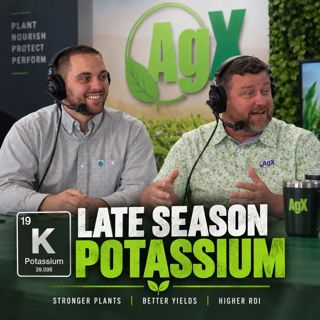
Your Soil Has Potassium. So Why Can’t Your Crop Get It?

Your Soil Has Potassium. So Why Can’t Your Crop Get It?

https://agxplore.com/assessment/?utm_source=google&utm_medium=cpc&utm_campaign=us_branding_search&utm_content=us_branding_search&utm_creative=&utm_term=nitrogen%20fertilizer%E2%80%A8&gad_source=1&gad_...

16 Sep 11min
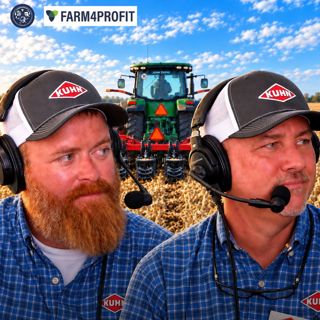
Every Pass Has to Pay: Smarter Tillage & Fertilizer

Every Pass Has to Pay: Smarter Tillage & Fertilizer

Does tillage make money? The answer isn't simply yes or no. The KUHN team explains why the industry is moving away from “recreational tillage” toward more calculated, specialized passes designed to so...

14 Sep 53min
Beyond the Farm: How Regan & Andrea Are Building Their Own Path

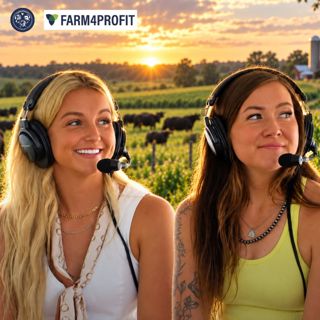
Beyond the Farm: How Regan & Andrea Are Building Their Own Path

Andrea Fleming and Regan Bieber return to Farm4Fun to share how their lives and operations have changed since their previous appearances. Regan talks about stepping back into her South Dakota family f...

10 Sep 49min
How Do You Move 23,000 Bushels of Grain Per Hour

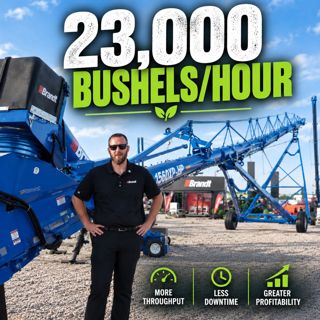
How Do You Move 23,000 Bushels of Grain Per Hour

In this What’s Working in Ag segment, Tanner gets an up-close look at Brandt’s 16125 HP Swingaway Auger. With bins continuing to get taller and wider, Brandt says demand is growing for equipment capab...

9 Sep 8min
Thin Margins, Expensive Nitrogen & the Agronomy Decisions That Pay

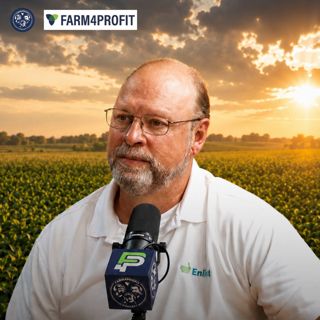
Thin Margins, Expensive Nitrogen & the Agronomy Decisions That Pay

Dr. Eric Scherder of Corteva Agriscience returns to Farm4Profit to look back at the 2026 growing season and help farmers start building their 2027 agronomy plan. The conversation begins with cover cro...

7 Sep 59min
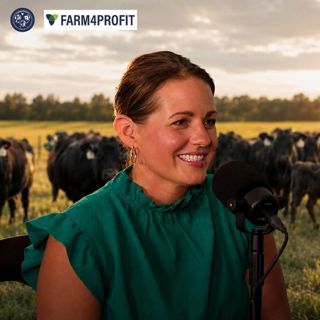
Farm Accidents, Family & Ranching with Calli Williams of TW Angus

Farm Accidents, Family & Ranching with Calli Williams of TW Angus

Calli Williams, the Millennial Rancher, joins Farm4Fun to share the story behind TW Angus and what it takes to build a first-generation cattle operation in South Dakota. Calli grew up around cattle, 4...

3 Sep 56min

200-Bushel Corn at $14? Understanding the Opportunity

200-Bushel Corn at $14? Understanding the Opportunity

Greg Schreiner of Quick Organics returns with some major updates, including collaboration with USDA around the Common Organic System Plan and new tools designed to simplify one of the biggest headache...

2 Sep 10min

Populärt inom Business & ekonomi

framgangspodden
varvet
rss-jossan-nina
rss-borsens-finest
24fragor
svd-tech-brief
avanzapodden
badfluence
uppgang-och-fall
lastbilspodden
fill-or-kill
rss-inga-dumma-fragor-om-pengar
rss-kort-lang-analyspodden-fran-di
tabberaset
rss-dagen-med-di
bathina-en-podcast
rikatillsammans-om-privatekonomi-rikedom-i-livet
kapitalet-en-podd-om-ekonomi
affarsvarlden
borsmorgon