
Navigating Crop Insurance in 2024: Strategies for Lower Commodity Prices

Navigating Crop Insurance in 2024: Strategies for Lower Commodity Prices

- Commodity Prices are down. This will result in slightly lower MPCI premiums (15-20%), but it also means much lower per acre guarantees than it did in 2023. $200 an acre less on corn and $100 an acre less on beans. Unfortunately, input costs are about the same. I included a quick spreadsheet where I used ISU's estimated costs of production to come up with an implied level of MPCI coverage that would be needed to cover costs. You can see the big differences in '23 and '24 - it is not pretty.

- Any good crop insurance agent's first job is to find a level of coverage that can cover input costs. That was easy in '21-'23. In 2024, it will be impossible for a majority of farmers - especially if they are not willing to buy higher coverages. So we might be stuck just trying to come close to covering inputs. Farmer instinct's may be to back off of crop insurance in order to save a few bucks, but they really should be looking at more ways to keep losses to a minimum.

- So we might need to buy higher coverages. What are our options? 85%, SCO (86% county based), ECO (95% county based), and private (unsubsidized) add-on coverages. Folks who bought ECO on Corn in 2023 should be pretty happy. Prices fell enough that even counties with above average yields will be getting ECO payments. SCO and ECO have both grown in popularity over their short history and I think we will continue to see them grow in the coming years.

FMH also has a couple of add-on coverages that work in tandem with SCO or ECO that are pretty good values. They are called SCO+ and ECO+. I can really nerd out on these, but we may not want to get this deep.

- SCO is an economical way to buy up, but you can only have it when you have elected the PLC program at FSA. Both ARC and PLC programs are more relevant now than they were in the past several years. They are far from a crop insurance replacement, but they may come into play in 2024.

- High level MPCI products are not always needed for good risk management, but they are always a good value because of the subsidy. History proves farmers will get back more than they put in if they remain in the same programs long enough. This is true for all subsidized crop insurance plans.

- Private Products like Hail and Wind have not changed much and I don't know of any significant rate changes across the country.

- The use of precision data to report acres, production, and complete claims continues to grow. The typical farmer will reduce premium (FSA acres tend to be overstated) and grow APHs (Dividing the same production by fewer acres). Claims are also completed significantly faster.

- FMH itself has a unique story. We were founded as a mutual insurance company by a group of farmers in the late 1800s in Early, IA. They were frustrated with losing crops due to hail so they pooled together financial resources to be paid out to those who had the largest hail losses. The majority of board members and president at that time were from the same family - the Rutledge family. The Rutledge's still run the company today and have for the entire 130+ years.

This last bit seems odd given crop insurance is unique to the American Farmer, but a high majority of crop insurance companies (I think 11 out of the current 14) are run by larger reinsurers that are foreign entities. On the other hand FMH is a mutual owned by our private policyholders. So for this reason - we call ourselves "America's Crop Insurance Company."

I also thought of another good story from the playgrounds of Aurelia if you will allow me to indulge.

Want Farm4Profit Merch? Custom order your favorite items today!

https://farmfocused.com/farm-4profit/

Don’t forget to like the podcast on all platforms and leave a review where ever you listen!

Website: www.Farm4Profit.com

Shareable episode link: https://intro-to-farm4profit.simplecast.com

Email address: Farm4profitllc@gmail.com

Call/Text: 515.207.9640

Subscribe to YouTube: https://www.youtube.com/channel/UCSR8c1BrCjNDDI_Acku5Xqw

Follow us on TikTok: https://www.tiktok.com/@farm4profitllc

Connect with us on Facebook: https://www.facebook.com/Farm4ProfitLLC/

Farm4Profit Media is not a financial, legal, or tax advisor. Content is provided for informational purposes only, and we serve solely as a platform for third-party opinions. Any actions taken based on this content are at your own risk.


Hosted by Simplecast, an AdsWizz company. See pcm.adswizz.com for information about our collection and use of personal data for advertising.

Det här avsnittet är hämtat från ett öppet RSS-flöde och publiceras inte av Podme. Det kan innehålla reklam.

Avsnitt(623)

He Bought 80 Acres. Then Asked Customers What to Grow.

He Bought 80 Acres. Then Asked Customers What to Grow.

Tom Brown didn't grow up farming. After studying anthropology and horticulture at Kansas State, he spent roughly 15 years living and working in Pakistan and Afghanistan, where he gained experience in ...

17 Sep 44min
Your Soil Has Potassium. So Why Can’t Your Crop Get It?

Your Soil Has Potassium. So Why Can’t Your Crop Get It?

https://agxplore.com/assessment/?utm_source=google&utm_medium=cpc&utm_campaign=us_branding_search&utm_content=us_branding_search&utm_creative=&utm_term=nitrogen%20fertilizer%E2%80%A8&gad_source=1&gad_...

16 Sep 11min
Every Pass Has to Pay: Smarter Tillage & Fertilizer

Every Pass Has to Pay: Smarter Tillage & Fertilizer

Does tillage make money? The answer isn't simply yes or no. The KUHN team explains why the industry is moving away from “recreational tillage” toward more calculated, specialized passes designed to so...

14 Sep 53min

Beyond the Farm: How Regan & Andrea Are Building Their Own Path

Beyond the Farm: How Regan & Andrea Are Building Their Own Path

Andrea Fleming and Regan Bieber return to Farm4Fun to share how their lives and operations have changed since their previous appearances. Regan talks about stepping back into her South Dakota family f...

10 Sep 49min
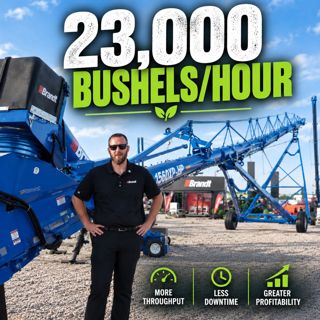
How Do You Move 23,000 Bushels of Grain Per Hour

How Do You Move 23,000 Bushels of Grain Per Hour

In this What’s Working in Ag segment, Tanner gets an up-close look at Brandt’s 16125 HP Swingaway Auger. With bins continuing to get taller and wider, Brandt says demand is growing for equipment capab...

9 Sep 8min

Thin Margins, Expensive Nitrogen & the Agronomy Decisions That Pay

Thin Margins, Expensive Nitrogen & the Agronomy Decisions That Pay

Dr. Eric Scherder of Corteva Agriscience returns to Farm4Profit to look back at the 2026 growing season and help farmers start building their 2027 agronomy plan. The conversation begins with cover cro...

7 Sep 59min
Farm Accidents, Family & Ranching with Calli Williams of TW Angus

Farm Accidents, Family & Ranching with Calli Williams of TW Angus

Calli Williams, the Millennial Rancher, joins Farm4Fun to share the story behind TW Angus and what it takes to build a first-generation cattle operation in South Dakota. Calli grew up around cattle, 4...

3 Sep 56min

200-Bushel Corn at $14? Understanding the Opportunity

200-Bushel Corn at $14? Understanding the Opportunity

Greg Schreiner of Quick Organics returns with some major updates, including collaboration with USDA around the Common Organic System Plan and new tools designed to simplify one of the biggest headache...

2 Sep 10min

Populärt inom Business & ekonomi

framgangspodden
varvet
rss-jossan-nina
rss-borsens-finest
24fragor
svd-tech-brief
avanzapodden
badfluence
uppgang-och-fall
lastbilspodden
fill-or-kill
rss-inga-dumma-fragor-om-pengar
rss-kort-lang-analyspodden-fran-di
tabberaset
rss-dagen-med-di
bathina-en-podcast
rikatillsammans-om-privatekonomi-rikedom-i-livet
kapitalet-en-podd-om-ekonomi
affarsvarlden
borsmorgon