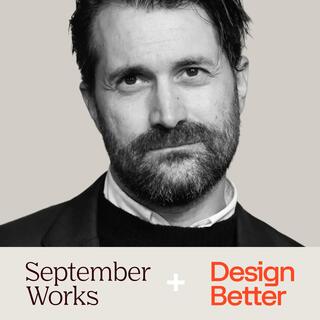
The Brief: What designers can learn from writers and storytellers
Design Better28 Feb 2025

The Brief: What designers can learn from writers and storytellers

Words are worth a thousand pictures by Eli Woolery How does Sir Jony Ive, the famed former head of design at Apple, start every project? If, like me, you guessed by sketching, you’d be wrong. I was surprised to learn when he visited the design capstone class I co-teach at Stanford that he starts all projects by writing. But Jony gave our class a powerful example of why writing is a far more versatile conceptual tool than sketching. He spoke of working with a landscape designer on his property in the UK. The designer could have shared drawings, but instead he wrote about the night garden, and how the flagstones would radiate both the heat from the warmth of the day and the fragrance of the flowers along the pathway. “I write because I realized at art school that you can only draw a small percentage of the attributes of an object. You know, if I were to draw this [holds up a glass], you would understand only 20 percent of its nature. You would have no sense of its weight or material or temperature. You would have no sense of the way that it reacted to its environment. Writing helps me frame the problem. A lot of mistakes are made when you frame a problem, because you could already be dismissing 60 percent, 70 percent of the potential ideas.” —Jony Ive, in an interview with McKinsey Quarterly Free from the constraints that even the best draftsperson would face, Jony and his team can conceptualize not only the look of products, but the touch, weight, and even the emotions they trigger. Perhaps it shouldn’t surprise us that good design can start with writing. Good writers are adept at taking an iterative approach to creativity. They create memorable characters through empathy. Their characters evolve, and they often reimagine old stories with new, innovative approaches. “The difference between writers and non-writers is that writers go back again and again. My old classics teacher used to say that the people who succeeded in classics were the people with the highest tolerance for failure. I think the same is true for writers.”—Madeline Miller, author of Circe and The Song of Achilles Madeline Miller is a great example of an author who uses all of these techniques in her writing. Her book Circe takes the titular character who was a peripheral—if important—part of Homer’s Odyssey, and reimagines her as the protagonist. Her empathetic approach to the enchantress-in-exile reframes the story in a way that makes us feel a human connection to the not-quite-human character. Professional writers also aren’t afraid to make mistakes as they go. Many have a bias toward action, creating the rough outlines (parallel to a prototype) of the work before going back to refine it. “My husband is a master carpenter. When I asked him if master carpenters make fewer mistakes than regular carpenters, he said no–but they recognize [the mistakes] more quickly. It’s the same for writers as they gain experience.” —Madeline Miller, author of Circe and The Song of Achilles Former guests on the show, David Sedaris and Dan Pink, shared wisdom about writing that can teach us plenty about becoming better designers. Continue reading this issue of The Brief on Substack Learn more about your ad choices. Visit megaphone.fm/adchoices

Det här avsnittet är hämtat från ett öppet RSS-flöde och publiceras inte av Podme. Det kan innehålla reklam.

Avsnitt(268)

Creative Leadership Retreat: Paul Dichter

Creative Leadership Retreat: Paul Dichter

This episode kicks off a special series recorded live at our Creative Leadership Retreat in Sonoma, which we co-hosted with our friends at September Works in late September. We gathered 40 leaders fro...

4 Nov 1h
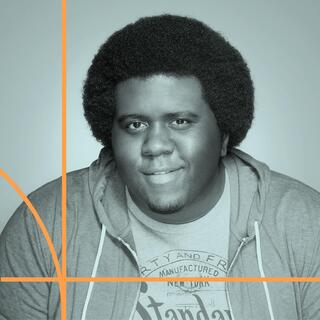
Maurice Cherry: Revision Path creator on why attention isn’t impact

Maurice Cherry: Revision Path creator on why attention isn’t impact

For eleven years, Maurice Cherry made a weekly podcast called Revision Path showcasing Black designers from around the world. He recorded more than 500 episodes with designers on six continents and bu...

28 Okt 51min

Tom Foley: How to pair typefaces and why the best brand fonts go unnoticed

Tom Foley: How to pair typefaces and why the best brand fonts go unnoticed

Tom Foley didn’t set out to design typefaces. As a postgraduate student at Central Saint Martins in London, he was researching why Ireland, unlike Switzerland, the Netherlands, or Germany, never seeme...

21 Okt 40min

Kevin Flores: Find Your Inner Rebel

Kevin Flores: Find Your Inner Rebel

Kevin Flores has been part of the Design Better community for years — we first met him in 2017, while he was leading design at 23andMe, back when we were researching how design teams are structured fo...

14 Okt 39min

Randy Hunt: Notion and Etsy design leader on why the best design teams stay small

Randy Hunt: Notion and Etsy design leader on why the best design teams stay small

In graduate school, Randy Hunt poured his heart and soul into a poster for Milton Glaser’s class, a picture built entirely from hand lettering that read as an image from across the room and as words u...

7 Okt 40min

Matt Owens:  Athletics co-founder on keeping your creative fire lit

Matt Owens: Athletics co-founder on keeping your creative fire lit

When Aarron was fresh out of grad school, working at an agency outside Philadelphia, he and his coworkers used to crowd around a monitor to study volumeone.com. Most websites back then had a picture, ...

5 Okt 55min

Blaine Billingsley: OpenAI designer on the collaboration problem AI hasn't solved yet

Blaine Billingsley: OpenAI designer on the collaboration problem AI hasn't solved yet

Blaine Billingsley is a staff designer at OpenAI, and his path there was anything but a straight line. He studied music composition and comparative religion, played guitar in Texas for a living (he re...

23 Sep 28min

Mack Paul: Co-author of Miracle Road on designing places where innovation happens

Mack Paul: Co-author of Miracle Road on designing places where innovation happens

In the mid-1950s, North Carolina was one of the poorest states in the country. Its economy ran on tobacco, furniture, and textiles — all three in decline — and its universities were turning out talent...

17 Sep 44min

Populärt inom Business & ekonomi

framgangspodden
rss-hemlispodden
varvet
rss-jossan-nina
rss-svart-marknad
rss-borsens-finest
bathina-en-podcast
uppgang-och-fall
avanzapodden
rss-inga-dumma-fragor-om-pengar
badfluence
rss-dr-bjorklund
rss-hos-psykologen
fill-or-kill
lastbilspodden
rss-kort-lang-analyspodden-fran-di
24fragor
borsmorgon
dynastin
tabberaset