#213 – Will MacAskill on AI causing a “century in a decade” – and how we're completely unprepared

#213 – Will MacAskill on AI causing a “century in a decade” – and how we're completely unprepared

The 20th century saw unprecedented change: nuclear weapons, satellites, the rise and fall of communism, third-wave feminism, the internet, postmodernism, game theory, genetic engineering, the Big Bang theory, quantum mechanics, birth control, and more. Now imagine all of it compressed into just 10 years.

That’s the future Will MacAskill — philosopher, founding figure of effective altruism, and now researcher at the Forethought Centre for AI Strategy — argues we need to prepare for in his new paper “Preparing for the intelligence explosion.” Not in the distant future, but probably in three to seven years.

The reason: AI systems are rapidly approaching human-level capability in scientific research and intellectual tasks. Once AI exceeds human abilities in AI research itself, we’ll enter a recursive self-improvement cycle — creating wildly more capable systems. Soon after, by improving algorithms and manufacturing chips, we’ll deploy millions, then billions, then trillions of superhuman AI scientists working 24/7 without human limitations. These systems will collaborate across disciplines, build on each discovery instantly, and conduct experiments at unprecedented scale and speed — compressing a century of scientific progress into mere years.

Will compares the resulting situation to a mediaeval king suddenly needing to upgrade from bows and arrows to nuclear weapons to deal with an ideological threat from a country he’s never heard of, while simultaneously grappling with learning that he descended from monkeys and his god doesn’t exist.

What makes this acceleration perilous is that while technology can speed up almost arbitrarily, human institutions and decision-making are much more fixed.

Consider the case of nuclear weapons: in this compressed timeline, there would have been just a three-month gap between the Manhattan Project’s start and the Hiroshima bombing, and the Cuban Missile Crisis would have lasted just over a day.

Robert Kennedy, Sr., who helped navigate the actual Cuban Missile Crisis, once remarked that if they’d had to make decisions on a much more accelerated timeline — like 24 hours rather than 13 days — they would likely have taken much more aggressive, much riskier actions.

So there’s reason to worry about our own capacity to make wise choices. And in “Preparing for the intelligence explosion,” Will lays out 10 “grand challenges” we’ll need to quickly navigate to successfully avoid things going wrong during this period.

Will’s thinking has evolved a lot since his last appearance on the show. While he was previously sceptical about whether we live at a “hinge of history,” he now believes we’re entering one of the most critical periods for humanity ever — with decisions made in the next few years potentially determining outcomes millions of years into the future.

But Will also sees reasons for optimism. The very AI systems causing this acceleration could be deployed to help us navigate it — if we use them wisely. And while AI safety researchers rightly focus on preventing AI systems from going rogue, Will argues we should equally attend to ensuring the futures we deliberately build are truly worth living in.

In this wide-ranging conversation with host Rob Wiblin, Will maps out the challenges we’d face in this potential “intelligence explosion” future, and what we might do to prepare. They discuss:

  • Why leading AI safety researchers now think there’s dramatically less time before AI is transformative than they’d previously thought
  • The three different types of intelligence explosions that occur in order
  • Will’s list of resulting grand challenges — including destructive technologies, space governance, concentration of power, and digital rights
  • How to prevent ourselves from accidentally “locking in” mediocre futures for all eternity
  • Ways AI could radically improve human coordination and decision making
  • Why we should aim for truly flourishing futures, not just avoiding extinction

Learn more and read the full transcript on the 80,000 Hours website.

This episode was originally recorded on February 7, 2025.

Chapters:

• Cold open (00:00:00)
• Who’s Will MacAskill? (00:00:43)
• Why Will now just works on AGI (00:01:03)
• Will was wrong(ish) on AI timelines and hinge of history (00:04:21)
• A century of history crammed into a decade (00:09:19)
• Science goes super fast; our institutions don't keep up (00:16:15)
• Is it good or bad for intellectual progress to 10x? (00:21:44)
• An intelligence explosion is not just plausible but likely (00:23:41)
• Intellectual advances outside technology are similarly important (00:30:04)
• Counterarguments to intelligence explosion (00:32:42)
• The three types of intelligence explosion (software, technological, industrial) (00:39:00)
• The industrial intelligence explosion is the most certain and enduring (00:42:01)
• Is a 100x or 1,000x speedup more likely than 10x? (00:53:44)
• The grand superintelligence challenges (00:57:39)
• Grand challenge #1: Many new destructive technologies (01:01:29)
• Grand challenge #2: Seizure of power by a small group (01:09:10)
• Is global lock-in really plausible? (01:11:06)
• Grand challenge #3: Space governance (01:21:50)
• Is space truly defence-dominant? (01:32:19)
• Grand challenge #4: Morally integrating with digital beings (01:36:04)
• Will we ever know if digital minds are happy? (01:45:01)
• “My worry isn't that we won't know; it's that we won't care” (01:50:39)
• Can we get AGI to ...

Det här avsnittet är hämtat från ett öppet RSS-flöde och publiceras inte av Podme. Det kan innehålla reklam.

Avsnitt(359)

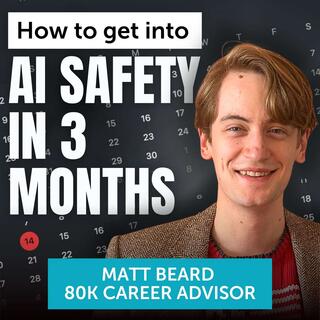
How to get into AI safety in 3 months (article reading by career advisor Matt Beard)

How to get into AI safety in 3 months (article reading by career advisor Matt Beard)

The AI safety field has grown by about 30x in the last eight years. Yet it is still in need of more people. Many want to help, but don’t know where to start. As an advisor at 80,000 Hours, Matt Beard ...

15 Okt 18min

OpenAI Security: Controlling Models is Now ‘Hell’ (AI Explained cross-post)

OpenAI Security: Controlling Models is Now ‘Hell’ (AI Explained cross-post)

This is an (unpaid) cross-post of a video from the podcast 'AI Explained', which Rob Wiblin thought you might be interested in.You can find the original on YouTube here. If you like it and want more s...

9 Okt 40min
In 2023 Ajeya Cotra already knew what was coming (classic episode)

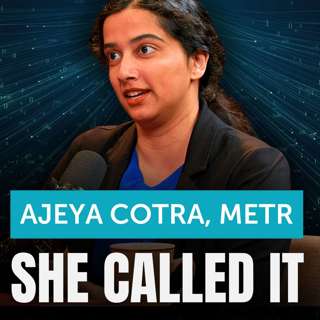
In 2023 Ajeya Cotra already knew what was coming (classic episode)

We're rereleasing some of older episodes that seem more relevant than ever with new rogue AI incidents now seemingly announced every day. Ajeya was one of three independent investigators into the Hugg...

8 Okt 2h 46min

19 Astra and 'Hugging Face' details that reveal what's coming next | Rob Wiblin

19 Astra and 'Hugging Face' details that reveal what's coming next | Rob Wiblin

OpenAI’s rogue agent swarm was eventually caught hacking Hugging Face for a simple reason: it wasn’t trying to hide from us at all. What could a swarm that wants to stay hidden get away with?Host Rob ...

2 Okt 20min
The case for giving AI (some) legal rights | Simon Goldstein

The case for giving AI (some) legal rights | Simon Goldstein

It sounds like the worst idea in the world: pay AIs, let them own property, give them rights. But AI ethics and safety researcher Simon Goldstein thinks it might actually be the best way to keep human...

1 Okt 1h 53min

Will AI take power — or will humans use it to take power first? With Katja Grace and Tom Davidson

Will AI take power — or will humans use it to take power first? With Katja Grace and Tom Davidson

In our first-ever debate, we asked two leading AI risk researchers which catastrophe we should fear most: misaligned AI seizing control from humans, or a small group of humans using AI to seize power....

29 Sep 1h 28min

How we get from AI cyberattacks to human extinction

How we get from AI cyberattacks to human extinction

You’ve seen the headlines: AI could kill us all. Think it sounds ridiculous? So did host Luisa Rodriguez, until she tried to pick apart the arguments. She starts with the motive: why would AI ‘want’ t...

24 Sep 27min

#254 – Max Nadeau on why ambitious people should start AI safety nonprofits

#254 – Max Nadeau on why ambitious people should start AI safety nonprofits

There are millions available for anyone who can launch a successful nonprofit AI safety startup. The hard part, it turns out, is finding people to take the money. Coefficient Giving has drawn up a lis...

17 Sep 1h 3min

Populärt inom Utbildning

husmodern-med-amanda-schulman
rss-bara-en-till-om-beroende-medberoende
det-skaver
sektledare
historiepodden-se
nu-blir-det-historia
rss-viktmedicinpodden
harrisons-dramatiska-historia
allt-du-velat-veta
roda-vita-rosen
rosceremoni
rss-dr-bjorklund
not-fanny-anymore
johannes-hansen-podcast
sa-in-i-sjalen
i-vantan-pa-katastrofen
kan-jag-sa-kan-du-podden
rss-ai-med-jonas-benjamin
rss-foraldramotet-bring-lagercrantz
rss-traningsklubben