Hurricane Hunters Face BIG Challenges Due to Funding Constraints

Hurricane Hunters Face BIG Challenges Due to Funding Constraints

Questions and Answers on Hurricane Hunter Aircraft Operations

Q1: What is the primary purpose of Hurricane Hunter aircraft operated by NOAA and the Air Force?

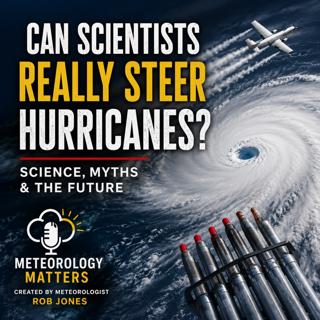
Hurricane Hunter aircraft from the National Oceanic and Atmospheric Administration (NOAA) and the United States Air Force fly into tropical cyclones and winter storms to collect critical data. This information is used by the National Weather Service (NWS) to improve forecasts of a storm's track and intensity. These forecasts are vital for informing evacuation efforts and storm preparations, ultimately aiming to protect life and property. NOAA studies have indicated that data from Hurricane Hunters can improve forecast accuracy by at least 10 percent.

Q2: How has the demand for Hurricane Hunter reconnaissance missions changed since 2014, and what factors have contributed to this change?

The number of Hurricane Hunter reconnaissance missions has increased since 2014 for both tropical cyclone and winter seasons. Tropical cyclone missions saw a rise due to increased storm activity in the Atlantic basin and a greater demand for data from forecasters. Winter season missions experienced a substantial increase, particularly in the Pacific basin, beginning in fiscal year 2020. This surge was primarily driven by the expansion of Hurricane Hunter responsibilities to include reconnaissance of atmospheric rivers on the U.S. West Coast, which can cause extreme precipitation and flooding.

Q3: What challenges have NOAA and the Air Force faced in meeting their Hurricane Hunter mission requirements?

Both NOAA and the Air Force have encountered challenges in completing Hurricane Hunter mission requirements, leading to an increasing number of missed requirements since 2014. Key challenges include limited aircraft availability, often due to maintenance issues (as seen when all of NOAA's aircraft were grounded during Hurricane Idalia in 2023), and staffing shortages affecting air crews and maintenance personnel. The expansion of winter season responsibilities has also placed a higher operational tempo on the aircraft, limiting time for off-season repairs and contributing to more frequent maintenance problems. Limited backup aircraft options further exacerbate the issue when a primary aircraft is unavailable.

Q4: Have NOAA and the Air Force systematically tracked the reasons for missed Hurricane Hunter mission requirements?

No, neither NOAA nor the Air Force has systematically tracked the reasons why Hurricane Hunter mission requirements have been missed. NOAA officials stated they didn't previously consider it necessary due to the lower frequency of missed missions, but now recognize the potential benefits. The Air Force historically did not track this data as it wasn't a requirement. While the Air Force began documenting some reasons in fiscal year 2023, comprehensive data to assess trends over time is still limited for both agencies.

Q5: What are NOAA's plans for its Hurricane Hunter aircraft fleet, and what challenges does the agency face in implementing these plans?

NOAA plans to acquire six new Hurricane Hunter aircraft: two Gulfstream G550 high-altitude jets to replace its aging Gulfstream IV, and four C-130J aircraft to replace its two WP-3D Orions and expand reconnaissance capacity. However, NOAA faces several challenges in implementing these plans, primarily funding-related issues. While significant appropriations have been received, substantial additional funding is needed, particularly for the C-130J acquisition. Budgetary constraints and the timing of congressional appropriations add uncertainty. NOAA has also experienced manufacturing delays with the first G550 jet and faces technical challenges in integrating Doppler radar on the new C-130J aircraft.

Det här avsnittet är hämtat från ett öppet RSS-flöde och publiceras inte av Podme. Det kan innehålla reklam.

Avsnitt(234)

When Politics Turns on Science Globally

When Politics Turns on Science Globally

Weather scientists are increasingly being ignored, censored, arrested, or pushed aside by political movements around the world. From NOAA staffing cuts in the United States to jailed earthquake scient...

15 Maj 45min

2026 Weather Shock: Super El Niño, Record Heat, and a Planet Running Hot

2026 Weather Shock: Super El Niño, Record Heat, and a Planet Running Hot

A Super El Niño may be forming for 2026, and it could push global heat, extreme weather, flooding, drought, and hurricane impacts into dangerous new territory.A Super El Niño may be forming for 2026, ...

8 Maj 33min

AI Weather Forecasts Are Getting Smarter. So Why Are We Weakening NOAA?

AI Weather Forecasts Are Getting Smarter. So Why Are We Weakening NOAA?

AI is revolutionizing weather forecasting. New models like Google DeepMind’s GraphCast and GenCast, ECMWF’s AIFS, and NOAA’s experimental AI-GEFS are producing faster, cheaper, and increasingly accura...

5 Maj 42min

AI Just Beat Hurricane Forecasting… Should We Be Worried?

AI Just Beat Hurricane Forecasting… Should We Be Worried?

AI just changed hurricane forecasting forever. In 2025, it outperformed traditional models and even challenged official NHC forecasts. Artificial Intelligence is no longer experimental in meteorology ...

21 Apr 53min

Will Hurricane Forecasts Get Worse? Inside the NOAA Budget Cuts

Will Hurricane Forecasts Get Worse? Inside the NOAA Budget Cuts

Could hurricane forecasts actually get worse? A deep dive into the proposed 2027 budget cuts to NOAA and how eliminating key research could impact storm prediction, safety, and future forecast accurac...

13 Apr 32min

Fired, Sued, and Still Forecasting: The Matt Devitt vs WINK News Battle

Fired, Sued, and Still Forecasting: The Matt Devitt vs WINK News Battle

Fired. Sued. And still forecasting.The sudden termination of longtime Southwest Florida meteorologist Matt Devitt has exploded into one of the most fascinating media and legal battles in recent years....

4 Apr 37min

“It Only Takes One”: Why 2026’s Hurricane Season Could Be Worse Than It Looks

“It Only Takes One”: Why 2026’s Hurricane Season Could Be Worse Than It Looks

The 2026 hurricane season warning nobody is talking about. The numbers may be average but the risk is anything but because “It only takes one”.The 2026 Atlantic hurricane season may look average on pa...

28 Mars 40min

This Should NOT Be Happening in March… 112° Heat + Hawaii Flood Disaster

This Should NOT Be Happening in March… 112° Heat + Hawaii Flood Disaster

In this episode of Meteorology Matters, we break down two extreme and highly unusual weather events happening right now:🔥 Record-shattering March heat reaching 112°F🌊 Dangerous flooding impacting pa...

21 Mars 38min

Populärt inom Politik & nyheter

svenska-fall
motiv
aftonbladet-krim
p3-krim
aftonbladet-daily
politiken
flashback-forever
rss-sanning-konsekvens
rss-krimreportrarna
rss-krimstad
rss-flodet
spar
rss-frandfors-horna
rss-vad-fan-hande
krimmagasinet
blenda-2
spotlight
rss-expressen-dok
sydsvenskan-dok
olyckan-inifran