
Kai-Fu Lee on the Power of A.I. to Transform Humanity
Time Sensitive5 Juni 2019

Kai-Fu Lee on the Power of A.I. to Transform Humanity

The media tends to hyperbolize and boosterize technologists and the work that they do, creating all kinds of absurdly over-the-top titles for them. But when CBS’s 60 Minutes dubbed Kai-Fu Lee “the oracle of A.I.” earlier this year, it was actually a spot-on assessment. Lee has indeed been at the forefront of the field for more than three decades and is without question an artificial intelligence visionary. There are few people in the world who understand A.I. so astutely, especially within so many social and cultural contexts. His accolades speak volumes: In 2013, Lee was named to that year’s Time 100 list of the world’s most influential people, and this January, he was named co-chair of the World Economic Forum’s A.I. Council. His new book, A.I. Superpowers: China, Silicon Valley, and the New World Order, quickly rose to become a New York Times bestseller.

Lee’s got one extraordinary résumé: After receiving a B.S.in computer science from Columbia University in 1983, he went on to get his Ph.D. in 1988 from Carnegie Mellon, where developed Sphinx, the first-ever speaker-independent continuous speech recognition system. In 1990, he joined Apple as a research scientist, heading up multiple R&D groups there for several years. From 1998 to 2005, he worked at Microsoft, where he established what would become Microsoft Research Asia, and later, upon returning to the U.S., he was named a vice president at the company. In 2005, he decamped to Google, resulting in a widely publicized five-month legal battle with Microsoft. Once settled, Lee helped bring Google to China, overseeing its growth and operations there for four years. Lee now runs Sinovation Ventures, a venture capital firm that invests in start-ups in China, many of them in the A.I. space. As of a year ago, according to Bloomberg, Sinovation had $2 billion under asset management with more than 300 companies in its portfolio.

On this episode of Time Sensitive, Lee shares with Andrew Zuckerman his fascinating story of emigrating from China to Oak Ridge, Tennessee, at age 11; why he remains rationally optimistic about A.I. (and its increasingly potent presence in our lives); and how a recent bout with cancer drastically altered his outlook on life and work.

Det här avsnittet är hämtat från ett öppet RSS-flöde och publiceras inte av Podme. Det kan innehålla reklam.

Avsnitt(163)

Simon Critchley on Giving Up the Fantasy of Mastery

Simon Critchley on Giving Up the Fantasy of Mastery

Who better to bring remarkable clarity to the density of Martin Heidegger’s Being and Time than the British philosopher and New School professor Simon Critchley? After decades spent studying and teach...

7 Okt 1h 37min
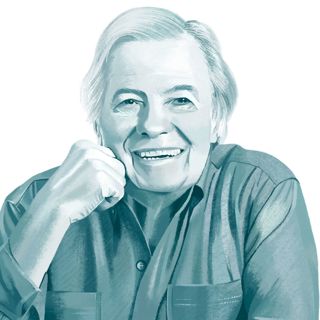
Jacques Pépin on “Taste Memory” and a Life in the Kitchen

Jacques Pépin on “Taste Memory” and a Life in the Kitchen

Jacques Pépin has long found beauty in simplicity—a glass of warm milk, a freshly sliced lemon, a garden-ripe tomato—and in transmitting knowledge from one hand to the next. Now 90, the French chef, a...

30 Sep 1h 14min

Iris van Herpen on Visualizing the Invisible Through Haute Couture

Iris van Herpen on Visualizing the Invisible Through Haute Couture

Iris van Herpen’s boundary-defying, otherworldly work exists somewhere between couture, sculpture, science, technology, architecture, and nature. For nearly two decades, the Dutch fashion designer has...

16 Sep 1h 19min

Dries Van Noten on the Meaning Found in Making

Dries Van Noten on the Meaning Found in Making

Dries Van Noten’s lifelong fascination with craft and making runs deep. He grew up in a multigenerational family of retailers and tailors in Antwerp, and in the 1980s, he was part of the famed avant-g...

24 Juni 59min

Felix Burrichter on Print’s Enduring Power in the Algorithmic Age

Felix Burrichter on Print’s Enduring Power in the Algorithmic Age

Through PIN–UP, the German-born, New York–based editor, curator, and founder Felix Burrichter continues to expand the possibilities of what an architecture magazine can be. He constructs intuitive bri...

17 Juni 1h 20min

Maria Popova on the Role of Chance in Shaping Our Lives

Maria Popova on the Role of Chance in Shaping Our Lives

Through her multifaceted work, the Bulgarian-born, Brooklyn-based writer, reader, and researcher Maria Popova, founder of the “free, ad-free, A.I.-free, fully human” website and newsletter The Margina...

10 Juni 58min
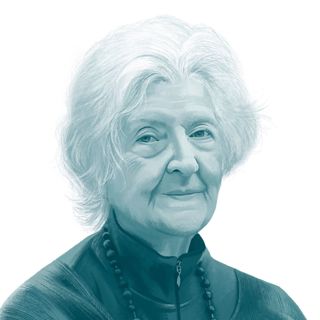
Sheila Hicks on Life as a Series of Portals

Sheila Hicks on Life as a Series of Portals

For our latest “site-specific” episode of Time Sensitive, Spencer meets Sheila Hicks inside her courtyard in Paris’s Saint-Germain-des-Prés neighborhood, where she has called home for more than 60 yea...

27 Maj 1h 4min

Valerie June on Joy as a Form of Resistance

Valerie June on Joy as a Form of Resistance

The singer-songwriter Valerie June has a gift for writing contemporary songs that feel timeless and as though they could also have existed at various points across the past century. Her expansive laye...

13 Maj 1h 13min

Populärt inom Business & ekonomi

framgangspodden
rss-jossan-nina
varvet
rss-borsens-finest
badfluence
uppgang-och-fall
rss-dr-bjorklund
24fragor
rss-inga-dumma-fragor-om-pengar
bathina-en-podcast
avanzapodden
bilar-med-sladd
fill-or-kill
rss-dagen-med-di
rss-kort-lang-analyspodden-fran-di
lastbilspodden
tabberaset
kapitalet-en-podd-om-ekonomi
rikatillsammans-om-privatekonomi-rikedom-i-livet
borsmorgon