
Michael Kimmelman on Building More Beautiful and Equitable Cities
Time Sensitive7 Aug 2019

Michael Kimmelman on Building More Beautiful and Equitable Cities

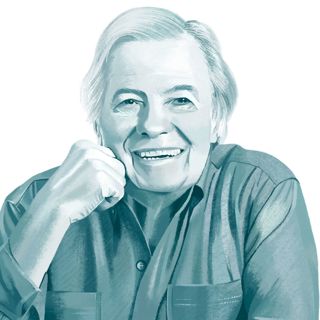
Michael Kimmelman does nothing in half measures. For more than 30 years, he has brought his assertive, culturally astute, historically sensitive perspective to The New York Times, which he has been contributing to since 1987 and joined full-time in 1990. During his tenure, he has written more than 2,000 articles, ranging from art criticism (he was its chief art critic from 1990 to 2007); to reporting from Europe and the Middle East (from 2007 to mid-2011, he was based in Berlin, where he was the “Abroad” columnist); to civically minded coverage of the built world, which has been his focus as the paper’s architecture critic the past seven years.

Throughout Kimmelman has displayed the rare ability to balance his writing in a way that shows him to be more far more level-headed than hot-headed. He is a classically trained pianist who plays with the well-rounded, even-keeled temperament and gentle skill of someone who clearly has done the work and put the hours in, and the same is true of his pieces in The New York Times. Consider his judicious take—note: not takedown—on a 1992 Julian Schnabel show at Pace gallery: “Mr. Schnabel's ambition and ego continue to outstrip his ability to paint. But there's something impressive about his sheer audacity, and just enough talent in him to make it impossible to dismiss his work out of hand. One wants to ignore it but can't.” Or, more recently, in 2014, his view on David Adjaye’s Sugar Hill social-housing complex in Harlem: “Sugar Hill is something of an extravagance and not easily replicable. But it posits a goal for what subsidized housing might look like, how it could lift a neighborhood and mold a generation.” Kimmelman more often than not sees the bigger picture and, at the same time, injects his own shrewd, deeply studied understanding of the subject at hand.

On this episode of Time Sensitive, Spencer Bailey speaks with Kimmelman about his lesser-known talents as a pianist, his three-plus-decade path at The New York Times, and his goal as architecture critic to build a greater discourse around designing cities that are better, healthier, and simply fairer for all.

Det här avsnittet är hämtat från ett öppet RSS-flöde och publiceras inte av Podme. Det kan innehålla reklam.

Avsnitt(160)

Dries Van Noten on the Meaning Found in Making

Dries Van Noten on the Meaning Found in Making

Dries Van Noten’s lifelong fascination with craft and making runs deep. He grew up in a multigenerational family of retailers and tailors in Antwerp, and in the 1980s, he was part of the famed avant-g...

24 Juni 59min

Felix Burrichter on Print’s Enduring Power in the Algorithmic Age

Felix Burrichter on Print’s Enduring Power in the Algorithmic Age

Through PIN–UP, the German-born, New York–based editor, curator, and founder Felix Burrichter continues to expand the possibilities of what an architecture magazine can be. He constructs intuitive bri...

17 Juni 1h 20min

Maria Popova on the Role of Chance in Shaping Our Lives

Maria Popova on the Role of Chance in Shaping Our Lives

Through her multifaceted work, the Bulgarian-born, Brooklyn-based writer, reader, and researcher Maria Popova, founder of the “free, ad-free, A.I.-free, fully human” website and newsletter The Margina...

10 Juni 58min

Sheila Hicks on Life as a Series of Portals

Sheila Hicks on Life as a Series of Portals

For our latest “site-specific” episode of Time Sensitive, Spencer meets Sheila Hicks inside her courtyard in Paris’s Saint-Germain-des-Prés neighborhood, where she has called home for more than 60 yea...

27 Maj 1h 4min

Valerie June on Joy as a Form of Resistance

Valerie June on Joy as a Form of Resistance

The singer-songwriter Valerie June has a gift for writing contemporary songs that feel timeless and as though they could also have existed at various points across the past century. Her expansive laye...

13 Maj 1h 13min

George Saunders on the Power of Fiction to Enliven the World

George Saunders on the Power of Fiction to Enliven the World

The novelist, essayist, and short-story writer George Saunders—widely celebrated for his novel Lincoln in the Bardo (2017), which won the Man Booker Prize, and book of short stories Tenth of December ...

6 Maj 1h 11min

Alma Allen on Connecting to the Primordial Through Art

Alma Allen on Connecting to the Primordial Through Art

There’s an animate quality to the biomorphic sculptures of the self-taught, Utah-born artist Alma Allen. His works, carved from wood, marble, and bronze—and informed by his deep appreciation for the n...

22 Apr 1h 6min

Devon Turnbull on Elevating the Beauty of Sound

Devon Turnbull on Elevating the Beauty of Sound

To be in a room with one of the artist and audiophile Devon Turnbull’s texture-rich Ojas hi-fi audio systems may be the closest one can get to being in the studio with the musicians themselves. It’s n...

8 Apr 1h 4min

Populärt inom Business & ekonomi

framgangspodden
badfluence
dynastin
varvet
uppgang-och-fall
svd-tech-brief
avanzapodden
rss-inga-dumma-fragor-om-pengar
tabberaset
rss-kort-lang-analyspodden-fran-di
rikatillsammans-om-privatekonomi-rikedom-i-livet
fill-or-kill
borslunch-2
lastbilspodden
rss-dagen-med-di
rss-borslunch
ekonomiekot-extra
rss-hos-psykologen
bathina-en-podcast
rss-borssurr-med-mitelman-och-mellqvist