

Professor Raghavan Iyer ~ The Eye of Self Existence
Reading of excerpts from Dr Raghavan's essay 'The Eye of Self Existence'. The full text can be found here: https://theosophytrust.org/944-eye-of-self-existenceProfessor Raghavan N. Iyer (1930 -1995) was an internationally known philosopher, political theorist, and spiritual practitioner who devoted his life to the intellectual and spiritual uplift of human society. The only Rhodes Scholar from India in 1950 to Oxford, he secured First Class Honors in Philosophy, Politics and Economics and later earned a D. Phil. Degree in moral and political philosophy. For eight years, he was Fellow and Lecturer in Politics at St. Anthony's College, Oxford, then Visiting Professor at the Universities of Oslo, Ghana and Chicago, and lectured at the College of Europe in Belgium, the Erasmus Seminar in Holland, and at Harvard, Bowdoin, Berkeley, U.C.L.A., Rand Corporation and the California Institute of Technology. He was professor of political philosophy at the University of California, Santa Barbara for 21 years.His message is that a renewed humankind is now emerging, and his writings address the causes of the global situation, the nature of this evolution, and the manner in which individuals can participate fully in this collective transformation.Dr Iyer was a practitioner and member of the Theosophical Foundation and wrote that:"Initiation into Theosophical metaphysics is more than an intellectual or moral enterprise; it is a continuous spiritual exercise in the development of intuitive and cognitive capacities that are the highest available to humans, a process that includes from the first a blending of the head and the heart through the interaction of viveka and vairagya, discrimination and detachment. Even our initial apprehension of a statement of Theosophical metaphysics involves an ethical as well as mental effort, just as even the smallest application of a Theosophical injunction to our moral life requires some degree of mental control and the deeper awareness, universal and impersonal in nature, that comes from our higher cognitive capacities. Moral growth, for a Theosophist, presupposes “the silent worship of abstract or noumenal Nature, the only divine manifestation”, that is “the one ennobling religion of Humanity.”🙏 May whatever goodness arises from these readings/offerings be for the benefit of all sentient beings.🔆 These podcasts are not monetized. If you benefit from these podcasts and would like to support our nun's hermitage, there are two options to donate - via Paypal using this email address: vivekahermitage@gmail.com with PayPal or using this direct link: https://paypal.me/VivekaHermitageor we have a WISE account with the above email address.
12 Sep 202529min
The Way of Tea (Wabi-sabi) ~ Sen No Rikyu ~ Zen Buddhism
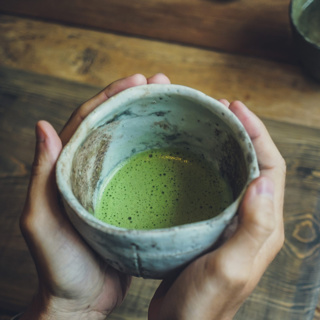
A reading of verses on 'The Spirit of Wabi-sabi: Beauty in Imperfection' by Sen No Rikyu.Sen no Rikyū (1522 -1591), was a Japanese tea master considered the most important influence on the chanoyu, the Japanese "Way of Tea", particularly the tradition of wabi-cha. Rikyū’s life unfolded during a turbulent period in Japanese history—an age of warlords and shifting powers—but in the midst of that chaos, he cultivated a space of serenity. His teachings arose from Zen Buddhism and the profound silence of mindful observation. He once said, “In the small, seek the great.” This encapsulates the heart of his worldview: that in the smallest actions—the placing of a cup, the bow before pouring water, the sweeping of a path—there lies an opportunity for awakening.Central to Rikyū’s vision of life is the concept of wabi-sabi—the beauty of imperfection, impermanence, and incompleteness. He brought this aesthetic into the tea ceremony by simplifying and refining it until only the essential remained. He preferred rustic, handmade tea bowls with irregular shapes and muted colors over ornate Chinese porcelain. These objects, flawed yet harmonious, reminded participants of their own impermanence and the natural rhythm of life.Music: Swami Madhuram - 'Calm'With deep thanks to Swami for permission to use his beautiful music for this channelPlease find his music here: https://insighttimer.com/swamimadhuram🙏 May whatever goodness arises from these readings/offerings be for the benefit of all sentient beings.🔆 These podcasts are not monetized. If you benefit from these podcasts and would like to support our nun's hermitage, there are two options to donate - via Paypal using this email address: vivekahermitage@gmail.com with PayPal or using this direct link: https://paypal.me/VivekaHermitageor we have a WISE account with the above email address.
6 Sep 202510min
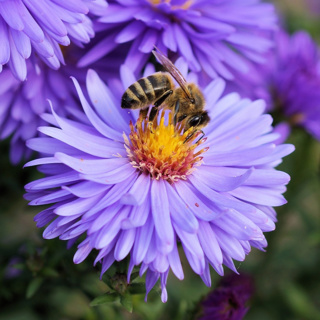
Ramana Maharshi ~ Unconditional Surrender
Selected excerpts of Ramana Maharshi's teaching taken from the text, Aham Sphurana. With thanks to John David for permission to read from this recently published text.https://www.amazon.com.au/Aham-Sphurana-Realisation-Selection-Teachings/dp/1916321178Ramana Maharshi ( 1879 -1950) was an Indian sage and jivanmukta (liberated being). He was born Venkataraman Iyer, but is mostly known by the name Bhagavan Sri Ramana Maharshi. He was born in Tiruchuli, Tamil Nadu, India. In 1895, an attraction to the sacred hill Arunachala and the 63 Nayanmars was aroused in him and in 1896, at the age of 16, he had a "death-experience" where he became aware of a "current" or "force" which he recognized as his true "I" or "Self".Music: Le Code - 'Ocean Shores'https://le-code.bandcamp.com/🙏 May whatever goodness arises from these readings/offerings be for the benefit of all sentient beings.🔆 These podcasts are not monetized. If you benefit from these podcasts and would like to support our nun's hermitage, there are two options to donate - via Paypal using this email address: vivekahermitage@gmail.com with PayPal or using this direct link: https://paypal.me/VivekaHermitageor we have a WISE account with the above email address.
31 Aug 202518min
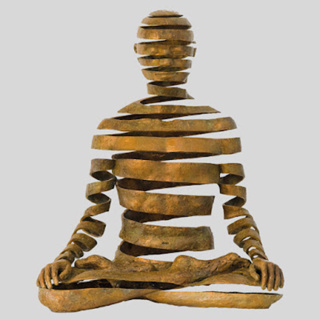
The Selfless Self ~ Ramakant Maharaj ~ Advaita
A selection of pointers read from the text, 'Selfless Self: Talks with Shri Ramakant Maharaj'.Ramakant Maharaj (1941-2018) was a direct disciple of the late Sri Nisargadatta Maharaj and spent 19 years with him. From 1962, he visited Nisargadatta Maharaj and listened to his lectures regularly, until his master's Mahasamadhi in 1981. Ramakant was himseldf also an Indian spiritual teacher of Advaita, Nonduality, and a Guru, belonging to the Inchegiri branch of the Navnath Sampradaya. During the last decade or so at his ashram in Nashik, Ramakant Maharaj introduced devotees from around the world to the ultimate Truth.Music track: Gifted by 'Beebs' - Yohann Vincent🙏 May whatever goodness arises from these readings/offerings be for the benefit of all sentient beings.🔆 These podcasts are not monetized. If you benefit from these podcasts and would like to support our nun's hermitage, there are two options to donate - via Paypal using this email address: vivekahermitage@gmail.com with PayPal or using this direct link: https://paypal.me/VivekaHermitageor we have a WISE account with the above email address.
26 Aug 202518min
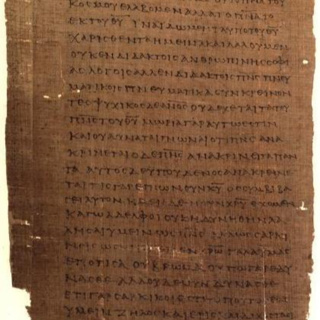
Letter of St Paul to the Corinthians (1:13) ~ The Chapter on Love
A reading of St Paul's first Letter (Chapter 13) to the Corinthians, the Christian community that he had founded at Corinth, Greece. In the year 55 C.E. while in Ephesus, Paul wrote this inspired letter, now known as 1 Corinthians. Among other things, he encouraged the Christians in Corinth to reject false teachings, to remain united, to shun immorality, and to strengthen their faith in the resurrection. Music: David Schombert - 'Lagoon'🙏 May whatever goodness arises from these readings/offerings be for the benefit of all sentient beings.🔆 These podcasts are not monetized. If you benefit from these podcasts and would like to support our nun's hermitage, there are two options to donate - via Paypal using this email address: vivekahermitage@gmail.com with PayPal or using this direct link: https://paypal.me/VivekaHermitageor we have a WISE account with the above email address.
21 Aug 20258min
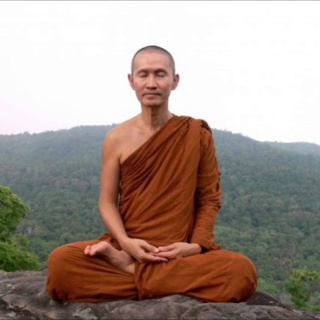
Ajahn Dtun ~ The Stages of Liberation ~ Thai Forest Tradition
This reading compiles excerpts from three different Dhamma talks (which were translated live), where Ajahn Dtun talks about the paths and fruits to full liberation (arahantship) and responds to questions. Only a few small grammatical adjustments have been made to allow for a smoother transition between sections.Ajahn Dtun is a highly respected Thai Buddhist monk and meditation master, known for his gentle demeanor and deep wisdom. He is a prominent figure within the Ajahn Chah tradition and is the Abbot of Wat Boonyawad in Chonburi, Thailand. Ajahn Dtun is recognized for his dedication to practice and the clarity of his teachings, which emphasize the importance of virtue, concentration, and wisdom in meditation._____________________________🙏 May whatever goodness arises from these readings/offerings be for the benefit of all sentient beings.
16 Aug 202521min
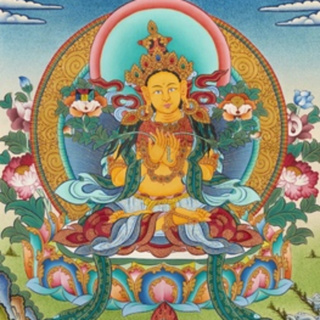
Heart Essence of the Dakinis ~ Bon Dzogchen
A selection of pith teachings on the nature of mind from various Khandros/Dakinis belong to the Bon Dzogchen tradition. These short teachings are found in the text, 'Heart Essence of the Khandro: Experiential Instructions on Bonpo Dzogchen - Thirty Signs and Meanings from Women Lineage-Holders ' - by Yongdzin Lopon Tenzin Namdak Rinpoche.🙏 May whatever goodness arises from these readings/offerings be for the benefit of all sentient beings.🔆 These podcasts are not monetized. If you benefit from these podcasts and would like to support our nun's hermitage, there are two options to donate - via Paypal using this email address: vivekahermitage@gmail.com with PayPal or using this direct link: https://paypal.me/VivekaHermitageor we have a WISE account with the above email address.
11 Aug 202530min
The Great Way ~ Verses on the Faith Mind ~ Hsing Hsing Ming - Zen Buddhism
The Hsin Hsin Ming (Shinjinmei in Japanese) is a verse attributed to the Third Zen Patrriarch. Written in the 6th century, it is considered the first clear and comprehensive statement of Zen. The Hsin Hsin Ming has been much beloved by Zen practitioners for over a thousand years and is still studied today in Western Zen circles. The Hsin Hsin Ming emphasizes that the Great Way is not involved in the game of opposites, and that in order to understand the truth, we have to become aware of our choosing, discriminating mindsTranslation: An amalagam of various classic translationsMusic: Swami Madhuram - 'Coming Home'With deep thanks to Swami for permission to use his beautiful music for this channelPlease find his music here: https://timeforpeace.bandcamp.com/🙏 May whatever goodness arises from these readings/offerings be for the benefit of all sentient beings.🔆 These podcasts are not monetized. If you benefit from these podcasts and would like to support our nun's hermitage, there are two options to donate - via Paypal using this email address: vivekahermitage@gmail.com with PayPal or using this direct link: https://paypal.me/VivekaHermitageor we have a WISE account with the above email address.
4 Aug 202524min