
Sam Newman: Monolith to Microservices

Sam Newman: Monolith to Microservices

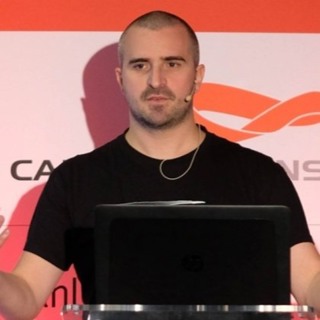
Today on the InfoQ Podcast, Wes Reisz talks with one of the thought leaders in Microservices, CI/CD, and Cloud -- Sam Newman. The podcast covers many of the topics, techniques, and patterns that Sam writes about in his latest book, Monolith to Microservices: Evolutionary Patterns to Transform Your Monolith. Topics covered in the podcast include understanding the problem you’re trying to solve, organizational/people changes when it comes to microservice architectures, database strategies for decomposing monolithic datastores, and why we’re seeing projects reverting from microservices to monoliths. Why listen to this podcast: - Fundamentally, microservices are distributed systems. Distributed systems have baggage (complexity) that comes along with them. The best way to deal with this complexity is not to address it. Try to solve the problem in other ways before choosing to take an organization to microservices. - A common issue that large enterprises run into that might be a strong indicator for implementing microservices occurs when lots of developers are working on a given problem and they’re getting in each other’s way. - A useful structure to follow with microservices is to make sure each service is owned by exactly one team. One team can own more than one service but having clear ownership of who owns a service helps in some of the operational challenges with microservices. - A release train should be a stop in the journey towards continuous delivery. It’s not the destination. If you find that you can only release in a release train, you are likely building a distributed monolith. - There are challenges of operating microservices when the end customer has to operate and manage it. These challenges are part of why we’re seeing projects move from microservices to process monoliths. More on this: Quick scan our curated show notes on InfoQ https://bit.ly/2XvGzmF You can also subscribe to the InfoQ newsletter to receive weekly updates on the hottest topics from professional software development. bit.ly/24x3IVq Subscribe: www.youtube.com/infoq Like InfoQ on Facebook: bit.ly/2jmlyG8 Follow on Twitter: twitter.com/InfoQ Follow on LinkedIn: www.linkedin.com/company/infoq Check the landing page on InfoQ: https://bit.ly/2XvGzmF

Det här avsnittet är hämtat från ett öppet RSS-flöde och publiceras inte av Podme. Det kan innehålla reklam.

Avsnitt(387)

The Human Edge: Why Brownfield Codebases Need Mob Programming, Not Just AI Vibes

The Human Edge: Why Brownfield Codebases Need Mob Programming, Not Just AI Vibes

Asgaut Mjølne Söderbom and Ola Hast discuss the evolution of their software engineering practices past continuous deployment and pair engineering. The conversation continues where it left off in the p...

24 Aug 39min

Will Agentic AI Bring Fantasia’s Sorcerer's Apprentice to Life?: A Conversation with Tracy Bannon

Will Agentic AI Bring Fantasia’s Sorcerer's Apprentice to Life?: A Conversation with Tracy Bannon

In this podcast, Michael Stiefel spoke to Tracy Bannon about the role of artificial intelligence in software and the attendant risks in the areas of security, software development, and society at larg...

17 Aug 49min
Cloud and DevOps InfoQ Trends Report 2026: AI, Resilience, Platforms, FinOps, and Sovereignty

Cloud and DevOps InfoQ Trends Report 2026: AI, Resilience, Platforms, FinOps, and Sovereignty

In this episode of the podcast, members of the InfoQ editorial staff and friends of InfoQ will discuss current trends in the cloud and DevOps domains as part of our annual trends report. These reports...

12 Aug 50min
WebAssembly on the JVM: Feature Evolution, Performance, and the Transition to Endive

WebAssembly on the JVM: Feature Evolution, Performance, and the Transition to Endive

Andrea Peruffo discusses the evolution of WebAssembly beyond the browser and its growing role on the server-side JVM. He covers performance advancements in Wasm runtimes, moving from interpreters to e...

3 Aug 34min

Rethinking Data: Moving From the Traditional Three-Tier Web Stack to Client-Side Event Sourcing

Rethinking Data: Moving From the Traditional Three-Tier Web Stack to Client-Side Event Sourcing

Johannes Schickling explores how he moved beyond the traditional three-tier web stack to a local-first approach. He shares his experience transitioning from Prisma to developing Overtone—a music curat...

27 Juli 43min

Strands Agents with Clare Liguori

Strands Agents with Clare Liguori

In this episode, Thomas Betts talks with Clare Liguori, the technical lead on the open source Strands Agents SDK. The conversation covers how Strands Agents has grown from a Python SDK to a full agent...

20 Juli 38min

Governance in the Age of AI: A Conversation with Sarah Wells

Governance in the Age of AI: A Conversation with Sarah Wells

In this podcast Michael Stiefel spoke to Sarah Wells about the relationship of governance to software architecture. Governance enables teams to work effectively by establishing procedures that minimiz...

13 Juli 48min

Spite-Driven Engineering: A New Blueprint for Cloud Security in the AI Native Era

Spite-Driven Engineering: A New Blueprint for Cloud Security in the AI Native Era

In this episode, Alex Zenla (CTO/Co-founder, Edera) challenges the "laissez-faire" attitude toward modern infrastructure. She promotes "spite-driven development", building software to solve genuine te...

6 Juli 40min

Populärt inom Teknik

uppgang-och-fall
market-makers
rss-elektrikerpodden
 och-bilen-gar-bra
rss-laddstationen-med-elbilen-i-sverige
bli-saker-podden
rss-technokratin
rss-en-ai-till-kaffet
rss-uppgang-och-fall
skogsforum-podcast
hej-bruksbil
gubbar-som-tjotar-om-bilar
bilar-med-sladd
rss-milpodden
natets-morka-sida
klocksnack-tillsammans-med-nymans-ur-1851
rss-fabriken-2
rss-veckans-ai
elbilsveckan
developers-mer-an-bara-kod