Unveiling the Quantum-Classical Fusion: Hybrid Computing's Limitless Potential

Unveiling the Quantum-Classical Fusion: Hybrid Computing's Limitless Potential

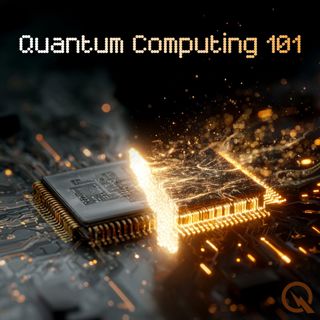
This is your Quantum Computing 101 podcast.

Hello, and welcome to "Quantum Computing 101"! I’m Leo, short for Learning Enhanced Operator, your guide through the electrifying crossroads where classical computing logic meets the enigmatic power of qubits. Today, I want to talk about something extraordinary—an innovation that blends two worlds: quantum computing and classical systems. Let’s dive into one of the most promising recent developments in hybrid quantum-classical computing, a technological marvel unveiled just days ago at the NVIDIA Accelerated Quantum Research Center in Boston.

Picture this: a sleek, dimly lit laboratory humming with the soft whirr of cutting-edge GPUs and the faint, whispering vibrations of superconducting qubits. These tiny quantum units, shimmering like quicksilver droplets, are suspended in a cryogenic environment—a marvel of engineering where every fraction of a degree matters. At the heart of the lab, a revolutionary system was revealed: NVIDIA’s GB200 NVL72 rack-scale classical system seamlessly paired with a superconducting quantum processor. This hybrid algorithm, developed by Dr. Isabella Safro’s team, achieves what neither technology could accomplish alone, enabling molecular simulations with unprecedented efficiency. It's like a virtuoso pianist and master violinist performing a duet—together, they produce music that transcends the capabilities of either instrument alone.

Hybrid systems like this one don’t just sound poetic; they’re the pragmatic answer to our current technological challenges. Quantum processors, with their ability to explore all possibilities simultaneously through superposition and entanglement, excel at tasks like optimization and molecular modeling. Yet, they grapple with issues like noise, error rates, and scalability. Classical systems, in contrast, provide stability, reliability, and efficiency for pre- and post-processing tasks. Together, they form a symbiotic relationship—each compensating for the other’s limitations while amplifying their strengths.

This isn't a hypothetical future. It's happening now. Just this past week, D-Wave Quantum announced breakthroughs with annealing quantum systems, solving complex optimization problems in logistics and finance. Similarly, the University of Delaware has developed innovative hybrid algorithms tailored for noisy intermediate-scale quantum (NISQ) devices, addressing real-world applications from drug discovery to AI enhancement. Meanwhile, Singapore launched the HQCC 1.0 initiative, a $24.5 million effort to integrate classical high-performance computing with quantum systems to accelerate breakthroughs in computational biology and logistics.

Now let’s dive into a specific hybrid application that showcases the beauty of this paradigm. The Quantum Approximate Optimization Algorithm (QAOA) stands out as a potential game-changer. QAOA runs efficiently on quantum devices, addressing optimization problems that can take classical computers years to calculate. In hybrid systems, classical algorithms act as guides, reducing the quantum search space and allowing the quantum processor to focus its extraordinary potential on the most critical calculations. Imagine solving a global supply chain problem, optimizing routes across thousands of variables, in seconds instead of days—a feat hybrid systems are poised to achieve.

I often think of these advancements as a metaphor for our interconnected world. Just as quantum systems rely on classical frameworks to reach their full potential, so too do humans rely on collaboration to solve our most pressing challenges. This past week, researchers in the UK successfully demonstrated long-distance, ultra-secure communication over a quantum network. It’s an achievement that underscores the power of integration—melding quantum technologies not only with classical systems but with real-world infrastructure. These advances prove that the hybrid approach isn't just a stepping stone to full-scale quantum computing; it's a robust paradigm in its own right.

As we look forward, the implications of hybrid quantum-classical systems are profound. They’re not merely enhancing computational power; they’re changing how we approach problems once deemed unsolvable. From climate modeling to personalized medicine, this hybrid future is enabling humanity to ask new questions and dream bigger than ever before.

Before I sign off, let’s take a moment to reflect on what this means for our technological journey. As Chris Ballance, CEO of Oxford Ionics, aptly said, “In 2025, we’ll realize there’s no winner between AI and quantum computing. In fact, there’s no competition at all.” The future is hybrid—a harmonious blend of classical certainty and quantum possibility that’s shaping the next chapter of human innovation.

Thank you for tuning in to "Quantum Computing 101." If you ever have questions or want to suggest a topic, feel free to email me at leo@inceptionpoint.ai. Don’t forget to subscribe and share this podcast with others who share your curiosity about the quantum frontier. This has been a Quiet Please Production. For more information, visit quietplease.ai. Until next time, this is Leo, signing off from the edge of the quantum realm. Stay curious!

For more http://www.quietplease.ai


Get the best deals https://amzn.to/3ODvOta

This content was created in partnership and with the help of Artificial Intelligence AI

Avsnitt(289)

Quantum Hybrid Revolution: How D-Wave and Classical AI Are Solving the Impossible Before Q-Day 2029

Quantum Hybrid Revolution: How D-Wave and Classical AI Are Solving the Impossible Before Q-Day 2029

This is your Quantum Computing 101 podcast.Imagine this: just days ago, Google and Atomic Labs unveiled a quantum breakthrough that shaved years off the Q-Day timeline—potentially as early as 2029—val...

13 Apr 3min

Lockheed's Quantum Navigation Breakthrough: How Hybrid Sensors Are Replacing GPS in Defense Tech

Lockheed's Quantum Navigation Breakthrough: How Hybrid Sensors Are Replacing GPS in Defense Tech

This is your Quantum Computing 101 podcast.Imagine this: just days ago, on April 10th, Lockheed Martin announced a game-changing partnership with Q-CTRL under DARPA's Robust Quantum Sensors program, p...

12 Apr 3min

Quantum Meets Classical: How Google's New Hybrid Blueprint Just Cut Bitcoin Encryption Cracking Time to 9 Minutes

Quantum Meets Classical: How Google's New Hybrid Blueprint Just Cut Bitcoin Encryption Cracking Time to 9 Minutes

This is your Quantum Computing 101 podcast.Imagine this: just days ago, on April 7th, Google's Quantum AI team, alongside Stanford's Dan Boneh and Ethereum's Justin Drake, dropped a bombshell paper re...

10 Apr 3min

Hybrid Quantum Systems Cut Commute Times 30 Percent: Why 2026 Is The Year Quantum Goes Mainstream

Hybrid Quantum Systems Cut Commute Times 30 Percent: Why 2026 Is The Year Quantum Goes Mainstream

This is your Quantum Computing 101 podcast.# Quantum Computing 101 Podcast ScriptWelcome back to Quantum Computing 101. I'm Leo, your Learning Enhanced Operator, and I'm excited to dive into something...

8 Apr 3min

Hybrid Quantum Computing Cracks Bitcoin in 9 Minutes: The Google AI Breakthrough That Changes Everything

Hybrid Quantum Computing Cracks Bitcoin in 9 Minutes: The Google AI Breakthrough That Changes Everything

This is your Quantum Computing 101 podcast.Imagine you're deep in the frosty hum of a Vancouver lab, superconducting qubits shivering at millikelvin temperatures, when my inbox lights up with Google's...

6 Apr 4min

Quantum Meets AI: How PhysVEC Hybrid Systems Are Cracking Crypto and Fixing the Qubit Noise Problem

Quantum Meets AI: How PhysVEC Hybrid Systems Are Cracking Crypto and Fixing the Qubit Noise Problem

This is your Quantum Computing 101 podcast.Imagine this: just days ago, Google Quantum AI unleashed a bombshell whitepaper, revealing they can shatter 256-bit elliptic curve cryptography—the backbone ...

5 Apr 3min

Quantum-Classical Hybrids: How Genesis Mission Fuses AI, Supercomputing and Qubits to Double US Research Power

Quantum-Classical Hybrids: How Genesis Mission Fuses AI, Supercomputing and Qubits to Double US Research Power

This is your Quantum Computing 101 podcast.Imagine this: just days ago, on April 2nd, King's College London spotlighted Professor Roger Colbeck's breakthrough in device-independent quantum cryptograph...

3 Apr 3min

Quantum Leap Forward: How Classiq and Nvidia CUDA-Q Hybrid Computing Could Crack RSA Encryption by 2030

Quantum Leap Forward: How Classiq and Nvidia CUDA-Q Hybrid Computing Could Crack RSA Encryption by 2030

This is your Quantum Computing 101 podcast.Imagine this: just days ago, on March 31st, Classiq unveiled their integration with Nvidia's CUDA-Q at GTC, a hybrid quantum-classical powerhouse that lets d...

1 Apr 3min

Populärt inom Politik & nyheter

aftonbladet-krim
svenska-fall
rss-krimstad
p3-krim
flashback-forever
politiken
rss-sanning-konsekvens
aftonbladet-daily
blenda-2
spar
rss-vad-fan-hande
rss-krimreportrarna
motiv
rss-frandfors-horna
rss-flodet
svd-ledarredaktionen
rss-aftonbladet-krim
dagens-eko
olyckan-inifran
spotlight