Managing Salinity and Sodicity
Soil Sense1 Mars 2021

Managing Salinity and Sodicity

Over 90% of producers in North Dakota are experiencing some sort of reduced productivity as a result of salinity. This problem is not unique to North Dakota - it’s happening in many of our most productive agricultural regions. The second problem that we’re going to discuss today, is a separate problem, but in many cases, even more difficult to manage, sodicity. Sodicity can also impede progress in solving salinity issues. Salinity and sodicity are different soil chemistries and require different management strategies. We discussed these topics on our panel at the DIRT Workshop.

Today you’ll hear from:

  • Naeem Kalwar, Extension Soil Health Specialist at North Dakota State University
  • Dr. Cheryl Reese, Senior Lecturer in agronomy at South Dakota State University

“The reason we need to care about soil salinity and for that matter sodacity too….is because we lose hundreds of thousands of dollars every year on these kind of spots.” - Naeem Kalwar

With the amount of expense necessary to farm ground including gas prices, land prices, inputs and seed prices, having certain sections that represent a net loss can be detrimental to finances. There are corrections that can be made to improve those soils, improving their profitability and move present salts deeper to cause less harm to crops. Naeem suggests first soil sampling to identify what crops and practices will be most successful in those specific areas.

“Across South Dakota and North Dakota, we have very similar soils and these areas pop up because we have old salty sediments that are from old formations. And if these formations are close to the surface and we have a high water table, then these salts will always come back up to the surface.” - Dr. Cheryl Reese

Dr. Reese highlights the benefits of using perennial salt tolerant grasses to improve erosion and salt concerns while still producing a usable crop. She suggests contacting your local NRCS to get more guidance and assistance with that measure. Dr. Reese also echoes Naeem by emphasizing the importance of soil testing to identify the specific issue and its severity before discussing mitigation practices such as switching crops, adding tiles or adding amendments.

This Week on Soil Sense:

  • Meet Naeem Kalwar, Extension Soil Health Specialist at North Dakota State University and Dr. Cheryl Reese, Senior Lecturer in agronomy at South Dakota State University
  • Learn about the harmful effects of salinity and sodicity and what practices can be used to better manage areas affected by these issues
  • Explore the potential benefits and limitations of adding tiles and additives to correct salinity and sodicity concerns

Connect with Soil Sense:

Soil Sense Podcast is hosted by Tim Hammerich of the Future of Agriculture Podcast.

Det här avsnittet är hämtat från ett öppet RSS-flöde och publiceras inte av Podme. Det kan innehålla reklam.

Avsnitt(150)

Advancing Regenerative Practices in Ukraine

Advancing Regenerative Practices in Ukraine

Fertile soil is something Ukraine has always been known for. But wind and water erosion are causing a soil loss of approximately 15 tons per hectare every year. Today we’re joined by Oleksandr, a farm...

11 Aug 202536min
Precision Agriculture For Soil Health In Argentina

Precision Agriculture For Soil Health In Argentina

Soil health on a large scale, can really be enhanced through data and digital tools. It’s pretty incredible to hear how that is being applied to farms like the one you’re going to hear from today in A...

30 Juli 202532min
The Pursuit of Regenerative Potatoes in Canada

The Pursuit of Regenerative Potatoes in Canada

Farmers and agronomists have a lot on their plate just to produce a profitable crop every year. So what happens when their buyers start requesting they also change practices to move in a more regenera...

15 Juli 202532min
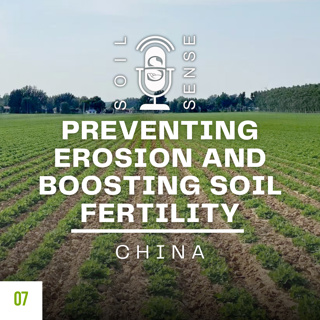
Preventing Erosion and Boosting Fertility in China

Preventing Erosion and Boosting Fertility in China

In order for soil health to go from words and ideas to actions and outcomes, there needs to be support at the farm level - whether that’s a corn farmer in the U.S. or a peanut farmer in rural Northeas...

3 Juli 202532min
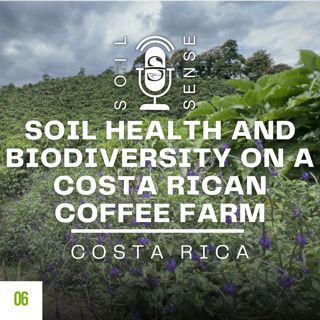
Soil Health and Biodiversity on a Costa Rican Coffee Farm

Soil Health and Biodiversity on a Costa Rican Coffee Farm

Costa Rica is home to an incredible amount of natural biodiversity. But it’s also an ideal spot to grow some of the world’s favorite crops, like coffee. How can farmers conserve biodiversity while sti...

17 Juni 202535min
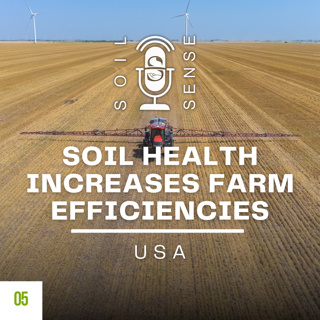
Soil Health Increases Farm Efficiencies in the USA

Soil Health Increases Farm Efficiencies in the USA

Oftentimes soil health practices may be thought of as “one more thing” to incorporate on the farm. But in this episode, producer Matt tells us that it would be very difficult for him to farm as much l...

3 Juni 202533min
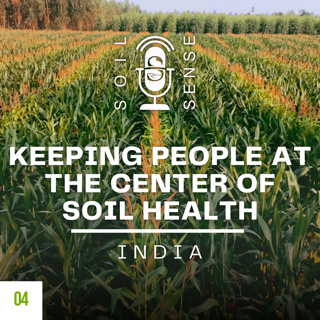
Keeping People at the Center of Soil Health in India

Keeping People at the Center of Soil Health in India

Despite a lot of exciting momentum behind regenerative agriculture, it remains necessary that that enthusiasm reaches farmers and leads to real outcomes. But how does that information get shared in a ...

20 Maj 202529min

Collaborating on Biodiversity and Technology in Germany

Collaborating on Biodiversity and Technology in Germany

For a long time, Europe has had very high standards for environmental sustainability and is really concerned about biodiversity. So how does a multi-generational family farm accommodate these interest...

5 Maj 202533min

Populärt inom Vetenskap

p3-dystopia
dumma-manniskor
allt-du-velat-veta
hacka-livet
ufo-sverige
bildningspodden
rss-vetenskapsradion
medicinvetarna
rss-ufobortom-rimligt-tvivel
det-morka-psyket
sexet
halsorevolutionen
rss-kriminologerna
rss-vetenskapsradion-2
ufo-sverige-2
svd-nyhetsartiklar
dumforklarat
paranormalt-med-caroline-giertz
doden-hjarnan-kemisten
vetenskapsradion