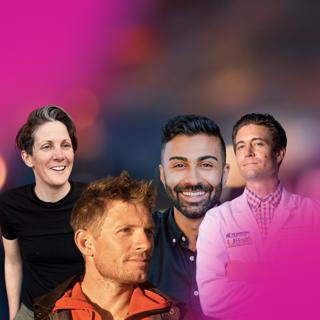
PT 601 - Neuropharmacology: Psychedelics on the Brain - Jim Harris, Rachel Zoeller, DPT, David W. Mcmillan, Ph.D., and Manesh Girn, Ph.D.

PT 601 - Neuropharmacology: Psychedelics on the Brain - Jim Harris, Rachel Zoeller, DPT, David W. Mcmillan, Ph.D., and Manesh Girn, Ph.D.

A panel discussion with Jim Harris, Rachel Zoeller, DPT, David W. McMillan, Ph.D., and Manesh Girn, Ph.D.
Recorded live at the Aspen Psychedelic Symposium

In this riveting and deeply personal conversation, moderator Jim Harris is joined by three pioneers at the intersection of neuroscience, psychedelics, and disability: Dr. Rachel Zoeller (Doctor of Physical Therapy and spinal cord injury survivor), Dr. David McMillan (Assistant Professor of Neurological Surgery at the University of Miami), and Dr. Manesh Girn (neuroscientist and postdoctoral researcher with Robin Carhart-Harris at UCSF). Together, they explore how psychedelics may do far more than treat depression or catalyze mystical experiences—they may also support healing and regeneration in the nervous system.

The discussion opens with an acknowledgment that our cultural understanding of psychedelics has mostly focused on their psychological and spiritual effects. But as these experts reveal, the somatic potential of psychedelics is vast and understudied. They delve into promising areas like central and peripheral neuroplasticity, the anti-inflammatory effects of psychedelics, and how these mechanisms might play a role in healing from spinal cord injuries or paralysis.

Dr. Girn breaks down the science behind psilocybin's interaction with 5-HT2A serotonin receptors, not only in the brain but also in the spinal cord. These receptors, when activated, may increase neuronal excitability and even help restore lost signaling in damaged motor pathways. He suggests that psychedelics could reopen "critical periods" for neuroplasticity—windows of opportunity for the nervous system to rewire and heal.

Rachel Zoeller shares her powerful lived experience as both a physical therapist and a spinal cord injury patient. Her story brings the science to life, particularly her observation that psychedelic experiences help her reconnect to parts of her body affected by paralysis. Psychedelics, she suggests, have allowed her to rebuild mind-body communication and foster compassion toward her own physical limitations. She also underscores the need for patients to cultivate body awareness, meditation, and breathwork as essential tools for safe and effective psychedelic use.

Dr. McMillan, who leads outreach at the Miami Project to Cure Paralysis, provides a clinical and safety-oriented perspective. While optimistic about the potential, he urges caution—especially with individuals who have high-level spinal cord injuries and are vulnerable to serious complications like autonomic dysreflexia. He stresses that before we can bring these treatments into clinical settings, we must carefully assess physiological risk, develop precise pharmacological protocols, and prioritize patient safety.

The panel also addresses cultural and spiritual interpretations of spasticity. Drawing on both shamanic and somatic perspectives, they propose that these involuntary muscle contractions could be reinterpreted not as dysfunction, but as potential portals for healing, integration, or neurological feedback. The idea that such spasms might help the brain remap muscle groups is discussed as a provocative and hopeful reframe.

The conversation wraps with a call to action: to bring together indigenous wisdom, embodied knowledge, rigorous science, and community storytelling in order to chart a new frontier in psychedelic medicine—one that does not leave the disabled community behind. As McMillan puts it, "There's a lesson to psychedelia from paralysis." It's a reminder that neuropharmacology must consider not just molecules and mechanisms, but people and possibilities.

Whether you're a clinician, researcher, patient, or curious explorer, this panel is a moving and illuminating look at how psychedelics could transform not only minds—but bodies.

Thanks to Aspen Public Radio, Aspen Psychedelic Resource Center, Healing Advocacy Fund and Aspen Psychedelic Symposium for allowing us to share this podcast.

A full agenda from the symposium can be found here.

Det här avsnittet är hämtat från ett öppet RSS-flöde och publiceras inte av Podme. Det kan innehålla reklam.

Avsnitt(774)

PT 656 - Travis Tyler Fluck: Denver Mushroom Decriminalization, Mutual Aid, and the Future of Psychedelic Culture

PT 656 - Travis Tyler Fluck: Denver Mushroom Decriminalization, Mutual Aid, and the Future of Psychedelic Culture

Denver mushroom decriminalization changed the national conversation around psilocybin access, personal use, and grassroots psychedelic reform. In this episode of Psychedelics Today, Joe Moore speaks w...

11 Maj 1h 43min
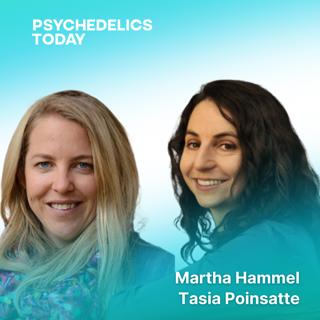
PT 655 - Martha Hammel and Tasia Poinsatte - Aspen Psychedelic Symposium

PT 655 - Martha Hammel and Tasia Poinsatte - Aspen Psychedelic Symposium

Aspen Psychedelic Symposium is the focus of this conversation with Martha Hammel of the Aspen Psychedelic Resource Center and Tasia Poinsatte of Healing Advocacy Fund. They join Joe Moore to discuss t...

8 Maj 54min
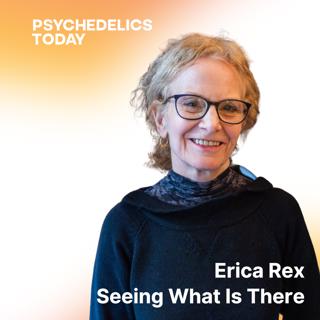
PT 654 - Erica Rex - Seeing What Is There

PT 654 - Erica Rex - Seeing What Is There

Seeing What Is There is at the center of this conversation with journalist and author Erica Rex, who joins Joe Moore to discuss her book Seeing What Is There: My Search for Sanity in the Psychedelic E...

23 Apr 1h 20min
PT 653 - Dr. Michael Alpert and Peter Alberding - ALS, Existential Distress, and Ketamine Therapy

PT 653 - Dr. Michael Alpert and Peter Alberding - ALS, Existential Distress, and Ketamine Therapy

ALS and ketamine therapy are at the center of this conversation with psychiatrist Dr. Michael Alpert and Peter Alberding, who was diagnosed with ALS in late 2023. Alpert is a Boston-area psychiatrist ...

16 Apr 1h 19min

PT 652 - Esme Dark - Psychedelics, Somatics and the Shadow

PT 652 - Esme Dark - Psychedelics, Somatics and the Shadow

Dr. Esme Dark joins Kyle Buller for a conversation on psychedelic therapy, somatic psychotherapy, and shadow work. Based in Australia, Dark is a clinical psychologist, somatic psychotherapist, and psy...

25 Mars 1h 14min

PT 651 - Betty Aldworth & Ismail Ali: MAPS Co-Executive Directors on Leadership, Research, and the Future of Psychedelics

PT 651 - Betty Aldworth & Ismail Ali: MAPS Co-Executive Directors on Leadership, Research, and the Future of Psychedelics

MAPS co-executive directors Betty Aldworth and Ismail Ali join Psychedelics Today to talk about leading one of the most visible organizations in the psychedelic field during a period of transition. Th...

19 Mars 1h 22min

PT 650 - Joe Moore Psychedelics Today on Leadership, Integration, and the Psychedelic Landscape

PT 650 - Joe Moore Psychedelics Today on Leadership, Integration, and the Psychedelic Landscape

Jen Davenport joins Psychedelics Today to interview co-founder Joe Moore about the growth of Psychedelics Today, the broader psychedelic ecosystem, and how professionals are beginning to engage with p...

9 Mars 1h 6min

PT 649 - Melissa Lavasani and Jay Kopelman

PT 649 - Melissa Lavasani and Jay Kopelman

Melissa Lavasani & Jay Kopelman join our podcast to discuss how psychedelic policy is actually moving in Washington, DC. Lavasani leads Psychedelic Medicine Coalition, a DC-based advocacy organization...

19 Feb 1h 10min

Populärt inom Vetenskap

allt-du-velat-veta
p3-dystopia
dumma-manniskor
kapitalet-en-podd-om-ekonomi
rss-ufobortom-rimligt-tvivel
ufo-sverige
svd-nyhetsartiklar
rss-spraket
paranormalt-med-caroline-giertz
medicinvetarna
rss-vetenskapsradion
det-morka-psyket
dumforklarat
hacka-livet
sexet
ufo-sverige-2
rss-tidsmaskinen
vetenskapsradion
rss-arkeologi-historia-podden-som-graver-i-vart-kulturlandskap
rss-geopodden-2