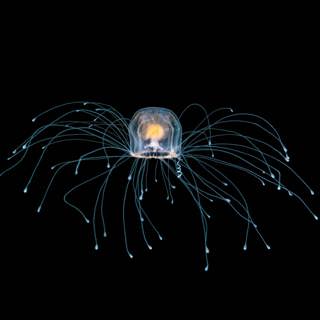
The immortal jellyfish and other mindblowing invertebrates
Each year the Guardian runs a competition to find the invertebrate of the year. To find out more about the 2026 nominees science editor Ian Sample hears from climate reporter Petra Stock, environment ...
13 Aug 15min

We’re reading less. And it’s making us stupid
Books have never been trendier, but studies show that as more and more things compete for our frazzled attention spans, we’re reading less and less. This is a problem because reading has a wealth of c...
11 Aug 19min

Four types of thinker, the cyclosporiasis outbreak, and the UK’s biggest telescope threatened
Madeleine Finlay is joined by Ian Sample, Guardian science editor, to discuss three eye-catching science stories including an investigation that has identified four distinct types of thinker. Also on ...
6 Aug 22min
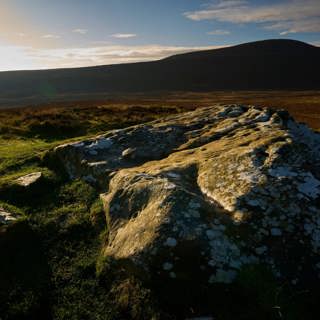
The fight to save a historic English landscape
Madeleine Finlay travels to the Rothbury estate in Northumberland, in north-east England. It’s a piece of land that has been in the same family for 700 years, but now it has been put up for sale and t...
4 Aug 16min

Revisited: Saunas and cold plunges, where does the evidence stand?
Saunas and cold plunge pools are popping up everywhere in the UK, bringing fiery heat and icy cold to a beach, city farm or park near you. Their users will be ready with all the reasons why it’s good ...
30 Juli 16min

Revisited: The surprising science of dreams and nightmares
In this episode from January 2026, Ian Sample puts listeners’ questions about dreams and nightmares to Dr Michelle Carr, the director of the Dream Engineering Laboratory in Montreal’s Centre for Advan...
28 Juli 22min
Revisited: A Scottish tea mystery, episode three – a bag for life
Science correspondent Nicola Davis investigates the strange story of Tam O’Braan and his attempts to grow tea in Scotland. In episode three of this mini-series first broadcast in October 2025, all of ...
23 Juli 20min
Revisited: A Scottish tea mystery, episode two – the list
Science correspondent Nicola Davis investigates the strange story of Tam O’Braan and his attempts to grow tea in Scotland. In episode two of this mini-series first broadcast in October 2025, Nicola he...
22 Juli 23min