Jan van Eyck - The Arnolfini Portrait

Jan van Eyck - The Arnolfini Portrait

In the 1400s, influencers couldn’t simply scout a location, arrange the perfect lighting and pull out their camera phone to snap dozens of pics testing different angles to find the perfect shot demonstrating how much better their curated life is than the lived experience of the rest of us plebeians. No back then, if someone wanted a picture to go along with their smug sense of superiority, they needed to hire a painter and in 1434, Jan van Eyck painted one of the greatest testaments to the enduring power of carefully constructing a casually posed portrait. There is a lot of debate about the meaning and symbolism in the work, but a common interpretation is that this is a sort of wedding scene. The man is taking the hand of his wife. She is in the interior of the space near the bed reinforcing the gender roles of the time with the woman’s place being taking care of the home while he stands by the open window symbolizing his role in the outside world. The mirror in the background is said to represent the eye of God witnessing their union and the frame of the circular mirror has a dozen small scenes from the passion of Christ. The small dog could be seen as a symbol of fidelity, or some say simply it is another signifier of wealth as many wealthy women were given lap dogs as companions. The green of the dress symbolizes hope. Many speculate the hope of becoming a mother and while many viewers today believe the woman in the portrait appears to be pregnant, as we all know, one should never assume a woman is pregnant. Scholars say this was actually a fashionable look for the day. Clothing was very expensive. Their clothing was particularly expensive with fur lining etc. The idea back then was the more clothing, the more wealthy one must be, so no matter how ridiculous the silhouette may appear to contemporary audiences, in the 15th century, those strange bulges of fabric showed that this was a person who could afford to dress themselves. It was conspicuous consumption proving yet again that for as long as we have had a means to record what people looked like, those people have worked to dress themselves up and surround themselves with markers of their high status. While some see modern mass media as producing a more vain and shallow culture, I would argue van Eyck shows us people have always been feeding their egos and flaunting their privilege with material goods. At least now most people know better than to use animal fur to do it. Who ARTed is an Airwave Media Podcast. Connect with me: Website | Twitter | Instagram | Tiktok Support the show: Merch from TeePublic | Make a Donation As always you can find images of the work being discussed at www.WhoARTedPodcast.com and of course, please leave a rating or review on your favorite podcast app. You might hear it read out on the show. Learn more about your ad choices. Visit megaphone.fm/adchoices

Det här avsnittet är hämtat från ett öppet RSS-flöde och publiceras inte av Podme. Det kan innehålla reklam.

Avsnitt(787)

Author Interview CJ Denton | La Pittura

Author Interview CJ Denton | La Pittura

My guest this week is CJ Denton, author of a new novel called La Pittura. While his work is historical fiction, in preparation for the book, he conducted extensive research into the life of Artemisia ...

7 Sep 37min
Author Interview: Ryan T. Pozzi | The Mess that Made Them

Author Interview: Ryan T. Pozzi | The Mess that Made Them

Today I have a bonus episode in the feed. I originally planned to release my interview with Ryan T. Pozzi on Monday, but due to technical difficulties, I had to flip things around. Today, his new book...

3 Sep 43min

TLDR Eugène Delacroix | Liberty Leading the People

TLDR Eugène Delacroix | Liberty Leading the People

Eugène Delacroix stands as one of the defining figures of 19th-century French art and the leading pioneer of the Romantic movement. Rejecting the rigid, line-driven academic standards of Neoclassicism...

31 Aug 13min
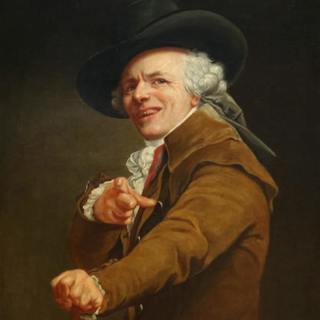
Joseph Ducreux  | Self-Portrait of the Artist in the Guise of a Mocker

Joseph Ducreux | Self-Portrait of the Artist in the Guise of a Mocker

Joseph Ducreux (1735–1802) was an innovative French portrait painter known for defying the rigid conventions of 18th-century academic art. After training under masters such as Jean-Baptiste Greuze, Du...

24 Aug 11min
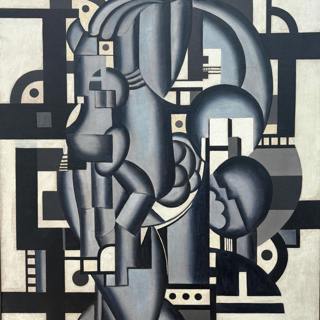
Fernand Léger | Composition in Blue

Fernand Léger | Composition in Blue

Fernand Léger was a pioneering French modernist painter whose foundational training as an architectural draftsman profoundly shaped his structured, geometric approach to art. After absorbing the influ...

17 Aug 11min
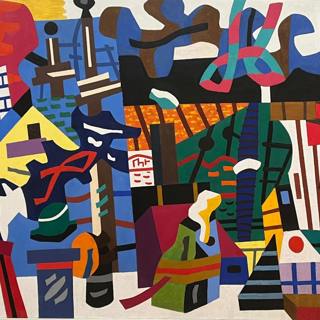
Stuart Davis | Swing Landscape

Stuart Davis | Swing Landscape

Stuart Davis was an influential 20th-century American modernist painter who bridged European abstract movements like Cubism with distinctively American subjects and aesthetics. Born in 1892, Davis stu...

10 Aug 12min
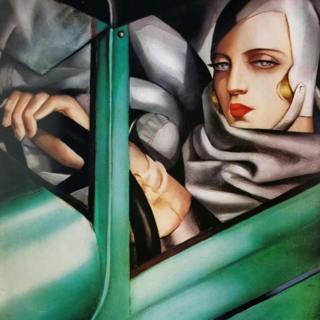
Tamara de Lempicka | Tamara in a Green Bugatti (encore)

Tamara de Lempicka | Tamara in a Green Bugatti (encore)

Tamara de Lempicka remains the definitive icon of the Art Deco era, blending polished Cubist techniques with the glamorous, high-stakes atmosphere of the Roaring Twenties. From her harrowing escape du...

7 Aug 10min
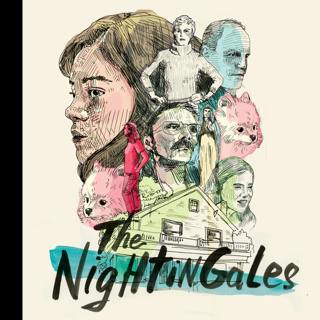
Artist Interview Emil Wilson | The Nightingales

Artist Interview Emil Wilson | The Nightingales

My guest this week is Emil Wilson, the author and illustrator behind the new graphic novel, The Nightingales. Wilson started his career in advertising before attending art school in his fifties, spurr...

3 Aug 43min

Populärt inom Samhälle & Kultur

podme-dokumentar
gynning-berg
p3-dokumentar
svenska-fall
aftonbladet-krim
en-mork-historia
creepypodden-med-jack-werner
hor-har
rss-vill-du-veta-en-hemlis-2
rss-schyffert-sundin-ar-det-har-nat
killradet
flashback-forever
rss-nemo-moter-en-van
rss-mer-an-bara-morsa
aftonbladet-daily
vad-blir-det-for-mord
rss-vad-fan-hande
p3-historia
rss-krimreportrarna
kod-katastrof