260: Small Faults, Big Impact - Improving CCUS with Seismic Attributes
Seismic Soundoff5 Juni 2025

260: Small Faults, Big Impact - Improving CCUS with Seismic Attributes

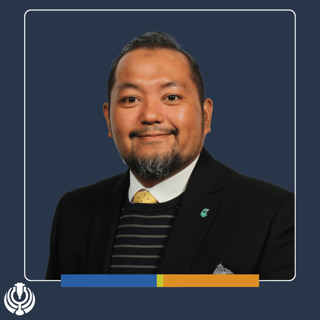
“The goal is to keep injected CO₂ safely in place - that’s why understanding fault networks is so critical.” In this episode, host Andrew Geary welcomes David Lubo-Robles, lead author of The Leading Edge paper on detecting small-offset faults for carbon capture and storage (CCUS). David explains how advanced seismic attributes, without relying on machine learning, can help geoscientists better map faults that influence the movement of CO₂ underground. His insights demonstrate the importance of applied geophysics in enabling safer and smarter reservoir management in the era of climate solutions. KEY TAKEAWAYS > Advanced Seismic Attributes Matter: Multispectral coherence and volumetric aberrancy help visualize subtle faults often missed by traditional methods. > Fault Mapping Is Critical for CCUS: Understanding both large and small faults reduces geological risk and improves CO₂ storage safety. > Applied Geophysics Is Essential: From modeling to monitoring, geophysicists play a vital role in every stage of a successful CCUS project. CALL TO ACTION Want to dig deeper into how seismic attributes enhance fault detection for carbon storage? Read David’s paper in The Leading Edge, “Detection of small-offset faults in seismic data: An application for carbon capture and storage.” Whether you're in CCUS, oil and gas, or geothermal, this workflow offers tools you can apply today. Read at https://doi.org/10.1190/tle44040276.1. GUEST BIO David Lubo-Robles is a Research Scientist and Algorithm and Computing Lead for the Attribute Assisted Seismic Processing & Interpretation (AASPI) Consortium at the University of Oklahoma. David received a B.S. in geophysical engineering from Simon Bolivar University, Venezuela, and an M.S. and Ph.D. in geophysics from the University of Oklahoma. His research interests include the development and application of innovative tools using artificial intelligence, quantitative interpretation, and seismic attribute analysis to delineate geologic features suitable for energy and climate solutions. LINKS * Visit https://seg.org/podcasts/episode-260-small-faults-big-impact-improving-ccus-with-seismic-attributes for all the links mentioned in this episode.

Det här avsnittet är hämtat från ett öppet RSS-flöde och publiceras inte av Podme. Det kan innehålla reklam.

Avsnitt(320)

305: Building Trust in Elastic FWI

305: Building Trust in Elastic FWI

“We always aim for 60 percent. The other 40 percent, we are ready to make mistakes, learn from those mistakes, and then move forward.” A 600-meter carbonate platform forced Dr. Ahmad Riza Ghazali and...

27 Aug 30min
14: How Exhibiting at IMAGE Can Shape What You Build Next (Inside IMAGE '26)

14: How Exhibiting at IMAGE Can Shape What You Build Next (Inside IMAGE '26)

Julian Chenin calls IMAGE “Disneyland for geoscience,” and after walking the exhibition floor it is easy to understand what he means. But for ROGII, the real value is what happens when people stop at ...

21 Aug 9min

13: AI Is an Accelerator, Not the Decision-Maker (Inside IMAGE '26)

13: AI Is an Accelerator, Not the Decision-Maker (Inside IMAGE '26)

Companies have spent years storing more and more data, but Amii Rozell and Hana Kabazi make an important distinction: saving the final answer is not the same as saving why you made the decision. Three...

21 Aug 28min

12: How GWB Turns Geoscience Into Human Impact (Inside IMAGE '26)

12: How GWB Turns Geoscience Into Human Impact (Inside IMAGE '26)

Geoscientists Without Borders starts with a simple idea: geoscience can improve someone’s life. Jim Funk has seen what access to clean water can mean in African communities, while Craig Beasley talks ...

20 Aug 26min

11: Bringing Sheriff's Dictionary to the Spanish-Speaking World (Inside IMAGE '26)

11: Bringing Sheriff's Dictionary to the Spanish-Speaking World (Inside IMAGE '26)

This one is personal for me. I worked with Reinaldo Michelena, Lucía Torrado, and Sergio Chávez-Pérez on this project for years, and after more than a decade of effort, seeing a printed Spanish editio...

20 Aug 32min
10: The Other Half of a Technical Career (Inside IMAGE '26)

10: The Other Half of a Technical Career (Inside IMAGE '26)

The SEG & AAPG Women’s Network brought together six leaders for a conversation on technical leadership and decision-making in complex energy environments. The panel focused on what happens as technica...

19 Aug 22min

9: What Great Geoscientists Keep Learning (Inside IMAGE '26)

9: What Great Geoscientists Keep Learning (Inside IMAGE '26)

Tom Ewing and Mike Forrest join me ahead of the AAPG and SEG Honors and Awards ceremonies for a conversation that quickly becomes less about the awards and more about what kept them engaged for so man...

19 Aug 26min
8: Where the Next Geoscience Opportunity Comes From (Inside IMAGE '26)

8: Where the Next Geoscience Opportunity Comes From (Inside IMAGE '26)

As IMAGE 2026 gets underway, we return to two conversations from last year that feel even more relevant now. Peter Duncan explains why asset turnover can create openings for smaller oil and gas compa...

18 Aug 19min

Populärt inom Vetenskap

p3-dystopia
dumma-manniskor
allt-du-velat-veta
kapitalet-en-podd-om-ekonomi
ufo-sverige
medicinvetarna
halsorevolutionen
rss-vetenskapsradion
det-morka-psyket
rss-ufobortom-rimligt-tvivel
rss-spraket
ufo-sverige-2
svd-nyhetsartiklar
paranormalt-med-caroline-giertz
sexet
vetenskapsradion
ideer-som-forandrar-varlden
rss-vetenskapsradion-2
dumforklarat
bildningspodden