Flower Flies or Hover Flies: Bee Mimic Extraordinaires

Flower Flies or Hover Flies: Bee Mimic Extraordinaires

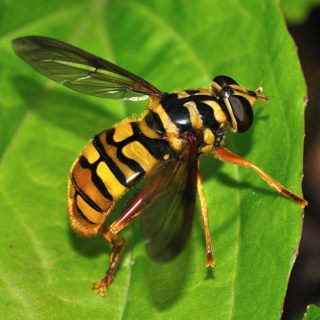
Flower flies, a.k.a. hover flies, are common garden visitors, but they are often overlooked. The reason they are so often overlooked is because they are extraordinary mimics, usually of bees or wasps. Their mimicry is so good, that flower flies are often mistakenly identified as bees in social media posts, magazine articles, newsletters, and sometimes even books.

In this week's episode of the Backyard Ecology podcast, we are talking with Dr. Jeff Skevington and Michelle Locke. Jeff and Michelle are co-authors authors of the book Field Guide to the Flower Flies of Northeastern North America. Their book covers the flower flies found from the Mississippi River across to the east coast and from Kentucky north all the way into Greenland. However, the book includes full distribution range maps for each species, so it will still be relevant for many areas outside of its primary focal range, especially in the eastern half of the continent.

Our conversation covered many different topics including the life history of flower flies, where and when to look for them, and some fascinating behaviors like hilltopping and migrating. We also talked about how to identify flower flies, starting with how to know you are looking at a flower fly and not a bee or wasp. Michelle and Jeff are both extremely knowledgeable. I learned a lot from our conversation.

Even though flower flies are important pollinators, there is still much that we don't know about them. It's really hard to manage for a species, or protect it if necessary, without basic information like knowing its full life history or population numbers and distribution. Yet, basic information like that is unknown for many species of flower flies. Multiple times throughout our conversation, Jeff and Michelle mentioned simple ways we could help fill in those knowledge gaps.

Links:

Episode image:

  • Virginia Giant (Milesia virginiensis)
  • Photo credit: Andrew Young

Det här avsnittet är hämtat från ett öppet RSS-flöde och publiceras inte av Podme. Det kan innehålla reklam.

Avsnitt(118)

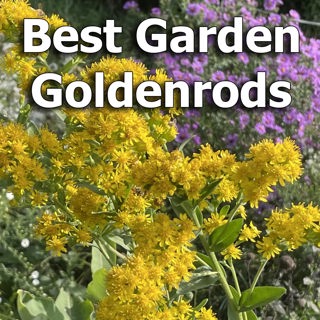
Goldenrod Geek-out! What You Need to Know About This Ecological Powerhouse!

Goldenrod Geek-out! What You Need to Know About This Ecological Powerhouse!

Summary In this episode, Sam Hoadley and I talk about how goldenrods (Solidago sp.) are keystone species and all the ecological roles that they play. We also touch on some of the evolving discussions ...

23 Juli 58min
Simple Ways to Help Eastern Bluebirds

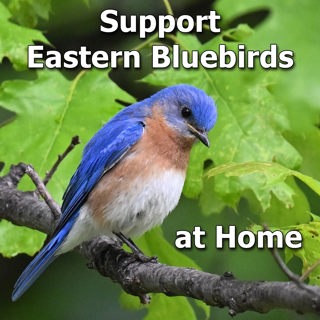
Simple Ways to Help Eastern Bluebirds

Summary In this episode, Ashley Kennedy and I discuss simple ways that anyone can help eastern bluebirds. Our discussion is based off her recently published research looking at the diets of nestling e...

3 Juni 36min
New Research Reveals Diet of Baby Eastern Bluebirds

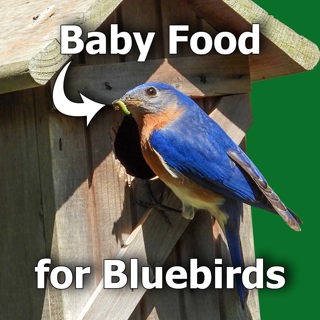
New Research Reveals Diet of Baby Eastern Bluebirds

Summary In this episode, Ashley Kennedy and I discuss the results of her research on the diets of nestling eastern bluebirds. Ashley used GoPro cameras located on active bluebird nestboxes to take pic...

7 Maj 29min
More than just a forest: Our surprisingly diverse eastern ecosystems

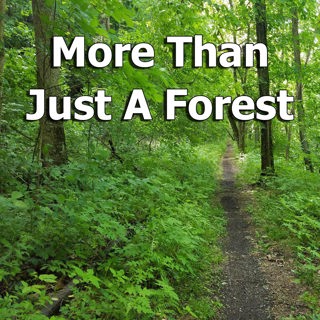
More than just a forest: Our surprisingly diverse eastern ecosystems

Summary The general impression that many people have is that prior to European settlement the whole eastern U.S. was one giant old growth forest. But that wasn't the case. Using an interdisciplinary a...

18 Feb 21min
How to Be Successful with Your Habitat Goals

How to Be Successful with Your Habitat Goals

Summary When it comes to creating habitat, having a written set of goals can be extremely helpful in moving a task from the "I'll get to it someday" category to the "I'm actually going to get this don...

8 Jan 10min
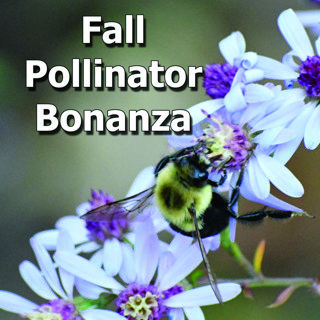
Short's aster: A beautiful late season extravaganza for pollinators

Short's aster: A beautiful late season extravaganza for pollinators

Summary Late blooming native plants are crucial sources of pollen and nectar for pollinators. One of my favorite species that blooms in October, and often into early November, is Short's aster (Symphy...

23 Okt 20257min
The Science Behind "Leave the Leaves"

The Science Behind "Leave the Leaves"

Summary "Leave the leaves" has become an increasingly common mantra each fall. However, until recently little to no scientific research had been done to quantify impacts of leaving your leaves in a ty...

9 Okt 202547min

Black-eyed Susan: A must-have for the pollinator garden

Black-eyed Susan: A must-have for the pollinator garden

Summary Black-eyed Susan (Rudbeckia hirta) is a beautiful native plant that can be found throughout most of the eastern U.S. and makes a great addition to pollinator and native plant gardens. It can g...

25 Sep 20259min

Populärt inom Vetenskap

p3-dystopia
dumma-manniskor
allt-du-velat-veta
hacka-livet
ufo-sverige
rss-kriminologerna
svd-nyhetsartiklar
bildningspodden
rss-vetenskapsradion
halsorevolutionen
det-morka-psyket
rss-vetenskapsradion-2
sexet
ufo-sverige-2
medicinvetarna
vetenskapsradion
barnpsykologerna
paranormalt-med-caroline-giertz
rss-odla
rss-ufobortom-rimligt-tvivel