Galls: Amazingly Diverse and Fascinating Plant Growths

Galls: Amazingly Diverse and Fascinating Plant Growths

Have you ever found a leaf with weird little balls or spiky things attached to it? Or found a plant with a weird growth on its stem or a dense clump of leaves growing out of an odd place? Chances are those were galls.

Going into this conversation, I knew a little bit about galls, but not much. However, what I knew was pretty interesting. So I wanted to learn more, and I thought you might be interested in learning more about them too. My mind was almost instantly blown. Galls are so much more diverse, interesting, and amazing than I ever dreamed of.

Louis Nastasi joined me for this conversation. Louis is a PhD candidate at Penn State's Frost Entomological Museum which is Penn State's research collection of insects and other arthropods. His research is looking at gall wasps in prairie plants, particularly Silphiums, of the Midwest.

At its most basic level, a gall is a piece of plant tissue that has been modified by the activity of another organism. However, in reality, galls are so much more than that implies. They can be formed by a variety of different organisms, although most of the ones we think about and encounter are formed by different types of insects. They can also be found in a variety of different places on the plant, including hidden inside the stem in such a way that you would never know it was there unless you cut the stem open.

Louis and my conversation touches on all kinds of topics related to galls. We start out talking a little about what galls are and the types of organisms that can form them, then focus more on insect-induced galls. From there our conversation covers topics like why insects might choose to form a gall in this plant over that plant, the importance of galls and the ecosystem, and how little we actually know about galls.

This was a really fun and educational conversation. I learned so much and am completely intrigued. I could have kept discussing and learning more about galls for much longer because they are so much more complex and interesting than I realized. I hope you find the conversation as interesting and educational as I did. I also encourage you to check out the resources that Louis shared with us.

Links:

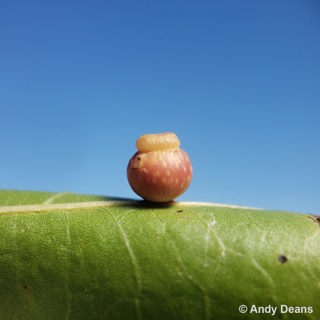
Episode image:

  • A gall on a leaf.
  • Photo credit: Andy Deans, all rights reserved

Avsnitt(115)

The Great Backyard Bird Count

The Great Backyard Bird Count

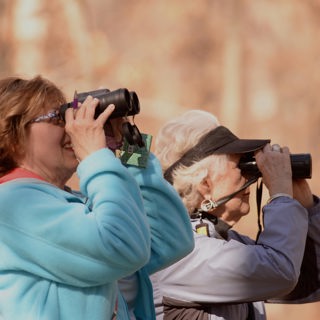
The Great Backyard Bird Count is an annual citizen science / community science project hosted by the Cornell Lab of Ornithology, Audubon, and Birds Canada. This international project takes place all o...

4 Feb 202141min
The Valuable Ecological Roles of Crayfish and the Discovery of Two New Species

The Valuable Ecological Roles of Crayfish and the Discovery of Two New Species

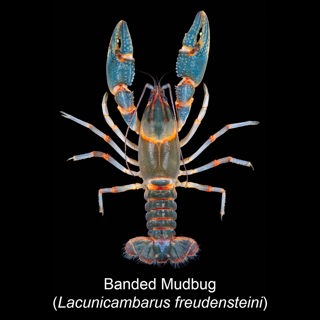
We're lucky in the eastern U.S. because bodies of water are pretty common. For most of us, if we don't have access to a creek, stream, river, pond, etc. in our immediate backyards, then we likely have...

28 Jan 20211h 9min
Native Seed Production and Tips for Starting a New Native Plant Garden or Restoration Area

Native Seed Production and Tips for Starting a New Native Plant Garden or Restoration Area

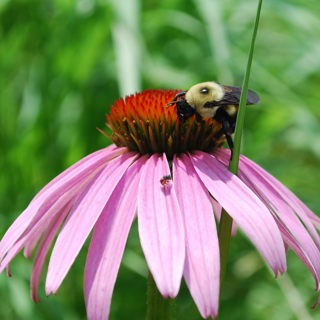
Growing native plants has grown in popularity over the last couple of decades. This has led to an increased demand for native plant seeds. However, many of us have never really stopped to think about ...

21 Jan 20211h 3min
Land Snails and their Amazing Diversity

Land Snails and their Amazing Diversity

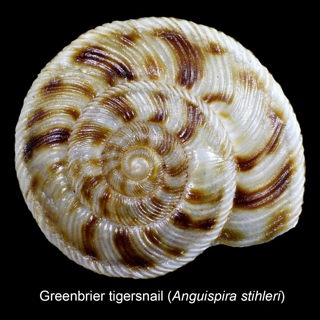
Land snails???? Come on, how do they fit with Backyard Ecology? True, land snails aren't the most charismatic organism in our yards and communities, so it would be easy to just write them off and igno...

14 Jan 202156min
Conserving our Southeastern Grasslands with Dwayne Estes

Conserving our Southeastern Grasslands with Dwayne Estes

Many of us grew up hearing about the decline of the old growth forests and their impacts on neotropical songbirds and other wildlife. I think this was especially true for those of us who grew up here ...

7 Jan 202154min
Native and Non-native Earthworms in the Eastern U.S. with Mac Callaham

Native and Non-native Earthworms in the Eastern U.S. with Mac Callaham

Hi Everyone! Today we are talking with Mac Callaham who is a Research Ecologist with the Southern Research Station of the U.S. Forest Service. Mac's focus is on invasive species, with a specialty in s...

31 Dec 202053min
Moths in the Winter with Shelby Fulton

Moths in the Winter with Shelby Fulton

Hi, Everyone! In today's episode of the Backyard Ecology podcast we are talking with Shelby Fulton who is a terrestrial biologist with the Kentucky Nature Preserves. Our conversation focuses on moths ...

24 Dec 202031min
An Introduction to iNaturalist with Maddy Heredia

An Introduction to iNaturalist with Maddy Heredia

Hi Everyone! On today's episode of Backyard Ecology, we talk with Maddy Heredia who is the outreach specialist and a biologist with the Kentucky Nature Preserves. Maddy and I first met when she was in...

17 Dec 202036min

Populärt inom Vetenskap

p3-dystopia
dumma-manniskor
svd-nyhetsartiklar
kapitalet-en-podd-om-ekonomi
doden-hjarnan-kemisten
allt-du-velat-veta
rss-ufo-bortom-rimligt-tvivel-2
rss-vetenskapsradion
bildningspodden
det-morka-psyket
rss-vetenskapsradion-2
paranormalt-med-caroline-giertz
medicinvetarna
sexet
rss-spraket
dumforklarat
har-vi-akt-till-mars-an
rss-experimentet
barnpsykologerna
vetenskapsradion