Insurance, the canary for climate change

Insurance, the canary for climate change

There are challenges that the insurance industry faces, even though it can look like a licence to print money, Since the Big Bang of the nineties, when deregulation allowed the industry to flourish, insurance now accounts for 2.5% of UK GDP. Not bad money for an industry that is a cost to society, rather than a benefit.


Until now the business model has been simple; charge a premium based on the risk profile of the customer, avoid high risk customers altogether and invest the payments you receive in the markets to make even more money. And, unfortunately, payout when someone makes a claim, but keep the legal profession gainfully employed to ensure that doesn’t happen too often.

If you find claims are rising, imply put up th premiums next year. Which is why we’ve had several years were premiums have grown significantly faster than inflation. The consequence of that is people from lower- and middle-income households simply can’t afford the insurance, so they avoid it altogether or under-insure.


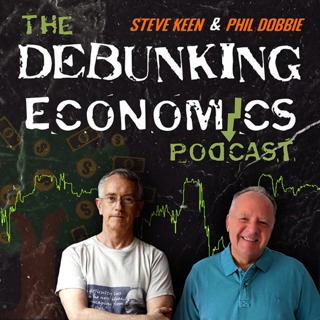
Phil and Steve discuss the merits of government-run insurance. We already have it in health, of course. The problem with having it applied more broadly is that it won’t alert us to the impact of climate change. As insurance moves from covering us for episodic events, to systematic change, the business model folds. Steve’s hope is that, as this happens, the industry starts to squeal and wakes us all up to the profound impact of climate change. It acts as the canary in the coal mine and becomes the first industry to lobby for us to take it seriously. Although, with them still enjoying healthy profit margins, it’s not happening yet.

Hosted on Acast. See acast.com/privacy for more information.

Det här avsnittet är hämtat från ett öppet RSS-flöde och publiceras inte av Podme. Det kan innehålla reklam.

Avsnitt(522)

The always moving equilibrium

The always moving equilibrium

Equilibrium is a fantasy—and this conversation explains why. Phil and teve explore how the belief that markets naturally self-correct has shaped economic policy, contributed to the failure to anticipa...

16 Sep 36min

What did Keating do for Australia?

What did Keating do for Australia?

Paul Keating is often sold as the man who modernized Australia - but what if the reforms that made him legendary also helped create the financialized, boom-and-bust economy we live with today? Steve a...

9 Sep 42min

The risks of hedging

The risks of hedging

In this episode, Prof Steve Keen and host Phil explore the complexities of hedging, its applications, pitfalls, and its impact on markets and the economy.Hedging, rife in the financial and commercial ...

2 Sep 28min

Burnham on Buying British

Burnham on Buying British

The UK Prime Minister Andy Burnham has said he wants government departments to focus on buying British, The UK state spends roughly £300bn to £400bn a year on public procurement—and currently treats i...

25 Aug 40min

Ways to foster innovation

Ways to foster innovation

Unless you are one of the tech bros, it is difficult for anyone to push on with innovative ideas, probably why the world seems reliant on the US for the next big thing. If you not running a Megacap ge...

18 Aug 39min

Do we actually need bonds?

Do we actually need bonds?

There’s only one reason a government issues bonds. It’s so their account with the central bank is not overdrawn. It’s only regulation that stops the central bank from saying a rapidly expanding defici...

13 Aug 40min

A reality check on bonds and government spending

A reality check on bonds and government spending

A listener (Doug) left a comment on YouTube saying I assume Phil intends to play "devil's advocate" when he speaks as though taxes are necessary for money issuance by governments with sovereign curren...

4 Aug 53min

AI, inequality and basic income

AI, inequality and basic income

Phil happened upon a book to Australian economist Joshua Gans (and Andrew Leigh) called Innovation & Inequality – how to create a future that is more Star Trek than Terminator. He discusses some of th...

29 Juli 44min

Populärt inom Business & ekonomi

framgangspodden
varvet
rss-jossan-nina
rss-borsens-finest
svd-tech-brief
24fragor
avanzapodden
badfluence
uppgang-och-fall
rss-inga-dumma-fragor-om-pengar
lastbilspodden
fill-or-kill
rss-dagen-med-di
rss-kort-lang-analyspodden-fran-di
rikatillsammans-om-privatekonomi-rikedom-i-livet
tabberaset
bathina-en-podcast
kapitalet-en-podd-om-ekonomi
borsmorgon
affarsvarlden