AI and the death of work

AI and the death of work

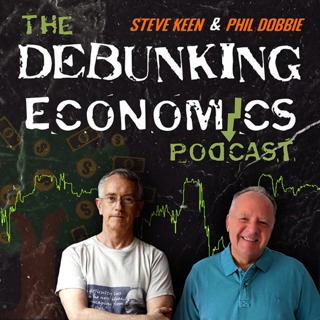
Bill Gates has predicted that within 10 years we’ll be working a two-day week, thanks to advances in AI. He says it’ll mean a vast rethinking of the workplace. It’s not too dissimilar to Keynes's prediction in the 1930s that wed al be working 15-hour weeks, with more time to enjoy the good things in life.


Of course, Keynes was wrong. We are working longer hours with loads more stress. Tools to aid productivity have freed up time for us to take new jobs and add to the economic output. Steve says a lot of this extra income has been used to increase the price of assets, particularly housing.


This time, though, who is to say the replacement jobs will exist. AI and robots could replace us in almost every job. So then what do we do? A universal basic income, perhaps, which Phil says will not be too dissimilar to unemployment benefit. But that’s going to take more government money. If we ignore the MMT arguments about governments’ ability to create money the only way to pay for the unemployed is through higher taxes on those businesses doing the work. But the focus today is on less regulation, so these companies can complete their cycle of job destruction unhindered. As a society have we really thought this through?

Hosted on Acast. See acast.com/privacy for more information.

Det här avsnittet är hämtat från ett öppet RSS-flöde och publiceras inte av Podme. Det kan innehålla reklam.

Avsnitt(522)

The always moving equilibrium

The always moving equilibrium

Equilibrium is a fantasy—and this conversation explains why. Phil and teve explore how the belief that markets naturally self-correct has shaped economic policy, contributed to the failure to anticipa...

16 Sep 36min

What did Keating do for Australia?

What did Keating do for Australia?

Paul Keating is often sold as the man who modernized Australia - but what if the reforms that made him legendary also helped create the financialized, boom-and-bust economy we live with today? Steve a...

9 Sep 42min

The risks of hedging

The risks of hedging

In this episode, Prof Steve Keen and host Phil explore the complexities of hedging, its applications, pitfalls, and its impact on markets and the economy.Hedging, rife in the financial and commercial ...

2 Sep 28min

Burnham on Buying British

Burnham on Buying British

The UK Prime Minister Andy Burnham has said he wants government departments to focus on buying British, The UK state spends roughly £300bn to £400bn a year on public procurement—and currently treats i...

25 Aug 40min

Ways to foster innovation

Ways to foster innovation

Unless you are one of the tech bros, it is difficult for anyone to push on with innovative ideas, probably why the world seems reliant on the US for the next big thing. If you not running a Megacap ge...

18 Aug 39min

Do we actually need bonds?

Do we actually need bonds?

There’s only one reason a government issues bonds. It’s so their account with the central bank is not overdrawn. It’s only regulation that stops the central bank from saying a rapidly expanding defici...

13 Aug 40min

A reality check on bonds and government spending

A reality check on bonds and government spending

A listener (Doug) left a comment on YouTube saying I assume Phil intends to play "devil's advocate" when he speaks as though taxes are necessary for money issuance by governments with sovereign curren...

4 Aug 53min

AI, inequality and basic income

AI, inequality and basic income

Phil happened upon a book to Australian economist Joshua Gans (and Andrew Leigh) called Innovation & Inequality – how to create a future that is more Star Trek than Terminator. He discusses some of th...

29 Juli 44min

Populärt inom Business & ekonomi

framgangspodden
varvet
rss-jossan-nina
rss-borsens-finest
24fragor
svd-tech-brief
avanzapodden
badfluence
uppgang-och-fall
lastbilspodden
fill-or-kill
rss-inga-dumma-fragor-om-pengar
rss-kort-lang-analyspodden-fran-di
tabberaset
rss-dagen-med-di
bathina-en-podcast
rikatillsammans-om-privatekonomi-rikedom-i-livet
kapitalet-en-podd-om-ekonomi
affarsvarlden
borsmorgon