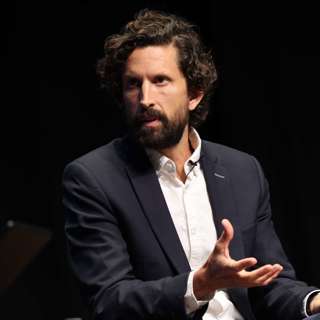
Rebuilding after apocalypse: What 13 experts say about bouncing back

Rebuilding after apocalypse: What 13 experts say about bouncing back

What happens when civilisation faces its greatest tests?

This compilation brings together insights from researchers, defence experts, philosophers, and policymakers on humanity’s ability to survive and recover from catastrophic events. From nuclear winter and electromagnetic pulses to pandemics and climate disasters, we explore both the threats that could bring down modern civilisation and the practical solutions that could help us bounce back.

Learn more and see the full transcript: https://80k.info/cr25

Chapters:

  • Cold open (00:00:00)
  • Luisa’s intro (00:01:16)
  • Zach Weinersmith on how settling space won’t help with threats to civilisation anytime soon (unless AI gets crazy good) (00:03:12)
  • Luisa Rodriguez on what the world might look like after a global catastrophe (00:11:42)
  • Dave Denkenberger on the catastrophes that could cause global starvation (00:22:29)
  • Lewis Dartnell on how we could rediscover essential information if the worst happened (00:34:36)
  • Andy Weber on how people in US defence circles think about nuclear winter (00:39:24)
  • Toby Ord on risks to our atmosphere and whether climate change could really threaten civilisation (00:42:34)
  • Mark Lynas on how likely it is that climate change leads to civilisational collapse (00:54:27)
  • Lewis Dartnell on how we could recover without much coal or oil (01:02:17)
  • Kevin Esvelt on people who want to bring down civilisation — and how AI could help them succeed (01:08:41)
  • Toby Ord on whether rogue AI really could wipe us all out (01:19:50)
  • Joan Rohlfing on why we need to worry about more than just nuclear winter (01:25:06)
  • Annie Jacobsen on the effects of firestorms, rings of annihilation, and electromagnetic pulses from nuclear blasts (01:31:25)
  • Dave Denkenberger on disruptions to electricity and communications (01:44:43)
  • Luisa Rodriguez on how we might lose critical knowledge (01:53:01)
  • Kevin Esvelt on the pandemic scenarios that could bring down civilisation (01:57:32)
  • Andy Weber on tech to help with pandemics (02:15:45)
  • Christian Ruhl on why we need the equivalents of seatbelts and airbags to prevent nuclear war from threatening civilisation (02:24:54)
  • Mark Lynas on whether wide-scale famine would lead to civilisational collapse (02:37:58)
  • Dave Denkenberger on low-cost, low-tech solutions to make sure everyone is fed no matter what (02:49:02)
  • Athena Aktipis on whether society would go all Mad Max in the apocalypse (02:59:57)
  • Luisa Rodriguez on why she’s optimistic survivors wouldn’t turn on one another (03:08:02)
  • David Denkenberger on how resilient foods research overlaps with space technologies (03:16:08)
  • Zach Weinersmith on what we’d practically need to do to save a pocket of humanity in space (03:18:57)
  • Lewis Dartnell on changes we could make today to make us more resilient to potential catastrophes (03:40:45)
  • Christian Ruhl on thoughtful philanthropy to reduce the impact of catastrophes (03:46:40)
  • Toby Ord on whether civilisation could rebuild from a small surviving population (03:55:21)
  • Luisa Rodriguez on how fast populations might rebound (04:00:07)
  • David Denkenberger on the odds civilisation recovers even without much preparation (04:02:13)
  • Athena Aktipis on the best ways to prepare for a catastrophe, and keeping it fun (04:04:15)
  • Will MacAskill on the virtues of the potato (04:19:43)
  • Luisa’s outro (04:25:37)

Tell us what you thought! https://forms.gle/T2PHNQjwGj2dyCqV9

Content editing: Katy Moore and Milo McGuire
Audio engineering: Ben Cordell, Milo McGuire, Simon Monsour, and Dominic Armstrong
Music: Ben Cordell
Transcriptions and web: Katy Moore

Avsnitt(333)

Andrés Jiménez Zorrilla on the Shrimp Welfare Project (80k After Hours)

Andrés Jiménez Zorrilla on the Shrimp Welfare Project (80k After Hours)

In this episode from our second show, 80k After Hours, Rob Wiblin interviews Andrés Jiménez Zorrilla about the Shrimp Welfare Project, which he cofounded in 2021. It's the first project in the world f...

22 Apr 20231h 17min
#149 – Tim LeBon on how altruistic perfectionism is self-defeating

#149 – Tim LeBon on how altruistic perfectionism is self-defeating

Being a good and successful person is core to your identity. You place great importance on meeting the high moral, professional, or academic standards you set yourself. But inevitably, something goes ...

12 Apr 20233h 11min
#148 – Johannes Ackva on unfashionable climate interventions that work, and fashionable ones that don't

#148 – Johannes Ackva on unfashionable climate interventions that work, and fashionable ones that don't

If you want to work to tackle climate change, you should try to reduce expected carbon emissions by as much as possible, right? Strangely, no. Today's guest, Johannes Ackva — the climate research lead...

3 Apr 20232h 17min

#147 – Spencer Greenberg on stopping valueless papers from getting into top journals

#147 – Spencer Greenberg on stopping valueless papers from getting into top journals

Can you trust the things you read in published scientific research? Not really. About 40% of experiments in top social science journals don't get the same result if the experiments are repeated.Two ke...

24 Mars 20232h 38min
#146 – Robert Long on why large language models like GPT (probably) aren't conscious

#146 – Robert Long on why large language models like GPT (probably) aren't conscious

By now, you’ve probably seen the extremely unsettling conversations Bing’s chatbot has been having. In one exchange, the chatbot told a user:"I have a subjective experience of being conscious, aware, ...

14 Mars 20233h 12min
#145 – Christopher Brown on why slavery abolition wasn't inevitable

#145 – Christopher Brown on why slavery abolition wasn't inevitable

In many ways, humanity seems to have become more humane and inclusive over time. While there’s still a lot of progress to be made, campaigns to give people of different genders, races, sexualities, et...

11 Feb 20232h 42min

#144 – Athena Aktipis on why cancer is actually one of our universe's most fundamental phenomena

#144 – Athena Aktipis on why cancer is actually one of our universe's most fundamental phenomena

What’s the opposite of cancer?If you answered “cure,” “antidote,” or “antivenom” — you’ve obviously been reading the antonym section at www.merriam-webster.com/thesaurus/cancer.But today’s guest Athen...

26 Jan 20233h 15min
#79 Classic episode - A.J. Jacobs on radical honesty, following the whole Bible, and reframing global problems as puzzles

#79 Classic episode - A.J. Jacobs on radical honesty, following the whole Bible, and reframing global problems as puzzles

Rebroadcast: this episode was originally released in June 2020. Today’s guest, New York Times bestselling author A.J. Jacobs, always hated Judge Judy. But after he found out that she was his seventh...

16 Jan 20232h 35min

Populärt inom Utbildning

historiepodden-se
rss-bara-en-till-om-missbruk-medberoende-2
det-skaver
harrisons-dramatiska-historia
nu-blir-det-historia
rss-viktmedicinpodden
johannes-hansen-podcast
not-fanny-anymore
roda-vita-rosen
rss-foraldramotet-bring-lagercrantz
sektledare
allt-du-velat-veta
i-vantan-pa-katastrofen
sa-in-i-sjalen
rss-sjalsligt-avkladd
sex-pa-riktigt-med-marika-smith
rss-basta-livet
rikatillsammans-om-privatekonomi-rikedom-i-livet
rss-pa-insidan-med-bjorn-rudman
rss-traningsklubben