Greece’s debt crisis
Witness History16 Juli 2025

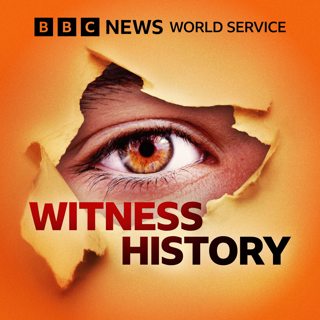
Greece’s debt crisis

It was a week that brought the future of Greece and the Eurozone to the brink. Ten years ago, on 6 July the Greek people voted against the terms of a financial bailout which included raising taxes and slashing welfare spending.

Greece owed €323bn to various countries and banks within Europe. Its banks were closed. A quarter of the population and half of Greece’s young people were unemployed.

The morning after the vote, Euclid Tsakalotos was brought in to replace Yanis Varoufakis as finance minister. His predecessor had accused European leaders of “terrorism” in their handling of the crisis. Parachuted in to last-ditch talks with angry European leaders, Euclid Tsakalotos describes to Josephine McDermott the make-or-break 17-hour summit in Brussels.

He reveals that when Angela Merkel, the leader of Greece’s biggest lender Germany, said she was leaving the room because she could not accept what was on the table, Donald Tusk, president of the European Council, actually locked the door to stop her leaving and force an agreement to be reached.

Eye-witness accounts brought to life by archive. Witness History is for those fascinated by the past. We take you to the events that have shaped our world through the eyes of the people who were there. For nine minutes every day, we take you back in time and all over the world, to examine wars, coups, scientific discoveries, cultural moments and much more.

Recent episodes explore everything from football in Brazil, the history of the ‘Indian Titanic’ and the invention of air fryers, to Public Enemy’s Fight The Power, subway art and the political crisis in Georgia. We look at the lives of some of the most famous leaders, artists, scientists and personalities in history, including: visionary architect Antoni Gaudi and the design of the Sagrada Familia; Michael Jordan and his bespoke Nike trainers; Princess Diana at the Taj Mahal; and Görel Hanser, manager of legendary Swedish pop band Abba on the influence they’ve had on the music industry. You can learn all about fascinating and surprising stories, such as the time an Iraqi journalist hurled his shoes at the President of the United States in protest of America’s occupation of Iraq; the creation of the Hollywood commercial that changed advertising forever; and the ascent of the first Aboriginal MP.

(Photo: A queue outside a bank in Greece in 2015. Credit: Getty Images)

Avsnitt(2000)

The Bauhaus

The Bauhaus

The groundbreaking Bauhaus school of art and design was founded in Germany in 1919. It would go on to have a huge impact on architecture and design around the world, with the clean lines and minimalist elegance of its distinctive modernist aesthetic influencing everything from skyscrapers to smartphones.In this interview from the BBC archive, Bauhaus founder Walter Gropius explains his goals for the school - and the challenges involved in setting it up.(Photo: View of one of the wings of the Bauhaus building in Dessau, taken on 30 January 2019. Credit: John MacDougall/AFP/Getty Images)

8 Maj 20198min

The siege of Dien Bien Phu

The siege of Dien Bien Phu

On May 7th 1954, French forces surrendered after a bloody 56-day siege of their base at Dien Bien Phu in the north of Vietnam. Their defeat by the communist independence movement, the Viet Minh, signalled the end of French colonial rule in Indochina. We hear from two veterans who fought on opposing sides in the Battle of Dien Bien Phu. (Photo: A French military Red Cross helicopter preparing to land, while French soldiers try to defend their positions in Dien Bien Phu against the Viet Minh, 1954 Credit: AFP/Getty Images)

7 Maj 20199min

Jack Ma: The founder of Alibaba

Jack Ma: The founder of Alibaba

The Chinese billionaire set up his online shopping site in 1999. When Alibaba first started, Jack Ma and his team were working out of a small flat in Hangzhou. The BBC's Michael Bristow has been hearing from Duncan Clark, who first worked with the internet entrepreneur in those early days.Photo: Jack Ma attends the World Economic Forum annual meeting in Davos, Switzerland, January 2019. (Credit: REUTERS/Arnd Wiegmann)

6 Maj 20199min

The Malayan Emergency

The Malayan Emergency

In 1948, British colonial authorities declared a State of Emergency in the territory of Malaya, now part of Malaysia. It was in response to the start of a Communist rebellion. From their bases in the jungle, Communist fighters carried out hundreds of guerrilla attacks across the country, targeting Malaya's valuable rubber estates, tin mines, and infrastructure. Alex Last speaks to Gus Fletcher, a decorated former Special Branch officer in Malaya, about his memories of Britain's attempt to combat the communist threat, which became seen by some, as a model for counter-insurgency. Photo: A photograph taken by a British sergeant on patrol in the Malayan jungle.. (Photo by Keystone/Getty Images)

3 Maj 201911min

The sinking of the Belgrano

The sinking of the Belgrano

The Argentine ship, General Belgrano, was sunk by a British submarine during the Falklands War on 2nd of May 1982. 323 people died in the attack. Dario Volonte, now an opera singer, was one of the survivors and he spoke to Louise Hidalgo about the attack.Photo: The General Belgrano. Credit: Getty Images

2 Maj 20199min

The Arctic African

The Arctic African

Tété-Michel Kpomassie, grew up in West Africa but he was obsessed with the Arctic. When he was 16 years old he ran away from his village in Togo determined to reach Greenland.. It took him eight years but in 1965, he finally arrived. He then went north to fulfil his dream of living among the indigenous people. Years later, he wrote an award-winning account of his odyssey, An African in Greenland, which has been translated into eight languages. Photo: Tété-Michel Kpomassie in Greenland in 1988.(BBC)

1 Maj 20199min

Rupert Brooke

Rupert Brooke

In April 1915, Britain mourned when poet and national hero Rupert Brooke died on a troopship in the Dardanelles during World War One. Often compared to a Greek god because of his blond good looks, Brooke had written a series of famous sonnets that reflected the optimistic mood at the beginning of a conflict that would claim tens of millions of lives. Simon Watts introduces the memories of three of Brooke's friends, as recorded in the BBC archives.(Photo: Rupert Brooke. Credit: Culture Club/Getty Images)

30 Apr 20199min

Ellen comes out

Ellen comes out

Ellen DeGeneres came out as a lesbian publicly in April 1997 – and so did the fictional character she played in her self-titled sitcom. The Puppy Episode would be watched by more than 40 million people and represented a milestone for LGBT representation in popular culture.Lucy Burns speaks to the episode’s writer and executive producer Dava Savel.Picture: Comedian Ellen DeGeneres and actress Anne Heche attend the 49th Annual Primetime Emmy Awards on September 14, 1997 at the Pasadena Civic Auditorium in Pasadena, California. (Ron Galella, Ltd./WireImage)

29 Apr 20199min

Populärt inom Samhälle & Kultur

podme-dokumentar
svenska-fall
p3-dokumentar
mardromsgasten
en-mork-historia
creepypodden-med-jack-werner
skaringer-nessvold
nemo-moter-en-van
killradet
rattsfallen
aftonbladet-krim
spar
hor-har
p3-historia
badfluence
p1-dokumentar
sanna-berattelser
flashback-forever
rss-brottsutredarna
rss-sanning-konsekvens