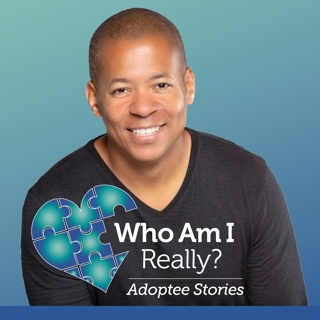
098 – Trained In Trauma

098 – Trained In Trauma

Dr. Julie Lopez lives and works in Washington, D.C. Julie’s early childhood was happy at home, but it was her circle of friends that made her question just what was wrong with being adopted? When she graduated college, her need for information, for professional reasons, made her stumble across an old document she’d seen before, which impulsively steered her down the path toward reunion. Along hat road she found trauma that she was already prepared to handle and disappointment that she’s also thankful for because the whole experience keeps her grounded.

Dr. Lopez runs the Viva Center – https://www.vivapartnership.com/

You can find her book: “Live Empowered: Rewire Your Brain’s Implicit Memory To Thrive In Business, Love, and Life

The post 098 – Trained In Trauma appeared first on Who Am I...Really? Podcast.

Julie (00:05):

Okay. I think behind every adoption there's usually trauma and then there is the just families don't give up children without some kind of distress and circumstance. You know, it goes against human nature.

Damon (00:28):

Who am I? Who am I? Who am I? Who am I? Who am I? Who am I? This is who am I really a podcast about adoptees that have located and connected with their biological family members. I'm Damon Davis and on today's show is Julie. She lives in Washington D C Julie's early childhood was happy at home, but it was her circle of friends that made her question just what was wrong with being adopted. When she graduated college her need for information, for professional reasons made her stumble across an old document she'd seen before which impulsively steered her down the path toward reunion along that road, she found trauma that she was already prepared to handle and disappointment that she's also thankful for. This is Julie's journey. Julie grew up in McLean, Virginia. She said her parents were very loving people who were somewhat open about her adoption from Catholic charities. Julie was the oldest child in their house, followed by a younger sister, adopted from San Antonio, Texas. A few years later, her parents were approved for a third international adoption from Mexico when her mother got pregnant.

Julie (01:48):

And I remembered her asking me, cause at that point I was seven, you know what, what should, what would I like to have happen? And she was pregnant, I'm going to have a child. And we all knew, you know, the adoption had gone through and what should we do. And I said, Oh you know what a both, but they didn't end up adopting the child from Mexico. And then my parents had another biological child two years after that. So there were four of us, two adopted and then a pretty big gap. And then two more children that were biologically connected to my adoptive parents.

Damon (02:26):

So in their home there were two older adopted girls, a five year gap, then two younger boys who were biological to her parents. That age differential can be challenging. But Julie said she was still close with her younger brothers, almost like a second mother to them while navigating the normal healthy battles that come with having a younger sister closer to her own age, but in her family they didn't talk about adoption much, at least not as much as they could have. She said she didn't know enough to be curious and ask questions.

Julie (02:58):

If I brought it up they would would've talked about it, but most of it would be their anxiety about me being upset. Right. It was like they definitely wanted to shelter me from that and so it wasn't really talked about hardly at all unless it was like more factual. Like I had this fact sheet about my biological mother and father had their age and their weight and their height and their interests and their nationalities and stuff like that. I always had that

Damon (03:31):

This fact sheet wasn't comprehensive at all. It only spoke of her birth parents in generalities far less than what her actual non identifying information would have. Julie's parents let her see the document and she knew it was in a file if she ever wanted to review it again. What's interesting is the concept of adoption and its perception among her friends and in the community was the more challenging piece for her growing up.

Julie (03:56):

And so I would say the bigger impact on me as I understood it growing up was in school and the peers and things like that. The idea that I was adopted, I didn't have to know other people that were adopted. Like there was this one family in our church that had clearly adopted a child because their child was black and they were white. That type of thing, like an international adoption, but, but I didn't even really know them. I could just see them across like, you know, we were part of a pretty big church so I really, aside from my sister, didn't know anyone else adopted. Although like looking back there probably were other adopted people. I just didn't know that. But I definitely knew when we did, well, first of all, every time I went to the doctor and they would ask questions about health history, those types of in jokes like other kids would say about being adopted was basically equated with being unwanted or kind of defective actually. It was like an insult you'd say to someone if I would say I was adopted. Most of my friends didn't want that to be true. Mostly because they liked today and it's that like that's not true. I'm like, no, it is true. They're all like, no, because, because they, I don't know, I guess they thought I was normal and nice and kind and that couldn't be what an adoptee looks like or something. I mean, they never said that, but I just know they didn't want me to be adopted, so that was, I don't know. That was hard.

Damon (05:29):

In fifth grade, Julie had one special best friend. They were both little tomboys and they played all kinds of sports together. Usually the only two girls in the mix with the boys. At school, the kids were learning about dominant and recessive traits. Their assignment was to note their mother's eye color, their father's eye color, and the kids were supposed to use a chart to pick the probability of their own eye color.

Julie (05:54):

And the teacher picked mine as an example. Like she was like, let me have one as an example. She showed what I had written. Well of course I guess I had that fact sheet, but at that age I didn't, I don't know. I didn't know that info. So I just put down my adoptive parents info and my friend, so this is in front of all class, that's the whole thing. And she was just being like scientific, I guess, you know. She was like, what? Wait a second. That's not relevant. This whole discussion is not relevant because this is not her biological line. And I remember just feeling so embarrassed that she said that even though it wasn't mean hearted, it was like more trying to understand the truth or factual piece that the teacher was trying to teach. But I was like, Oh my gosh, like kind of horrified. I didn't keep it secret from people, but I wouldn't have announced it like that in front of, you know, 25 kids.

Damon (06:50):

When Julie finished college at 22 she was traveling a lot for work as a consultant in systems engineering and she needed documentation to update her...

Det här avsnittet är hämtat från ett öppet RSS-flöde och publiceras inte av Podme. Det kan innehålla reklam.

Avsnitt(287)

140 - I Wanted To Be My True Self

140 - I Wanted To Be My True Self

Darryl, from Australia, admits he had a challenging childhood from his relationship with his adoptive father, to their family's need to move around a lot because they were so poor, and his experience ...

28 Mars 45min
139 -A Sense Of Peace And Calm

139 -A Sense Of Peace And Calm

Wendy, from Minnesota, had a lot of information about her natural mother and assumed the woman would want to know her, but that wasn't the case. They corresponded once, solely for her natural mother t...

14 Mars 38min
144 – Gullah Girl

144 – Gullah Girl

Brandi, who called me from myrtle Beach, South Carolina, is an inquisitive person adopted in to a family with a history of scholars, which is rare for a black family in the south. DNA led Brandi to a ...

7 Mars 28min

143 - He Really Stepped Up

143 - He Really Stepped Up

When Susan, from Irving, Texas, found her natural mother, she learned she was conceived in transit when two young lives collided, then never saw one another again. Her birth mother's life seemed too ...

28 Feb 42min

136 – Your Absence Has Gone Through Me

136 – Your Absence Has Gone Through Me

To date, I’ve only interviewed a few guests who weren't adoptees, and this will be another one. Today you're going to meet Anne-Marie from Southern California who drafted an impassioned submission to ...

21 Feb 1h 26min

134 – Destined To Be Unique

134 – Destined To Be Unique

Liz, from Michigan, grew up in a neighborhood full of adoptees, so it wasn’t until years later in the Dominican Republic teaching a class with a lot of adoptees in it that her own adoption sunk in. Af...

14 Feb 51min
127 – I Think I Was Afraid Of Knowing

127 – I Think I Was Afraid Of Knowing

Jim, who now lives in Delaware, said growing up he had no desire to search for his first family. After his parents passed and he found his adoption name change form, his feelings about a search change...

7 Feb 46min
141 - That Wasn't The Real Me

141 - That Wasn't The Real Me

Gloria called me from Texas where she grew up with Mexican parents. In younger days she tried to find the ways she looked like her family. In adulthood, following the whim of some co-workers, Gloria d...

31 Jan 56min
Populärt inom Utbildning

historiepodden-se
rss-bara-en-till-om-missbruk-medberoende-2
det-skaver
nu-blir-det-historia
allt-du-velat-veta
harrisons-dramatiska-historia
johannes-hansen-podcast
not-fanny-anymore
rss-viktmedicinpodden
roda-vita-rosen
i-vantan-pa-katastrofen
rikatillsammans-om-privatekonomi-rikedom-i-livet
sa-in-i-sjalen
sektledare
rss-max-tant-med-max-villman
rss-autismandan
rss-traningsklubben
rss-i-skenet-av-blaljus
rss-basta-livet
sex-pa-riktigt-med-marika-smith